A hi vis winter jacket has to do two jobs at once: keep the wearer visible under headlights and keep them warm and dry through a full shift. Most problems with winter hi-vis jackets start before production, in the specification. Buyers lock in the style and price, and leave the visibility class, insulation, seam treatment and reflective tape durability unspecified.
This guide is for PPE distributors, workwear brands, contractors and corporate buyers sourcing winter high-visibility jackets in bulk. It explains what to settle with a factory before sampling so the jacket you receive is compliant, warm and still bright after a season of washing.
Which Visibility Standard Does Your Market Require?
Start with the end market. The standard decides the minimum visible material, and the jacket design follows from it.
| Market | Common standard | Classification |
|---|---|---|
| United States | ANSI/ISEA 107 | Type O / R / P; Class 1–3 |
| EU, UK and many export markets | EN ISO 20471 | Class 1–3 |
| Australia / New Zealand | AS/NZS 4602.1 | Day (D), Night (N), Day/Night (D/N) |
Why most winter jackets are specified as Class 3
Road, highway and utility crews often work near traffic in low light, and many of these buyers ask for the highest visibility class. Class 3 sets the largest minimum areas of fluorescent background and retroreflective material:
- ANSI/ISEA 107 Class 3: at least 1,240 in² of background material and 310 in² of retroreflective material.
- EN ISO 20471 Class 3: at least 0.80 m² of background material and 0.20 m² of retroreflective material.
Sleeves add a large share of that area, which is why a full-sleeve jacket can reach Class 3 where a sleeveless vest usually cannot. Ask which sizes the certificate covers: on the smallest sizes, the measured area can fall below the class minimum.
Visibility and Cold Protection Are Separate Requirements
A high-visibility standard covers visibility only. It says nothing about warmth or waterproofing. European buyers often specify extra garment standards for winter jackets:
- EN 343 — protection against rain, with separate classes for water penetration resistance and breathability.
- EN 14058 — garments for cool environments, typically down to about −5 °C.
- EN 342 — garments for cold environments below −5 °C.
In the U.S. there is no single equivalent, so buyers normally write the performance into the specification. Include:
- Shell fabric: fluorescent yellow or orange polyester, usually Oxford weave with a PU coating or a laminated membrane.
- Waterproof rating: a hydrostatic head target in millimetres, tested on the finished fabric.
- Seams: taped or welded. A waterproof shell with untaped seams will leak at the shoulders.
- Insulation: padding weight in g/m² for body and sleeves, chosen for the climate and how active the wearer is.
- Lining: taffeta, quilted or fleece, depending on warmth and cost targets.
For rain-focused projects, see our hi-vis rain jacket buying guide.
Which Winter Jacket Style Fits the Job?
Insulated parka
Longer cut and the warmest option. Suits crews who stand still for long periods, such as flaggers, traffic controllers and site security. See an example in our padded reflective winter jacket.
Bomber jacket
Short cut that does not ride up when the wearer sits. Popular with forklift drivers, warehouse teams and delivery drivers.
3-in-1 or interchange jacket
A waterproof shell with a removable inner jacket or fleece. One SKU covers autumn, winter and spring, which keeps distributor inventory simple. Our Class 3 winter interchange jacket is built on this idea.
Softshell jacket
Light and flexible, for active work in moderate cold where a padded jacket would be too warm.

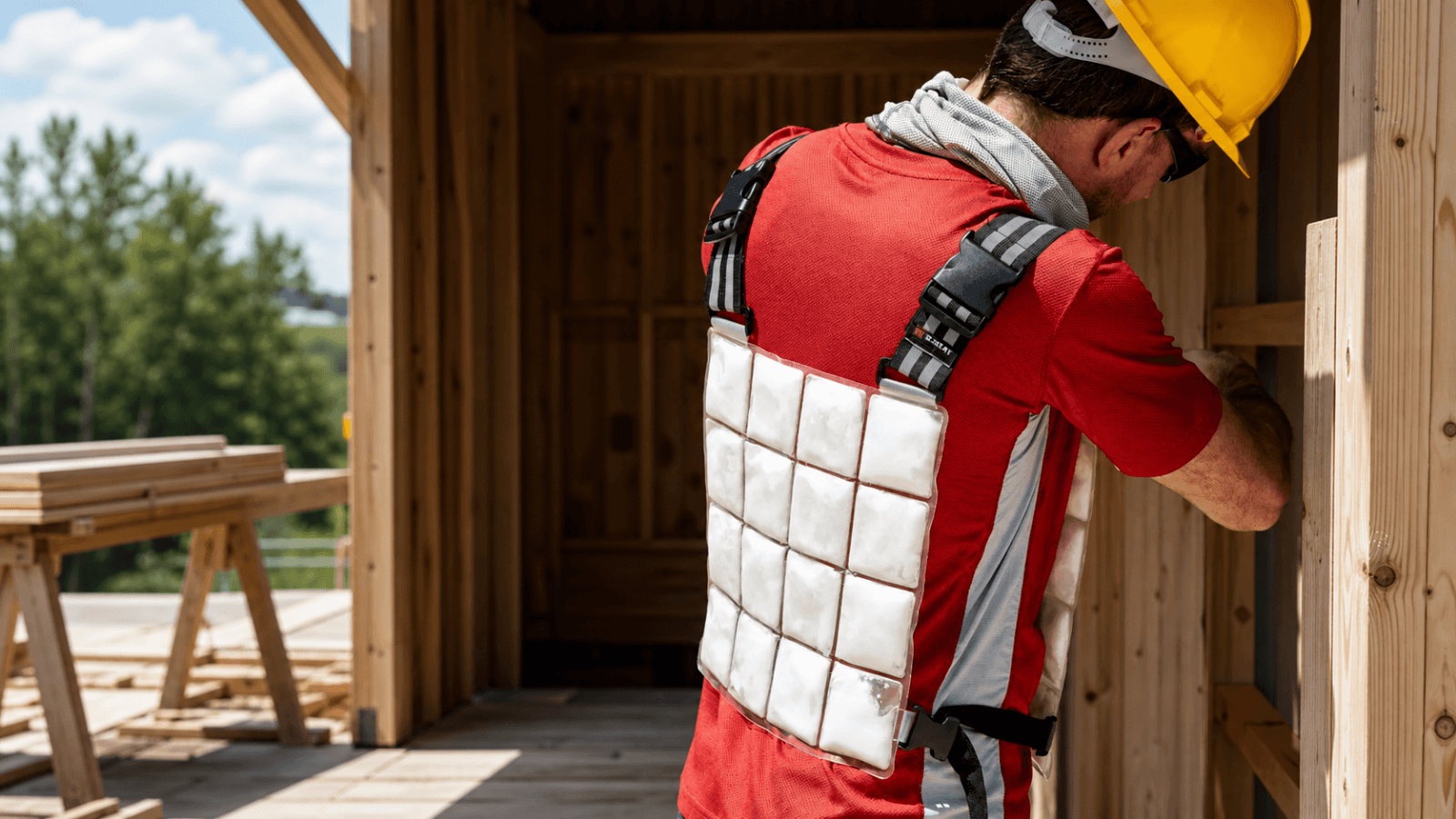
If you also need heating panels, read our guide to heated hi vis jackets.
Why Reflective Tape Is Where Cheap Jackets Fail
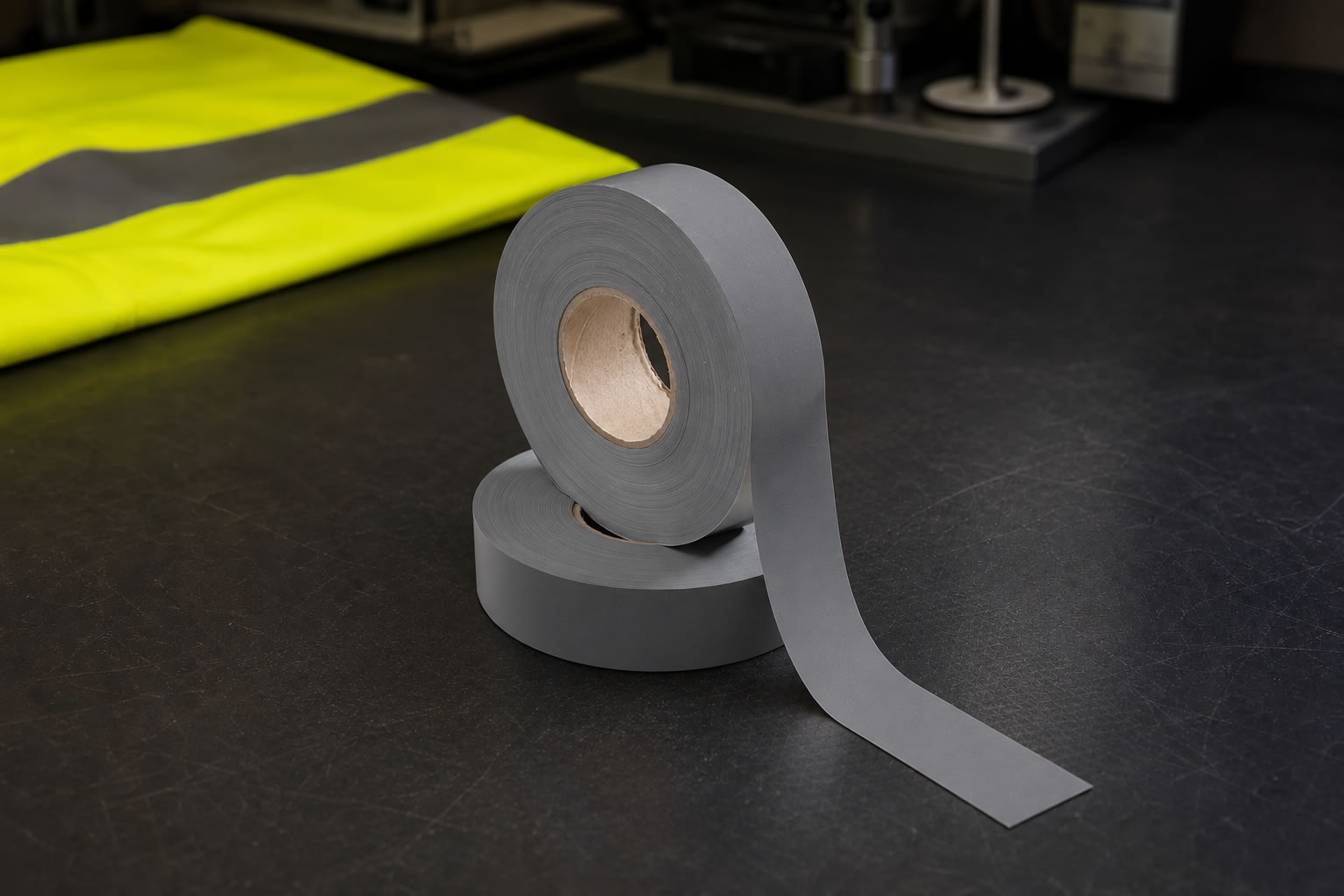
Fluorescent fabric provides daytime contrast. At night, the retroreflective tape is what returns headlight beams to the driver, and it is the part buyers most often under-specify. Check four points:
- Retroreflective performance: the coefficient of retroreflection must meet the standard’s level. Ask for test reports on the tape you are actually buying.
- Wash durability: ask how many wash cycles, and at what temperature and method, the tape keeps its performance.
- Tape type: sewn glass-bead tape is durable and cost-effective; segmented heat-transfer tape is more flexible and breathable; microprismatic tape is very bright and common on traffic garments. Our glass-bead vs microprismatic comparison explains the trade-offs.
- Cold flexibility: some tapes stiffen at low temperatures and crack at elbows and shoulders. For winter jackets, ask whether the tape has been checked for cold.
What Can Be Customized for Brands and Distributors?
- Logo method: embroidery, screen printing, reflective heat transfer or patches. Compare methods in our screen printing vs digital printing guide.
- Color blocking: fluorescent yellow or orange with navy or black lower panels hides dirt.
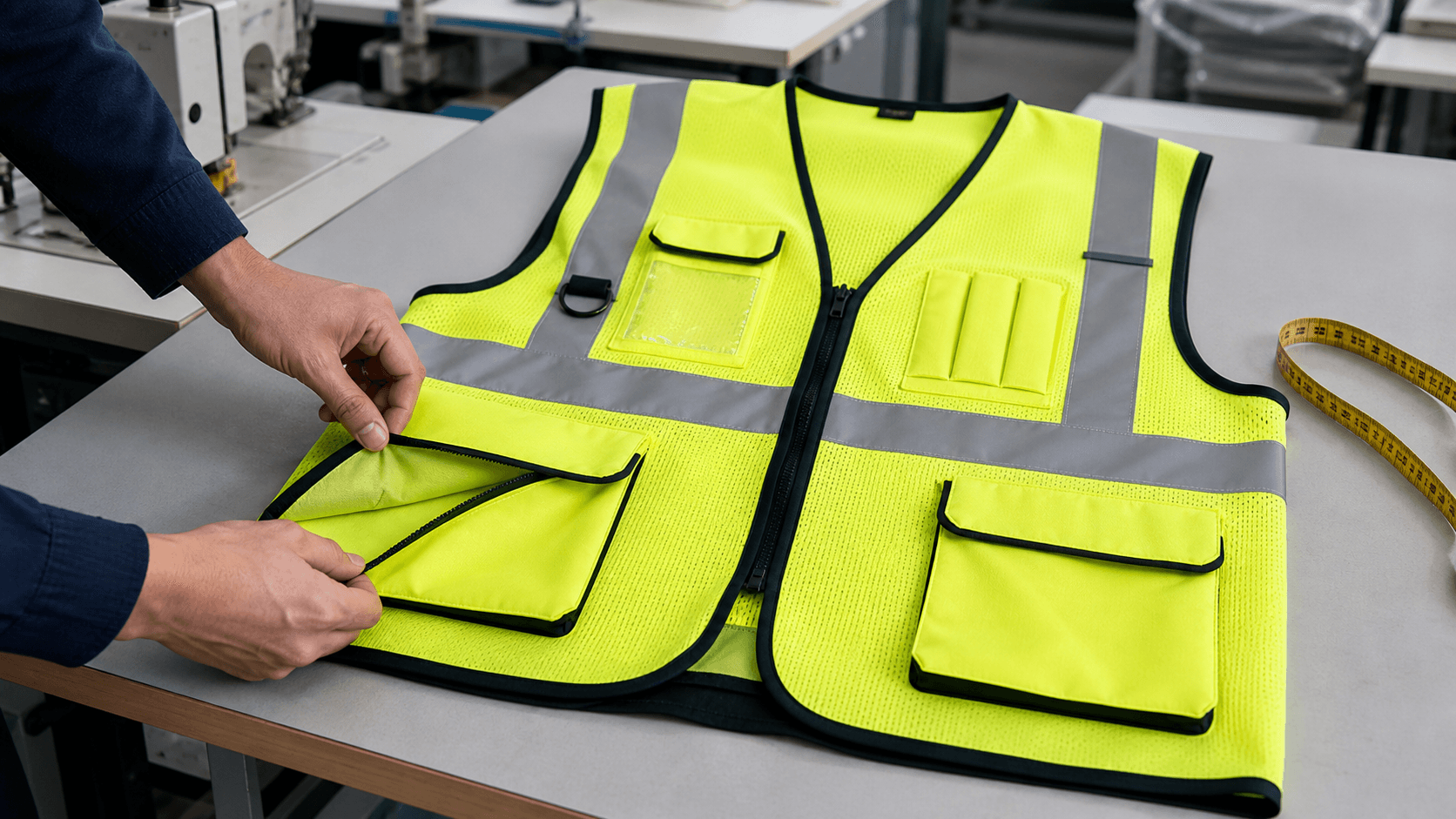
- Function details: ID badge holder, radio loop, microphone tabs, detachable hood, storm cuffs, two-way zip and inner phone pocket.
- Packaging: individual polybags, hang tags, size labels and barcodes in your format.
A logo must not cover so much fluorescent background or tape that the jacket falls below its class minimum. Agree logo size and position before the sample, not after.
When Should You Place a Winter Order?
This is the most common mistake we see. Demand and search interest for hi vis winter jackets start rising in November and peak from December to February. Work backwards from the date stock must be on your shelf:
- Development and samples: allow time for at least one round of sample revision.
- Bulk production: depends on quantity, fabric availability and customization; confirm it in writing with the factory.
- Shipping: sea freight from China to the U.S. or Europe adds several weeks, plus customs clearance.
For autumn delivery, most buyers need samples approved in summer.

Ten Checks Before You Send an RFQ
- Target market and standard (ANSI/ISEA 107, EN ISO 20471 or other).
- Required visibility class.
- Style: parka, bomber, 3-in-1 or softshell.
- Waterproof rating and seam treatment.
- Insulation weight and lining.
- Reflective tape type and wash durability.
- Logo method, size and position.
- Size range and quantity per size.
- Packaging and labeling.
- Required delivery date.
Our hi-vis workwear RFQ guide turns these points into a template, so you can compare quotations on the same specification.
Frequently Asked Questions
What class is a hi vis winter jacket?
It depends on the design and the certificate. Many insulated jackets with full sleeves are made to ANSI/ISEA 107 Class 3 or EN ISO 20471 Class 3, because sleeves add the background and reflective area needed for that class.
Can a hi vis jacket be both waterproof and breathable?
Yes. Coated or membrane shell fabrics with taped seams can be tested to EN 343 for both water penetration resistance and breathability.
Does a logo affect hi vis compliance?
It can. A logo that covers fluorescent background or reflective tape reduces the effective area. Size and place it so the jacket still meets its class, or use a reflective logo.
Can YOLITE make custom hi vis winter jackets?
Yes. Send your target standard, style, quantity and branding requirements, and we will confirm MOQ, sampling and lead time for your project.
Request a Hi Vis Winter Jacket Quote
Tell YOLITE where the jacket will be worn, which standard it must meet and how many pieces you need. We can review shell fabric, insulation, reflective layout, branding, sizing and packaging for your B2B project, or contact us directly with your specification.
Sources and Scope
1. American National Standards Institute, “ANSI/ISEA 107-2020: High-Visibility Safety Apparel,” November 2, 2020. https://blog.ansi.org/ansi/ansi-isea-107-2020-high-visibility-apparel/
2. 3M, “ANSI/ISEA 107-2020 Made Easier: A Quick Reference to the High-Visibility Safety Apparel Standard.” https://multimedia.3m.com/mws/media/638577O/ansi-107-2020-made-easier.pdf
3. International Organization for Standardization, “ISO 20471:2013 — High visibility clothing — Test methods and requirements.” https://www.iso.org/standard/30838.html
This article is a procurement guide, not a substitute for the complete standard, a workplace hazard assessment or advice from the authority responsible for your project. Requirements can vary by jurisdiction, contract, garment type, performance class and standard edition.

AUTHOR
Jack Lee
Founder · Yolite Industrial Co., Ltd.
Reflective-products specialist since 2003, focused on reflective materials, high-visibility apparel, OEM customization, and practical product development for international buyers.