A hi-vis rain jacket has to solve two different problems: help the wearer stand out around vehicles or machinery, and protect the wearer in wet weather. Those functions should be specified and verified separately. For bulk buyers, the safest route is to start with the worksite risk, name the required standards and performance levels, then approve the exact finished garment rather than relying on a fabric sample or catalogue description.
Quick Summary
When buying hi-vis rain jackets in bulk, check the visibility requirement, rain-protection claim, finished-garment construction, hood and closure design, breathability, fit, care instructions and matching compliance documents. EN ISO 20471 addresses high visibility, while EN 343 addresses protection against rain; one claim does not automatically prove the other.
1. Define the Rain, Traffic and Exposure Conditions First
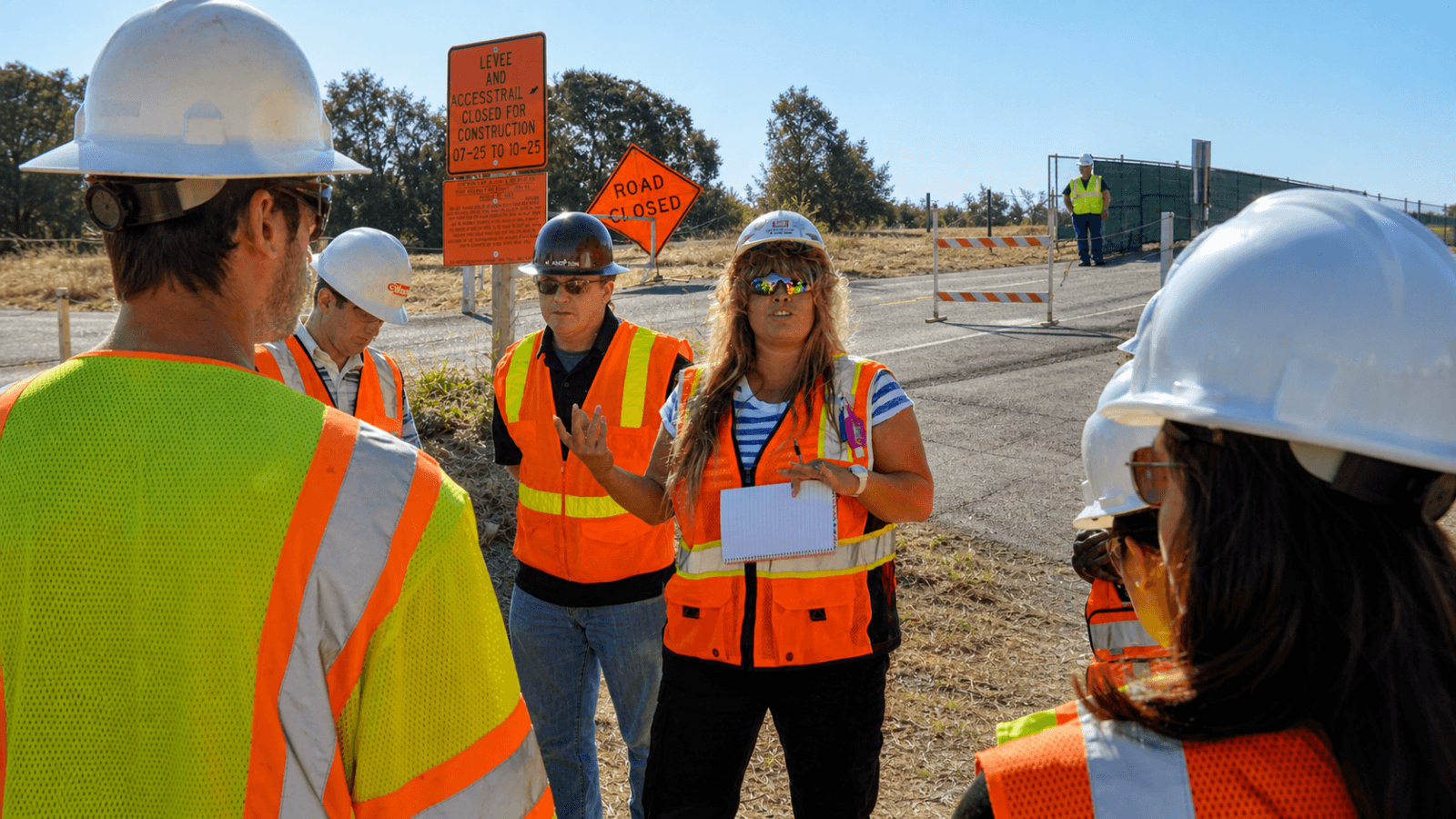
The right specification starts at the worksite. A short delivery task in light rain is different from a full shift beside moving vehicles in wind-driven rain. Buyers should document vehicle speed and direction, visibility distance, lighting, temperature, rainfall, wind, task duration and whether workers frequently enter vehicles or indoor areas.
The Health and Safety Authority's guidance on high-visibility clothing recommends selecting clothing through a risk assessment that considers factors such as moving vehicles, sightlines, lighting, weather and exposure time. It also notes that weather protection may be required in addition to visibility.
Turn these conditions into a written use case before requesting quotations. Suppliers can then propose a garment for a defined task instead of guessing what “waterproof hi-vis jacket” means to your team.

2. Treat EN ISO 20471 and EN 343 as Separate Requirements
Visibility and rain protection are evaluated under different standards. EN ISO 20471 covers high-visibility clothing intended to signal the wearer's presence in daylight and under headlights in darkness. The ISO overview identifies requirements related to colour, retroreflection, minimum material areas and placement.
EN 343 covers protective clothing against rain. The European Commission's harmonised-standards decision lists EN 343:2019 as “Protective clothing — Protection against rain” and separately lists EN ISO 20471 for high-visibility clothing.
For procurement, this distinction matters. A jacket described as waterproof is not automatically high-visibility certified, and a high-visibility jacket is not automatically tested for rain protection. Ask the supplier to state the exact standard, edition and performance classification claimed for the finished product.
3. Read the Rain-Protection Classification, Not Just “Waterproof”
“Waterproof” is too broad for a technical purchase order. EN 343 evaluates resistance to water penetration and water-vapour resistance, which relates to how easily moisture vapour can move through the garment system. The classification shown on the garment documentation helps buyers compare products designed for different exposure and comfort needs.
Do not select a class from a blog summary alone. Ask for the applicable certificate, declaration and test evidence, then confirm the interpretation with the supplier or your PPE compliance adviser. Also clarify whether an optional whole-garment rain-tower test was performed, because fabric performance does not reveal every possible leak path in a sewn jacket.
Your purchase specification should name the performance result you need, not merely repeat a marketing phrase.
4. Inspect Seams, Zips, Storm Flaps, Hood and Cuffs
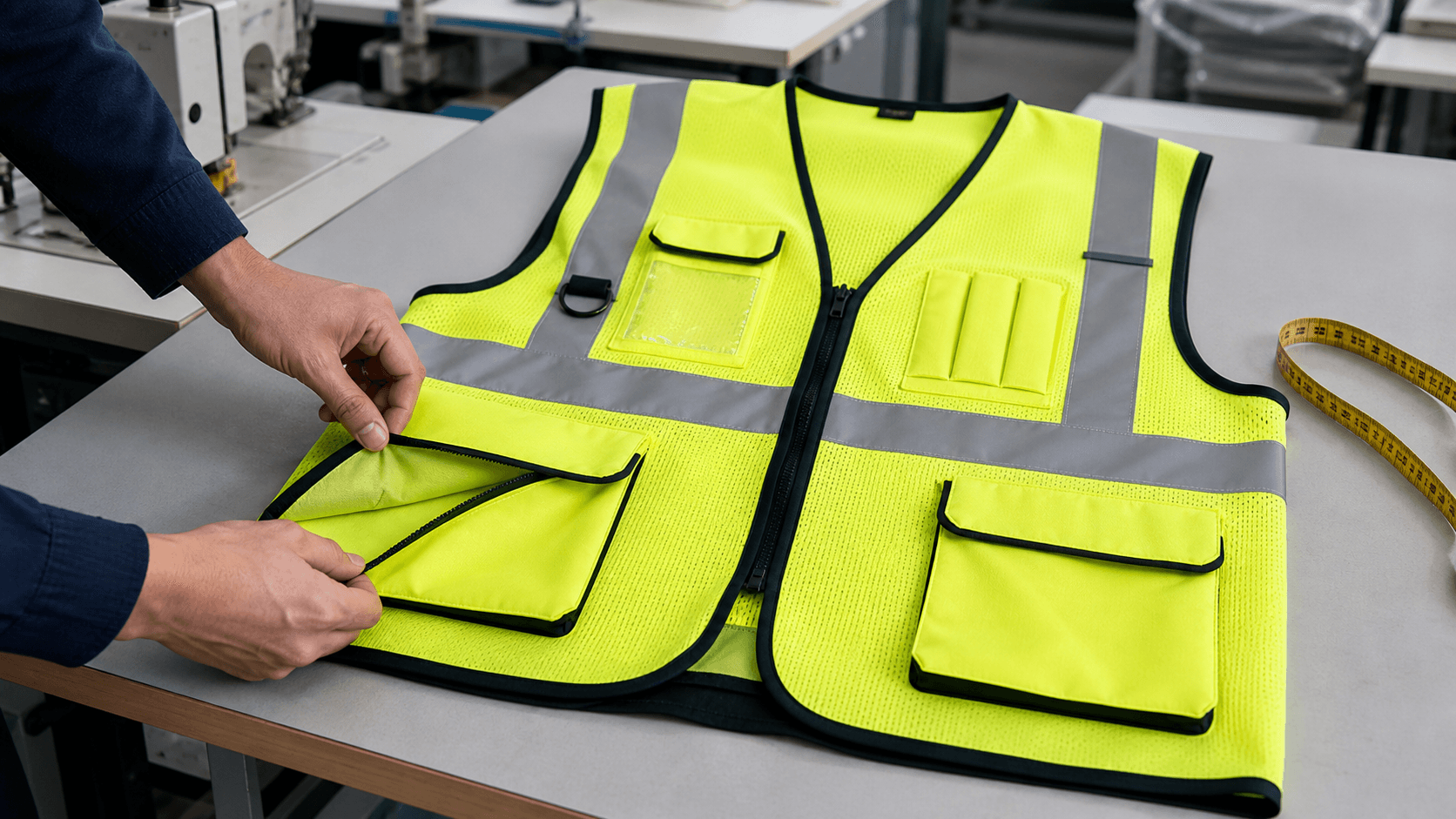
Water often enters through construction details rather than through the main fabric. A useful pre-production inspection therefore includes seam sealing, zip protection, storm flaps, hood adjustment, cuff closure, hem adjustment and pocket entry.
Check the jacket in the configuration workers will actually use. A hood should not obstruct necessary vision or interfere with other PPE. Cuffs need to work with gloves. Front closures should remain practical when hands are cold or wet. Pockets should drain or close appropriately for the intended task.
If your programme needs a modular garment, review the exact combinations separately. A 4-in-1 waterproof safety reflective jacket illustrates a multi-configuration format, but the supporting documentation must identify which configuration carries which claim.

5. Make Sure High-Visibility Areas Stay Visible in the Rain
The finished design still has to present the required fluorescent and retroreflective areas. Hoods, storm flaps, contrast panels, pockets, harnesses and branding can change how much material remains visible and how the wearer is recognised from different directions.
Review front, back and side drawings, then inspect a finished sample while the wearer bends, reaches, drives and carries equipment. Wet surfaces, dirt and outer layers can also affect real-world appearance, so the trial should resemble the workplace rather than a showroom.
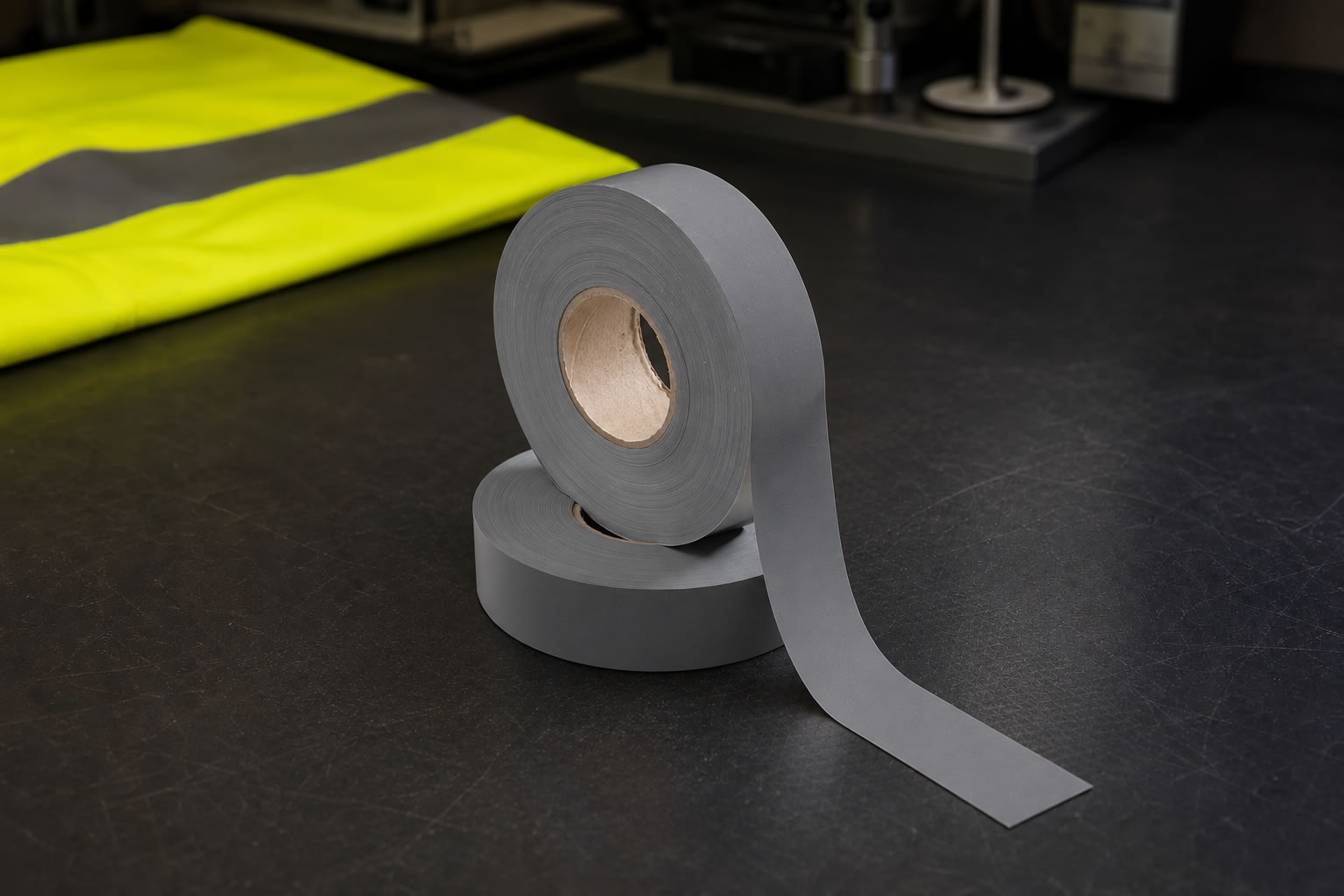
For a broader explanation of garment choice, see our reflective jacket procurement guide. The key principle is the same: approve the complete garment, not an isolated tape or fabric component.
6. Balance Breathability, Layering and Thermal Comfort
Keeping rain out is only half of wet-weather comfort. Physical work creates heat and moisture inside the jacket, and a garment that does not suit the workload may encourage workers to open it or remove it.
Specify the expected activity level, temperature range and shift length. Decide whether the jacket will be worn over a base layer, fleece, insulated liner or other PPE. Then test the size set with those layers in place. Shoulder movement, sleeve length, hem coverage and ventilation should all be checked during representative tasks.
Breathability results are useful comparison inputs, but they do not replace a wearer trial. The fabric, garment design, workload and clothing layers work as a system.
7. Control Branding and Size Grading Before Production
Logos and size changes can affect a high-visibility garment. A large print or embroidery may cover fluorescent background material, interrupt reflective bands or create a leak risk if the decoration penetrates the shell.
Submit final artwork, dimensions, location and application method before asking the supplier to confirm the design. This comparison of screen printing and digital printing for safety apparel explains some practical decoration trade-offs, but the final method must suit the fabric and compliance plan.
Approve more than one size when the order spans a wide range. The visible-material layout and jacket proportions should remain appropriate across the graded pattern, not only on the medium sample shown in a catalogue.
8. Match Every Document to the Exact Finished Jacket
The evidence pack should describe what you are buying. Model code, fabric, colour, reflective material, lining, size range, hood, closures, branding and garment configuration should be consistent across the purchase specification, sample and compliance documents.
For a bulk order, request at least:
- the finished product specification and size chart;
- applicable certificate or EU type-examination documentation;
- declaration of conformity where required;
- relevant test reports and claimed classifications;
- user instructions, care method and marking details;
- approved artwork and placement drawing;
- pre-production sample approval; and
- an agreed inspection plan for production.
Do not assume that a report for one fabric, colour or undecorated sample covers every variation. Ask the supplier to explain the link between each document and the exact SKU being ordered.
Common Mistakes When Buying Hi-Vis Rain Jackets
Several shortcuts create avoidable risk:
- treating “waterproof” as a complete technical specification;
- assuming one certificate covers both visibility and rain protection;
- approving reflective tape without reviewing the finished garment;
- adding a large logo after compliance review;
- testing fit without normal workwear layers;
- ignoring care instructions and replacement criteria; and
- accepting documents whose model numbers do not match the order.
A structured sample and document review catches these issues before they are repeated across a bulk shipment.
FAQ About Hi-Vis Rain Jackets
Is every hi-vis rain jacket certified to both EN ISO 20471 and EN 343?
No. The two standards address different functions. Check the marking and supporting documents for the exact finished model instead of inferring certification from its colour or product name.
Does a waterproof fabric make the whole jacket waterproof?
Not necessarily. Seams, zips, pockets, vents and other construction details can create water-entry points. Review finished-garment evidence and inspect a production-representative sample.
Can a company logo be printed on a certified rain jacket?
Branding may be possible, but its area, location and application method can affect visibility, shell construction or the evidence covering the finished design. Obtain approval for the decorated garment before production.
Should the same jacket be used for every season?
Only if it fits the risk, weather and workload across those seasons. Many buyers use layering or modular systems so workers can adjust insulation while retaining the required visibility and rain protection.
Conclusion
A strong hi-vis rain jacket specification keeps visibility, rain protection and wearer usability connected—but never confuses them as one claim. Define the worksite, name the required standards and performance levels, inspect the finished construction, run a layered fit trial and match every document to the final SKU. To discuss a bulk order, contact Yolite with your destination market, work conditions, quantity, size range and branding plan.

AUTHOR
Jack Lee
Founder · Yolite Industrial Co., Ltd.
Reflective-products specialist since 2003, focused on reflective materials, high-visibility apparel, OEM customization, and practical product development for international buyers.
View LinkedIn Profile