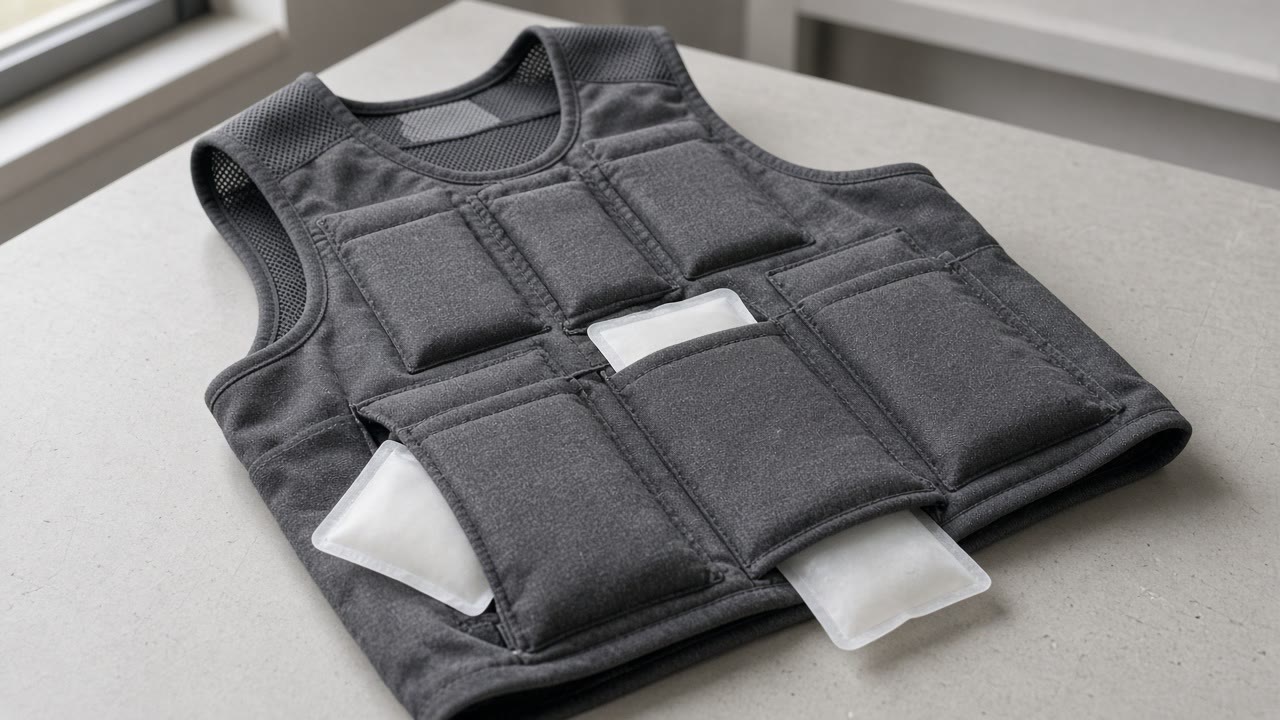
A PCM cooling vest is a passive personal cooling garment that uses phase-change material (PCM) packs as heat sinks. After the packs are solidified (typically in a freezer, refrigerator, or ice bath), they absorb body heat while melting from solid to liquid at an engineered temperature—so the wearer feels a steadier cool contact than raw ice. U.S. responder-equipment guidance describes commercial PCM packs that melt in about the 58–82°F (about 14–28°C) engineered range and can hold a relatively constant cooling effect for roughly two to four hours, depending on workload and environment. Also searched as a phase change cooling vest, it supplements—not replaces—employer heat controls such as water, rest, shade, and engineering measures.
What is a PCM cooling vest?
Phase-change materials store and release large amounts of heat when they change physical state. In personal cooling, sealed PCM packs (often paraffin-, salt-, or composite-based fillers) are placed in pockets around the torso. While the material melts, it absorbs heat from the body and clothing microclimate at roughly the pack’s designed melting point.
That is different from:
| Approach | How cooling happens | Typical buyer trade-off |
|---|---|---|
| PCM vest | Latent heat of melting at an engineered temperature | Steady feel; recharge needed; finite pack mass |
| Ice / frozen gel vest | Very cold packs absorb heat quickly | Strong chill; condensation and ice-burn risk; often shorter practical wear |
| Evaporative vest | Water evaporates from fabric | Light and simple; weak in high humidity or under sealed PPE |
| Active liquid/air systems | Pumped coolant or blown air | Highest continuous capacity; power, weight, or tether complexity |
The U.S. Department of Homeland Security (DHS) SAVER TechNote on personal cooling garments groups PCM with other passive systems (no onboard pump or blower). Passive options are generally more portable and lower cost than active systems, but they have a limited cooling capacity once the packs finish melting.
How does a PCM cooling vest work?
At a high level:
- Charge / solidify the PCM packs below their melting temperature (freezer, refrigerator, or ice bath—time depends on pack chemistry, starting state, and bath temperature).
- Insert packs into vest pockets so they contact the torso through fabric (good contact matters because cooling is mainly conductive).
- Wear during work or during recovery breaks. Body heat melts the solid PCM; while melting continues, pack surface temperature stays near the engineered setpoint.
- Swap or re-solidify packs after they are fully liquid. DHS notes re-solidification can take on the order of about twenty minutes to two hours, often faster than freezing water ice because the phase-change temperature is higher than 32°F.
Compared with ice packs, PCM packs are commonly described as less likely to cause ice burn and less prone to heavy condensation, because they are engineered to melt above typical ice temperatures. Exact pack chemistry and feel still vary by manufacturer—always follow the supplier’s safety data and activation instructions.
Why do temperature and duration matter for buyers?
Buyers usually ask two linked questions: How cool will it feel? and How long until I must swap packs?
What temperature setpoint should you choose?
There is no single “correct” PCM temperature for every job. DHS summarizes engineered melting temperatures for PCM packs in roughly the 58–82°F band. Peer-reviewed modeling work on PCM cooling vests (Itani / Ghaddar / Ouahrani and colleagues) finds a practical pattern:
- Lower melting temperature → stronger / faster skin cooling when you need aggressive heat removal.
- Higher melting temperature → milder sensation that may feel more comfortable for longer wear, with trade-offs in how quickly skin temperature drops.
Commercial catalogs sometimes list several labeled setpoints (vendor examples, not a regulatory class). For procurement, specify:
- Target melting / operating temperature (and units °C/°F)
- Whether packs are safe for direct skin proximity or need a fabric barrier
- Compatibility with the outer garment (hi-vis vest, coverall, FR layer, respirator straps)
What controls cooling duration?
Duration is not a fixed “SKU hours” promise. It depends mainly on:
- PCM pack mass and total latent-heat capacity — more mass generally extends melt time (Itani et al.: mass affects duration more than cooling *rate*).
- Ambient heat and radiant load — hot sun, hot asphalt, furnaces, and reflective surfaces raise heat inflow.
- Metabolic workload — heavy lifting and climbing produce more body heat for packs to absorb.
- Clothing stack — impermeable or multi-layer PPE reduces the body’s normal evaporative cooling, so packs may “spend” capacity faster; NIOSH notes PPE itself can increase heat burden.
- Contact quality and coverage — loose packs or sparse pocket maps cool less efficiently.
- Recharge logistics — how fast crews can swap packs, and whether a freezer/ice bath is available on site.
DHS’s order-of-magnitude figure—about two to four hours of relatively constant temperature under operating conditions—is a useful planning band, not a guarantee for every vest, climate, or task.
Where are PCM cooling vests used?
Common use cases (illustrative, not exclusive):
- Construction and outdoor trades in high heat, especially when workers also need high-visibility apparel near traffic or equipment
- Warehousing and logistics in poorly cooled buildings
- Industrial maintenance near hot processes
- Emergency response / PPE ensembles where sweat evaporation is blocked (DHS highlights law enforcement, fire, and hazmat contexts for personal cooling garments generally)
- Recovery during rest breaks — NIOSH notes wearable cooling can help lower core temperature during rehabilitation periods when workers remove outer PPE and rehydrate
OSHA’s heat-control guidance is clear on hierarchy: engineering controls and work practices first; special cooling devices (including jackets or vests with reusable ice or phase-change cooling packs) are for limited situations when those controls are not enough. Water, rest, shade, acclimatization, and training remain primary.
PCM vs evaporative vs ice: which fits humid or PPE-heavy work?
- Prefer PCM when humidity is high, airflow is poor, or packs will sit under outer PPE that blocks evaporation.
- Prefer evaporative when air is dry, ventilation is good, and you need a light, low-cost option without freezer logistics.
- Prefer ice/gel only when strong short bursts of cooling are acceptable and condensation / over-cold contact are managed.
- Prefer active systems when continuous high cooling power justifies power, weight, or tether trade-offs.
Many employers mix approaches: evaporative for light yard work; PCM inserts for mid-shift under hi-vis; active cooling only for the hottest confined tasks.
Practical checklist for specifying a PCM cooling vest
Use this when writing an RFQ or OEM brief:
- Confirm heat program first — water, rest, shade, acclimatization, work/rest schedules (OSHA / NIOSH framing).
- State the job profile — outdoor sun vs indoor radiant heat; continuous vs intermittent effort; humidity.
- Ask for melting temperature range and pack mass / pocket map (chest, back, sides).
- Define wear time target as a range under *your* conditions, then validate with a pilot crew—not only brochure hours.
- Plan recharge — freezer capacity, ice-bath option, spare pack sets per shift, sanitation of packs.
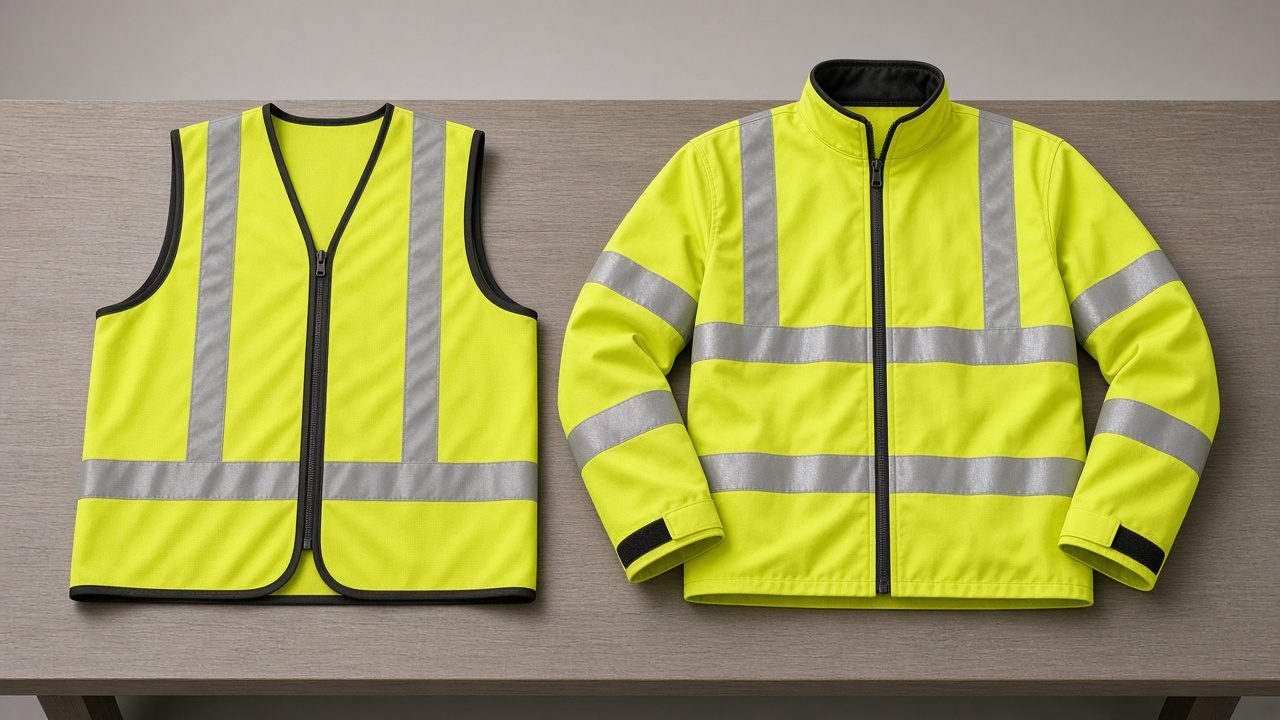
- Check garment stack — will the PCM vest sit under a high-visibility vest or be built as a combined hi-vis + cooling shell?
- Fit and mobility — adjustability, weight distribution, snag hazards around tools and harnesses.
- Safety review — SDS for pack contents; avoid claiming unrelated certifications; do not treat cooling gear as a substitute for medical protocols.
- Visibility requirements — if workers are near vehicles or traffic, keep ANSI/ISEA 107 (or regional EN ISO 20471) hi-vis selection separate and labeled correctly.
- Spare and swap SOP — who regenerates packs, how packs are tracked as “charged,” and when to stop work if cooling capacity is gone.
Related reading on reflective.cn
For a broader buyer overview that pairs with this temperature-and-duration focus, see our earlier guide: PCM Cooling Vests Explained: How They Work and How to Choose One.
Soft bridge: heat safety plus high-visibility for construction crews
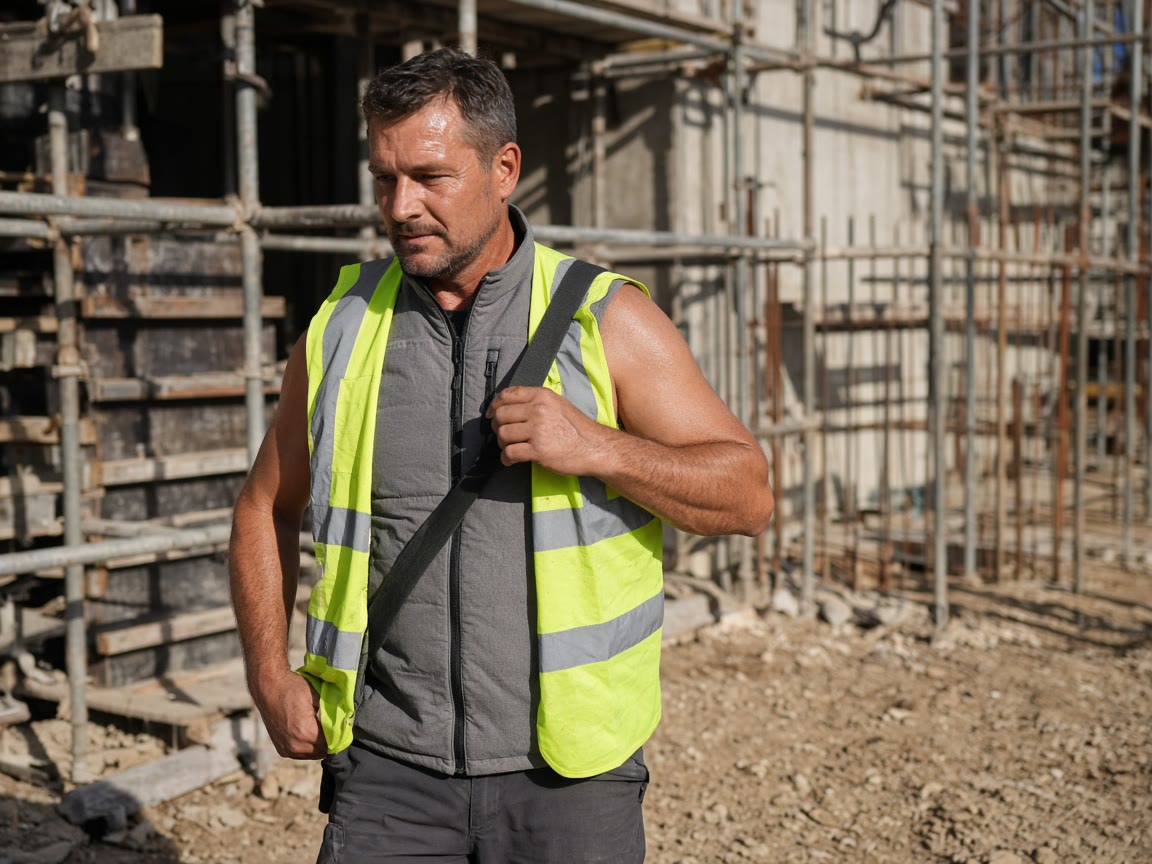
On many sites the same worker faces two simultaneous risks: heat illness and low conspicuity near vehicles or equipment. A practical sourcing pattern is:
- Outer high-visibility layer that meets the site’s labeled performance class / type
- Inner or integrated PCM / phase-change pack system sized for the shift’s recharge plan
Ningbo Jiangbei Shiquan Gift (brand Yolite, reflective.cn) designs, makes, and sells reflective safety gifts and high-visibility PPE (wristbands, hangers, patches, vests, LED warning products), with Scotchlite-class reflective materials and hi-vis frameworks such as EN ISO 20471 / EN1150 / EN13356 where they apply to the category. This article does not claim Yolite already markets a named PCM cooling-vest SKU or certified PCM system.
If you are building a custom or OEM brief that combines construction heat management with high-visibility vest construction—pocket maps for cooling inserts, reflective tape layout, fabric stack, private label—you can inquire through reflective.cn with your temperature band, shift length, visibility class, and volume. Share real site constraints; avoid accepting invented performance numbers from any supplier without a trial.
FAQ
What does PCM mean in a cooling vest?
PCM means phase-change material. In a cooling vest, sealed packs absorb heat while melting from solid to liquid at a designed temperature, acting as a portable heat sink without pumps or batteries.
How long does a PCM cooling vest last on one charge?
Expect a condition-dependent window. DHS’s TechNote cites about two to four hours of relatively constant temperature for PCM cooling vests depending on operating conditions. Heavier work, hotter environments, less pack mass, or poor contact shorten that window.
What temperature do PCM cooling packs run at?
Engineered melting points commonly fall near the 58–82°F range in DHS’s summary of PCM cooling systems. Individual commercial lines may offer several labeled setpoints; specify the temperature you need rather than assuming one industry default.
Are PCM cooling vests better than evaporative vests?
They solve different problems. PCM works when humidity is high or when packs sit under protective clothing that blocks evaporation. Evaporative vests are often lighter and cheaper when dry airflow is available. Many programs keep both options.
Can cooling vests replace water, rest, and shade?
No. OSHA frames special cooling devices as limited supplements after engineering and work-practice controls. NIOSH likewise treats personal cooling systems as auxiliary tools within a broader heat-stress program.
How do I combine a PCM vest with a high-visibility safety vest?
Common patterns are a slim PCM carrier under a compliant hi-vis vest, or a custom shell that hosts both reflective tape and insert pockets. Keep visibility labeling (ANSI/ISEA 107 or EN ISO 20471 class/type as required) based on the outer compliant garment configuration you actually wear—and treat PCM performance as a separate heat-management specification.
Sources
- U.S. Department of Homeland Security, SAVER TechNote — *Personal Cooling Garments* (April 2025). https://www.dhs.gov/sites/default/files/2025-05/25_0520_st_coolinggarmentstn.pdf
- NIOSH — *Criteria for a Recommended Standard: Occupational Exposure to Heat and Hot Environments* (DHHS/NIOSH Publication 2016-106). https://www.cdc.gov/niosh/docs/2016-106/pdfs/2016-106.pdf?id=10.26616/NIOSHPUB2016106l
- CDC/NIOSH — *PPE Heat Burden | Heat Stress*. https://www.cdc.gov/niosh/heat-stress/recommendations/ppe.html
- OSHA — *Heat — Engineering Controls, Work Practices, and Personal Protective Equipment*. https://www.osha.gov/heat-exposure/controls
- Itani, M.; Ghaddar, N.; Ouahrani, D.; et al. — *Effect of PCM packet mass and melting temperature on cooling vest performance* (Qatar University / ASHRAE-related record). http://hdl.handle.net/10576/22749
- ASTM F2300-10 (2022) — *Standard Test Method for Measuring the Performance of Personal Cooling Systems Using Physiological Testing* (named in DHS SAVER TechNote only; not linked to the DHS PDF as if it were the ASTM standard text).
- Techniche — CoolPax phase-change cooling technology overview (commercial example setpoints / activation notes). https://techniche-intl.com/our-technology/phase-change-cooling