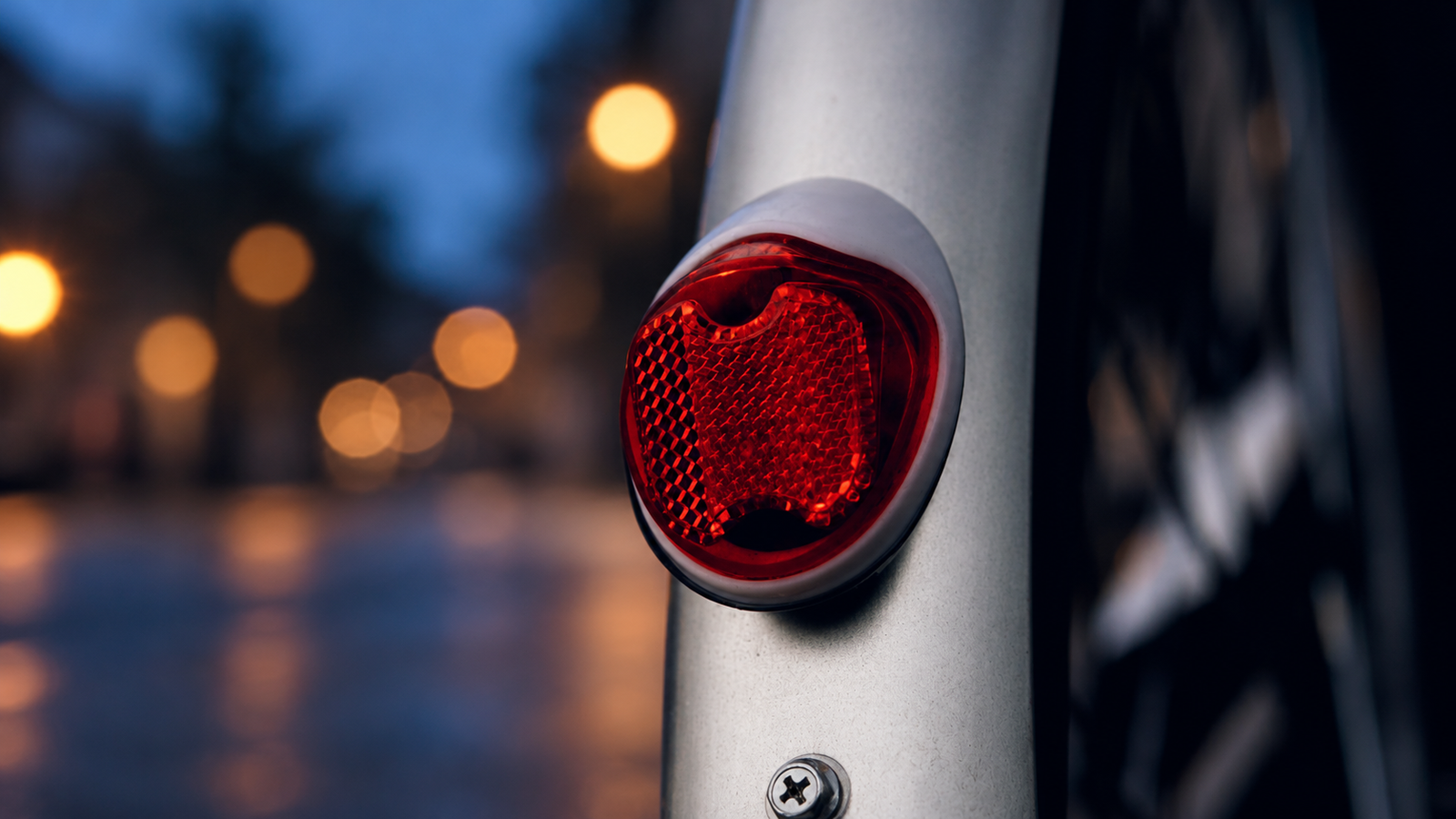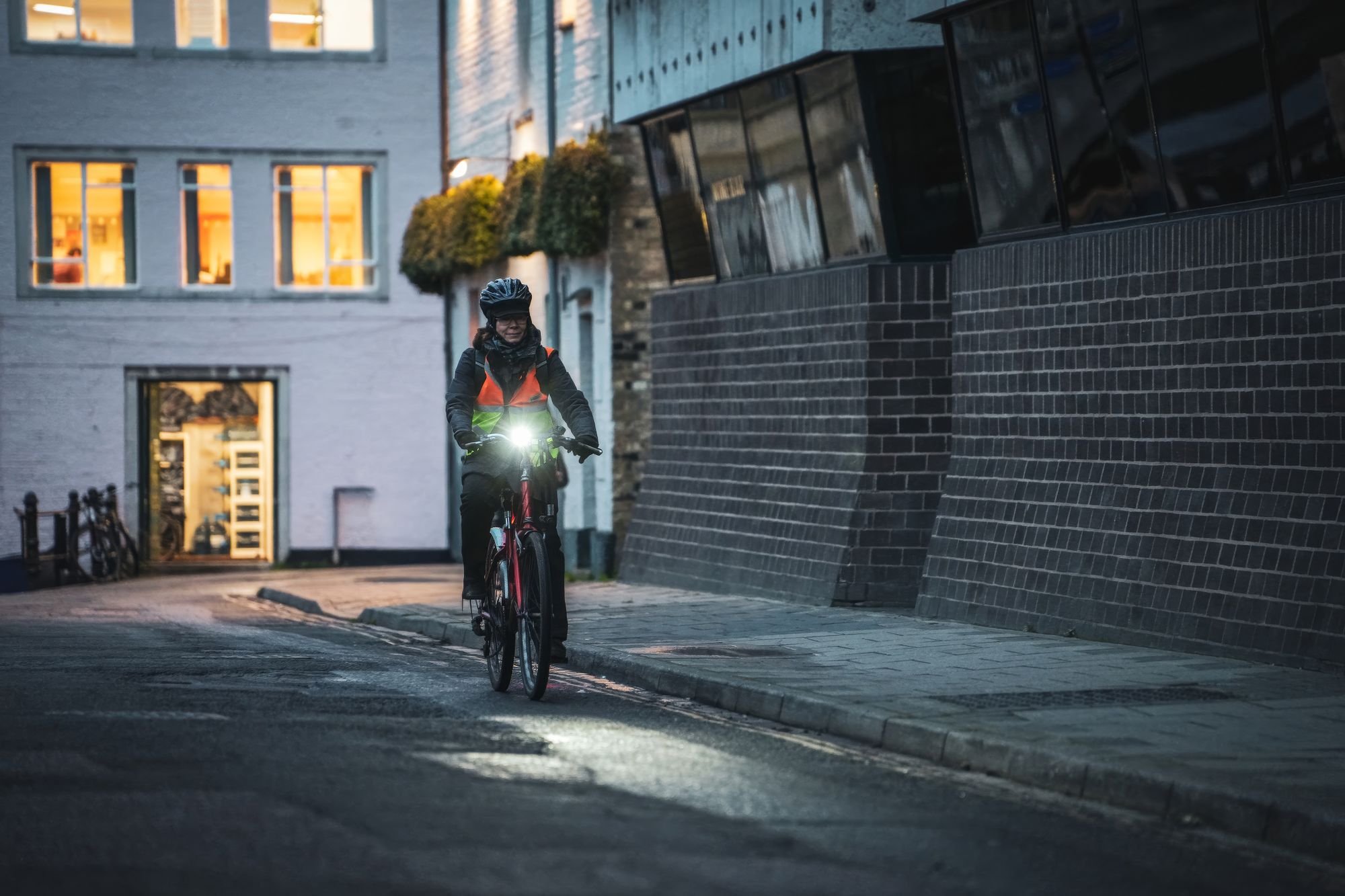
A reflective vest with LED lights combines passive retroreflective material, which shines back when headlights hit it, with small battery-powered lights that are visible even when no light is pointed at the wearer. That combination is why LED vests are popular with night runners, dog walkers, cyclists, event stewards and school groups. It also makes the vest an electronic product, which changes how you design, test, label and ship it compared with an ordinary reflective vest.
This guide is for brands, retailers, distributors and promotional buyers sourcing LED reflective vests from a factory. It covers when lights really help, battery and charging choices, water resistance, the compliance boundary between reflective standards and electrical rules, and a checklist for your first sample. For the wearer’s side of the story, see our article on how a running vest with light improves visibility.
Reflective vs LED: What Each Part Does
Retroreflective material only works when light reaches it and the observer is close to the light source, which is exactly the situation of a driver behind headlights. It needs no power and lasts as long as the vest. LEDs work the other way: they emit their own light, so they can be seen from the side, from above, by other pedestrians and cyclists without lights, and before a car’s headlights reach the wearer. Flashing modes also attract attention. The weak points are batteries, water and durability.
| Feature | Retroreflective material | LED lights |
|---|---|---|
| Needs an outside light source | Yes, best when the light is near the observer | No, emits its own light |
| Seen from the side or by unlit road users | Limited | Yes |
| Power and maintenance | None | Charging or battery replacement |
| Washing | Machine washable within its rating | Electronics must be removed or the vest hand-cleaned |
| Counted by EN ISO 20471 / EN 17353 | Yes, as tested material areas | No, active lighting is outside these standards |
The practical conclusion: LEDs should be added to a vest that is already visible, never used to replace reflective area.
Common LED Vest Designs
- Running and harness vests: lightweight elastic straps or mesh with reflective tape and an LED strip or light pods front and back. Compare our USB rechargeable reflective running light vest and the reflective LED harness.
- Belt-style sports vests: a waist belt with shoulder straps and lights, suited to runners who dislike full vests. See the LED safety belt sports vest.
- Full mesh or fabric vests: a standard reflective vest with an LED module or fibre-optic strip sewn into a sleeve, used for walking groups, events and promotional orders. Our guide to reflective vests for walking covers fit and layouts.
Batteries and Charging
The battery decides most of the cost, the shipping rules and the customer reviews. There are two common choices:
- Replaceable coin cells or AAA batteries: simple and cheap, and easy for the user to replace. Coin cells must be in a battery compartment that young children cannot open, and the packaging needs the right warnings for your market.
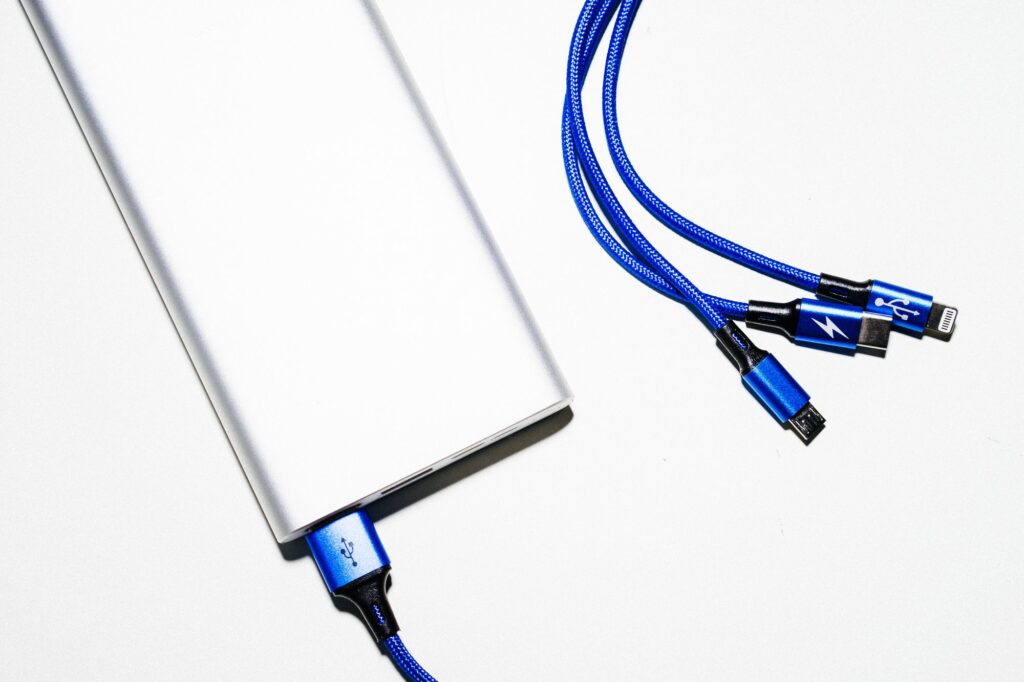
- Built-in rechargeable lithium battery: charged by USB, usually USB-C on newer designs. Ask for the cell’s capacity, expected run time per mode, charging time and the number of charge cycles. Lithium cells and batteries must pass the UN 38.3 transport tests before they can be shipped, and the factory should provide the test summary. Many buyers also ask for IEC 62133-2 safety testing of the cell or pack.
Write the claimed run time per mode (steady, slow flash, fast flash) into the specification and check it on the sample. Do not print run times on packaging until they are measured.
Water Resistance, Washing and Durability
- IP rating: the protection of the light module against water and dust is expressed as an IP code under IEC 60529. A runner in rain needs at least splash resistance; ask what rating the module has been tested to rather than accepting “waterproof”.
- Removable electronics: the most practical design lets the user take out the light unit and wash the vest normally. If the lights are fixed, the care label must say how to clean it.
- Switch and port: a cover on the charging port and a switch that can be used with gloves both reduce returns.
- Strain points: wires and LED strips fail where they bend. Ask the factory how wires are routed and secured, and flex-test the sample.
Compliance: Where the Boundaries Are
An LED vest sits between two sets of rules, and buyers often mix them up.
- Visibility standards: EN ISO 20471 for occupational high-visibility clothing and EN 17353 for consumer enhanced-visibility equipment assess fluorescent and retroreflective materials and their layout. Lights are not part of what they measure, so the vest must meet the standard without the LEDs if you want to claim it. Our comparison of EN ISO 20471 and EN 17353 for reflective vests explains the classes and types.
- Electrical and battery rules: in the EU, products with electronics are typically assessed for electromagnetic compatibility (EMC Directive 2014/30/EU) and restricted substances (RoHS Directive 2011/65/EU), and fall under the WEEE Directive and the Batteries Regulation (EU) 2023/1542 for take-back and labelling. In the US, ask your test lab whether FCC Part 15 applies to the circuit.
- Children’s products: vests for children add rules on small parts, button batteries and chemicals. Tell the factory the age range at the start.
Which tests your order needs depends on the market and the exact design, so agree the list with your lab and the factory before bulk production.

Sampling Checklist for an LED Reflective Vest
- User and use: running, walking, cycling, events, school groups or promotional giveaways.
- Vest base: harness, belt, mesh or fabric vest; sizes and adjustment.
- Reflective layout: tape type, width and positions, and whether the vest must meet EN 17353 or EN ISO 20471 without lights.
- Light module: LED colour and positions, modes, brightness target, switch type and whether it is removable.
- Battery: type, capacity, run time per mode, charging connector and the test documents required (UN 38.3, IEC 62133-2).
- Water and washing: IP rating of the module and the care instructions.
- Market and labelling: destination countries, required marks, battery and disposal symbols, warnings and user manual language.
- Branding and packing: logo print, retail box or polybag, and how the battery is packed for shipping.
Frequently Asked Questions
Is a reflective vest with LED lights better than a normal reflective vest?
It adds visibility from the side and to road users without lights, and draws attention with flashing modes. It also adds batteries, charging and cost. For most buyers the best product is a properly reflective vest with lights added, not lights instead of reflective material.
Can an LED vest meet EN ISO 20471 or EN 17353?
The vest can be, if its fluorescent and reflective materials and layout pass the standard on their own. The LEDs are an extra and are not assessed by these visibility standards.
How long do the lights last on one charge?
It depends on the battery capacity, the number of LEDs and the mode; flashing modes usually run longer than steady mode. Ask for measured run times on your sample rather than relying on a catalogue figure.
Can LED vests be shipped by air?
Products containing lithium batteries can be shipped, but they must meet the dangerous goods packing and labelling rules, and the battery must have passed UN 38.3. Your forwarder will ask for the test summary.
Can YOLITE make custom LED reflective vests?
Yes. Share the vest style, light layout, battery choice and target market, and we will confirm MOQ, sampling, testing options and lead time. For simpler accessories, read about LED reflective slap wraps.
Request an LED Reflective Vest Quote
Tell YOLITE who will wear the vest, where it will be sold and how you want the lights to work. We can review reflective materials, LED modules, batteries, packaging and branding for your order. Contact us with your sketch, reference sample or target specification.
Sources and Scope
1. ISO, “EN ISO 20471:2013 — High visibility clothing — Test methods and requirements”; CEN, “EN 17353:2020 — Protective clothing — Enhanced visibility equipment for medium risk situations.”
2. United Nations, “Manual of Tests and Criteria”, Part III, sub-section 38.3 (lithium metal and lithium ion batteries); IEC 62133-2 — Safety requirements for portable sealed secondary lithium cells and batteries.
3. IEC 60529 — Degrees of protection provided by enclosures (IP Code).
4. European Union: Directive 2014/30/EU (EMC), Directive 2011/65/EU (RoHS), Directive 2012/19/EU (WEEE) and Regulation (EU) 2023/1542 on batteries; United States: 47 CFR Part 15 (FCC).
This article is a procurement guide, not legal advice or a substitute for the complete standards and regulations or for testing by an accredited laboratory. Requirements can vary by market, product type and standard edition.

AUTHOR
Jack Lee
Founder · Yolite Industrial Co., Ltd.
Reflective-products specialist since 2003, focused on reflective materials, high-visibility apparel, OEM customization, and practical product development for international buyers.