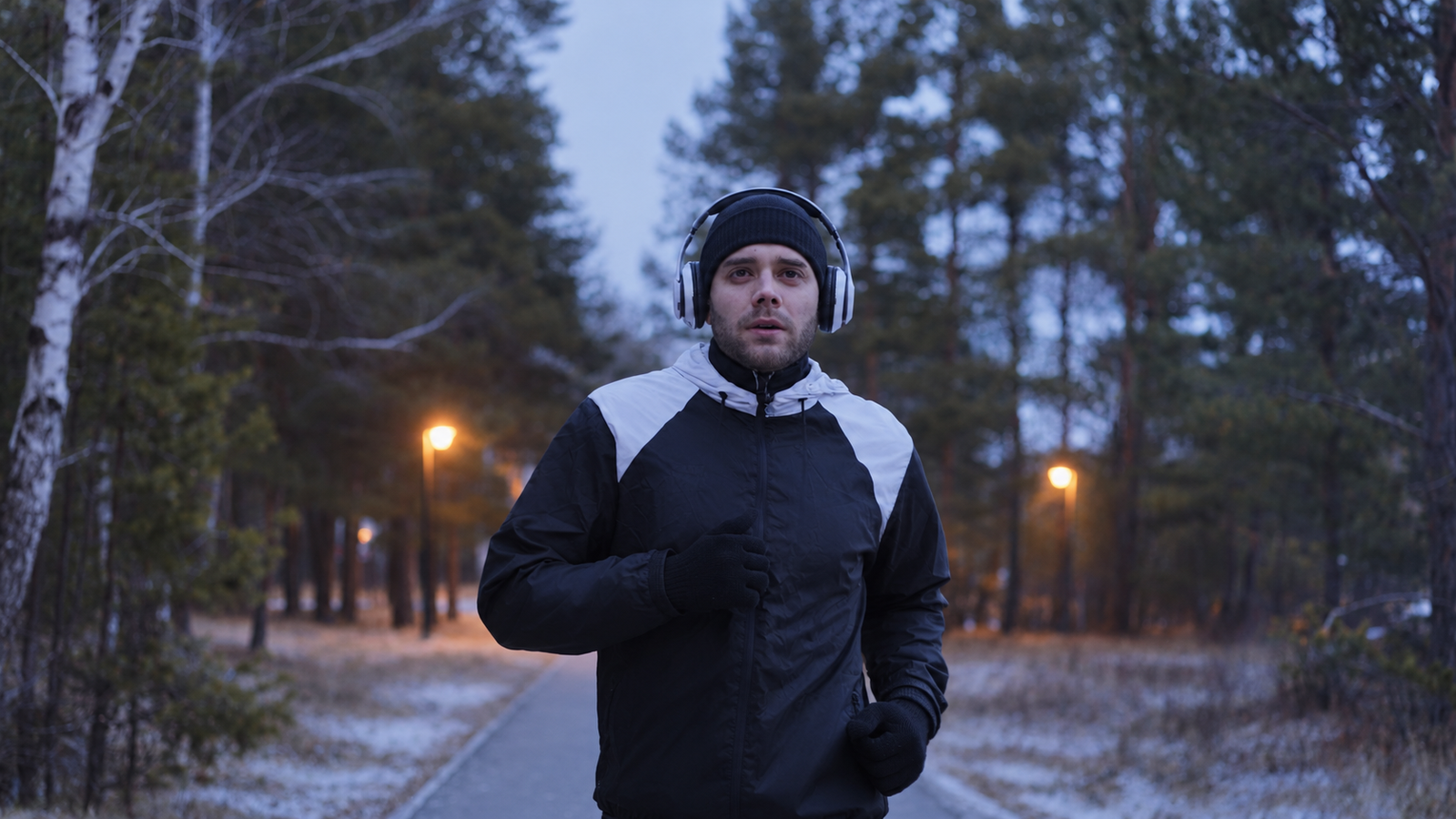
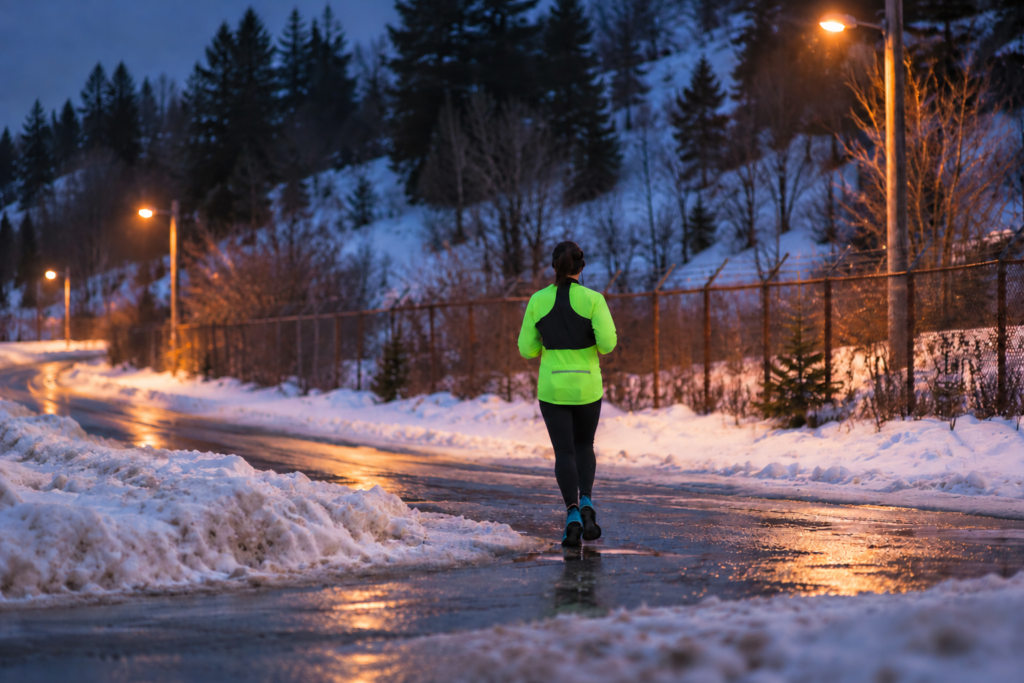
A reflective running jacket is a lightweight running shell with retroreflective trims, prints or panels that light up in vehicle headlights, so runners stay visible on dark winter mornings and evenings. For most runners, the darkest months are also the busiest training months, which makes this one of the most practical winter products a running, outdoor or sportswear brand can offer.
This guide is written for brands, running retailers, clubs and event organisers sourcing reflective running jackets. It covers where reflective material works best on a running jacket, which materials suit lightweight fabrics, what EN 17353 adds, and what to put in a sampling brief.
What Does a Reflective Running Jacket Need to Do?
A running jacket is a different product from a commuter or work jacket. Runners generate a lot of heat, move their arms and legs constantly and often run on roads and paths shared with traffic. A good winter design balances:
- Visibility in the dark: reflective material where it moves and outlines the body, not just a small logo.
- Visibility at dusk and dawn: fluorescent colour panels help before headlights are on.
- Breathability: vents, mesh zones and light fabrics so the runner does not overheat.
- Weather: windproof front panels and a water-resistant finish for cold, wet days.
- Weight and packability: runners notice every gram and often tie a jacket round the waist.
| Jacket style | Typical fabric | Suitable reflective method | Best for |
|---|---|---|---|
| Packable wind shell | Light woven nylon or polyester | Heat transfer prints, piping | Mild winters, racing, layering |
| Thermal softshell | Stretch woven with brushed back | Segmented heat transfer tape | Cold, dry winter runs |
| Waterproof running jacket | Lightweight laminate, taped seams | Bonded trims, reflective seam tape | Wet climates |
| All-over reflective jacket | Reflective printed or coated fabric | Whole body panels | Statement products, urban running |
Where Should Reflective Material Go on a Running Jacket?
Research on night-time visibility consistently finds that drivers recognise a person sooner when reflective material is placed on moving joints, an effect often called “biomotion”. For a running jacket, that means:
- Sleeves and cuffs: the arms swing with every stride, creating a moving pattern drivers read as human.
- Upper back and shoulders: visible to traffic coming from behind, the most common risk for road runners.
- Front chest: a stripe or print visible to oncoming traffic.
- Side seams and hem: visibility from the side at crossings.
Pair the jacket with reflective tights or ankle bands to add leg movement. Our article on why reflective gear matters for night running covers the wider kit, and reflective armbands for runners are a low-cost add-on for retail bundles.

Which Reflective Materials Suit Running Jackets?
- Heat transfer film: thin, light and flexible, ideal for logos, dots and patterns on wind shells. Check bond strength on water-repellent finishes. See our guide to reflective HTV.
- Segmented reflective tape: broken into small segments so it stretches and lets air through, a good choice on softshells.
- Reflective piping and zip tape: discreet lines along seams and closures that do not add stiffness.
- Reflective printing: reflective inks for large graphics; brightness is usually lower than tape, so test it.
- Reflective fabric: panels or whole jackets that look grey or coloured by day and shine at night.
For a side-by-side comparison of sewing, heat transfer and iron-on methods, read reflective tape for clothing. Wash durability matters on running jackets because they are washed after almost every run; ask for the rated number of wash cycles and follow our reflective jacket washing guide for the care label.
Does a Running Jacket Need EN 17353?
A running jacket sold simply as “reflective” does not need certification, but it must not claim a standard or class it has not passed. If you want a verifiable visibility claim for the European market, EN 17353:2020 is the relevant standard. It covers enhanced-visibility equipment for non-occupational users such as runners, cyclists and walkers in medium-risk situations, and defines:
- Type A for dark conditions, using retroreflective material;
- Type B for daylight, using fluorescent material;
- Type AB for both, combining the two.
Because winter runs often start in daylight and finish in the dark, a Type AB design is usually the most useful claim for a running jacket. Our men’s reflective jacket guide explains how EN 17353 differs from occupational EN ISO 20471.
Sampling Brief for a Reflective Running Jacket
- Use: road, trail or track running; climate and temperature range.
- Fabric: weight, stretch, wind and water resistance, colour (fluorescent or dark).
- Reflective layout: sketch with positions on sleeves, back, chest and sides, and the material for each.
- Features: hood or collar, thumb loops, rear pocket, phone pocket, vents, packing pocket.
- Fit and sizing: men’s, women’s or unisex grading; room for a base layer.
- Standard: whether EN 17353 testing is needed and for which type.
- Branding and packaging: logo method, hangtags and care labels.
Related YOLITE products include the reflective sports jacket and the lightweight reflective running vest, which many brands sell alongside a jacket.
Frequently Asked Questions
Is a black reflective running jacket safe at night?
It works once headlights hit the reflective areas, but it gives little visibility at dusk or on lit streets where drivers do not use full beams. Adding fluorescent panels or a bright colour improves visibility in more conditions.
How much reflective material does a running jacket need?
There is no single figure for uncertified jackets. Prioritise sleeves, back and shoulders. If you need a measurable claim, design to EN 17353, which sets minimum areas for each type and size.
Will reflective trims stay bright after many washes?
That depends on the material and how it is applied. Ask the supplier for the wash rating of the tape or film, and run your own wash tests on samples before approving bulk production.
Should a running jacket have LED lights?
Built-in lights add weight, washing problems and battery rules. Many brands keep the jacket passive and sell a separate LED harness or armband instead.
Can YOLITE make private-label reflective running jackets?
Yes. Send your design, fabric, reflective layout and target market, and we will confirm MOQ, sampling, testing options and lead time for your project.
Request a Reflective Running Jacket Quote
Tell YOLITE who will wear the jacket, where they run and where the jacket will be sold. We can review fabrics, reflective materials, branding and packaging for your order. Contact us with your tech pack or reference sample to get started.
Sources and Scope
1. European Committee for Standardization (CEN), “EN 17353:2020 — Protective clothing — Enhanced visibility equipment for medium risk situations — Test methods and requirements.”
2. Wood, J. M. et al., “Using biological motion to enhance the conspicuity of roadway workers,” Accident Analysis & Prevention, 2011, and related studies on biomotion and pedestrian visibility at night.
This article is a procurement guide, not a substitute for the complete standard or for testing by an accredited laboratory. Requirements can vary by market, product type and standard edition.

AUTHOR
Jack Lee
Founder · Yolite Industrial Co., Ltd.
Reflective-products specialist since 2003, focused on reflective materials, high-visibility apparel, OEM customization, and practical product development for international buyers.