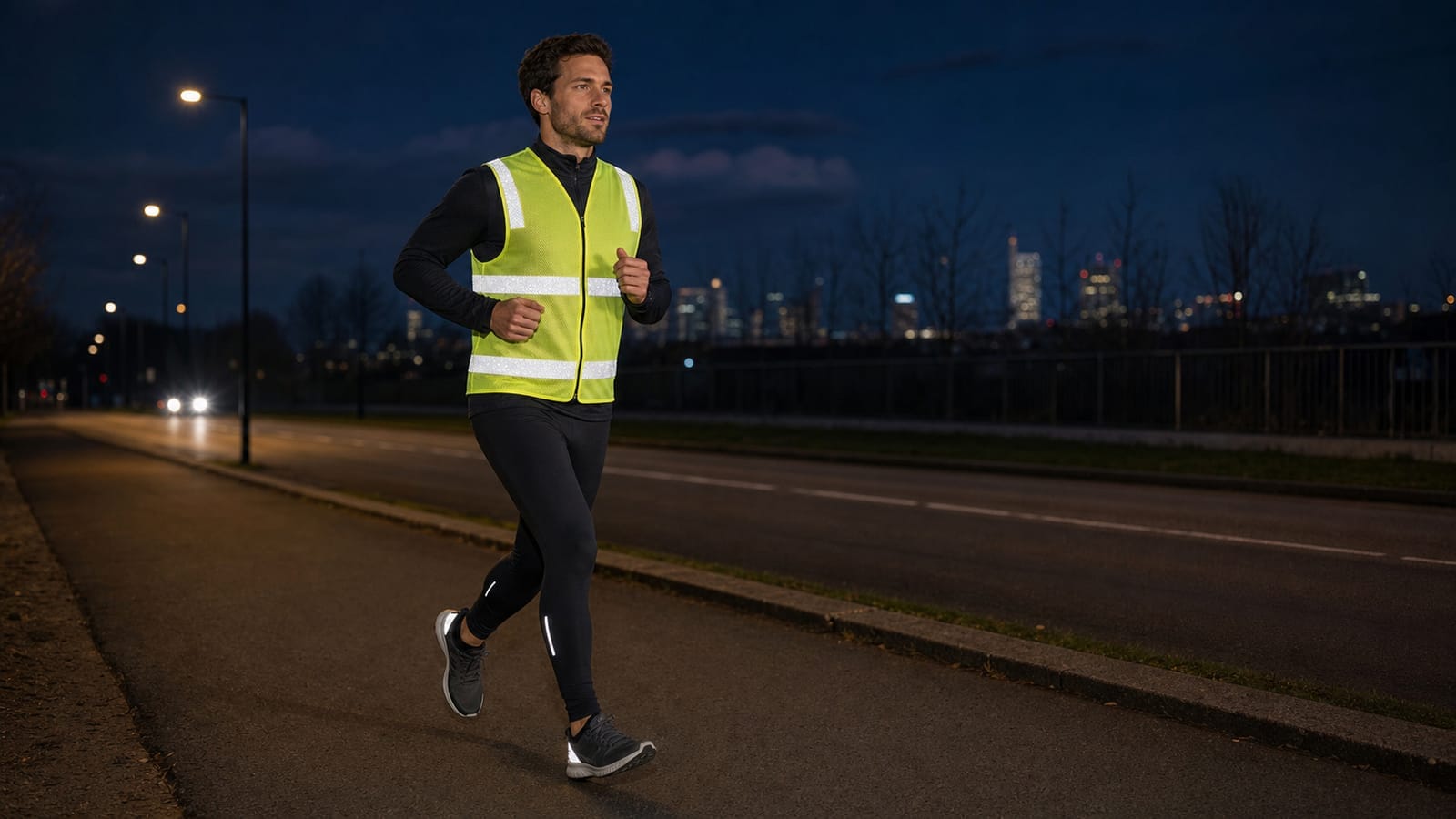
Choosing reflective accessories for an import or distribution range starts with a practical question: where will the customer attach them? A trouser band, a backpack pendant and a bicycle sticker need different fastening methods, packaging instructions and sample checks. Grouping everything under “reflective gear” can hide those differences.
For brands selling reflective jackets, accessories can extend the range to bags, footwear and equipment. For garment makers, they also introduce questions about reflective fabric, tape and transfer film. This guide organizes the options by use, attachment and customization so buyers can prepare a clearer product brief.
Reflective accessories for walking, running and cycling
Start with the activity, then define what the accessory attaches to. Walking, running and cycling may share product formats, but the fit and attachment requirements should be assessed separately.
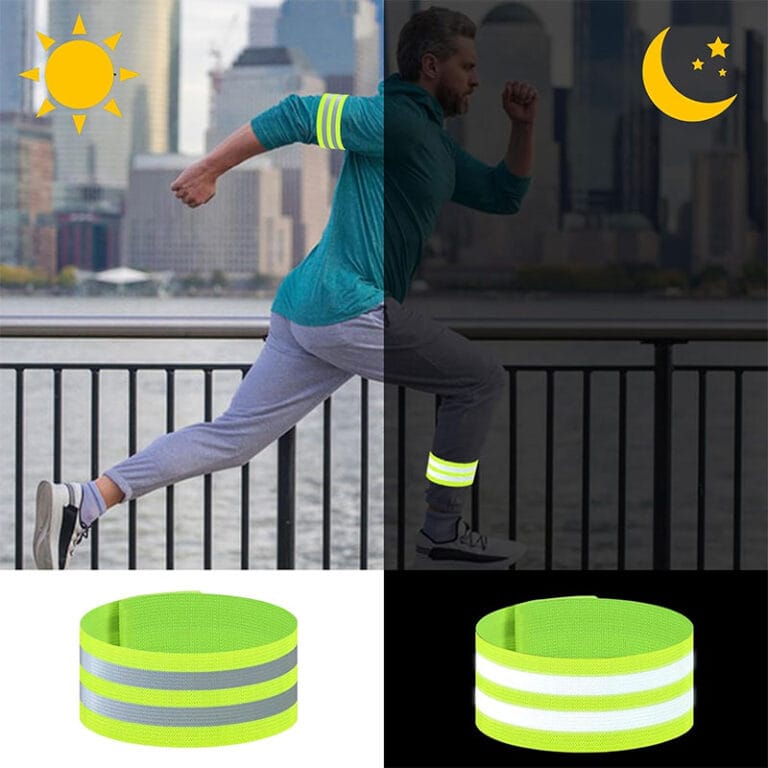
- Walking: Consider jacket attachments, bag reflectors, bands and removable sashes. Check how each item fits over the clothing customers expect to wear.
- Running: Assess bands, laces and lightweight wearable formats for movement, adjustment and contact with the wearer.
- Cycling: Separate accessories worn on the body or backpack from products fitted directly to the bicycle or helmet.
Reflective materials return incident light toward its source; powered lights emit light. A product combining both needs a brief covering both functions. Do not use a photograph of an illuminated product as evidence of its reflective performance.
For a walking-focused range, the guide to reflective gear for walking at night provides a useful companion to the attachment-based selection process below.
Where accessories attach: jackets, bags, strollers and bicycles
When planning a walking range, consider where reflectors and lights would attach to coats, jackets, bags or strollers. This expands the buying brief beyond items worn directly on the body. A distributor can organize products around the object they fit, making the intended use easier to explain on packaging.
Jackets and bags
Identify the actual mounting point: a zipper pull, fabric loop, strap or suitable garment edge. Ask for a sample fitted to that location. Check whether the accessory faces outward, becomes covered by clothing or rotates behind the bag during movement.
Specify the attachment hardware separately from the reflective component. A suitable reflector shape does not establish that its clip, loop or fastener will fit the intended jacket or backpack.
Strollers and other carried equipment
For stroller applications, assess the proposed mounting position with the stroller open and folded. Check that the accessory does not interfere with folding mechanisms, brakes or restraints. Define whether the customer removes it between uses or leaves it attached.
Bicycles and helmets
A cycling range can be organized into body and backpack accessories and adhesive reflectors, with each adhesive product assessed for its intended mounting location. Keep those categories separate in your specification. For adhesive products, identify the exact substrate, surface shape and installation position. For helmets, establish compatibility with the helmet manufacturer’s instructions before selecting an adhesive attachment.
Bands, sashes, laces, stickers and lights: organizing an assortment
A useful assortment gives each format a clear job. Avoid adding similar-looking products unless the fastening method, mounting position or intended use gives buyers a reason to choose between them.
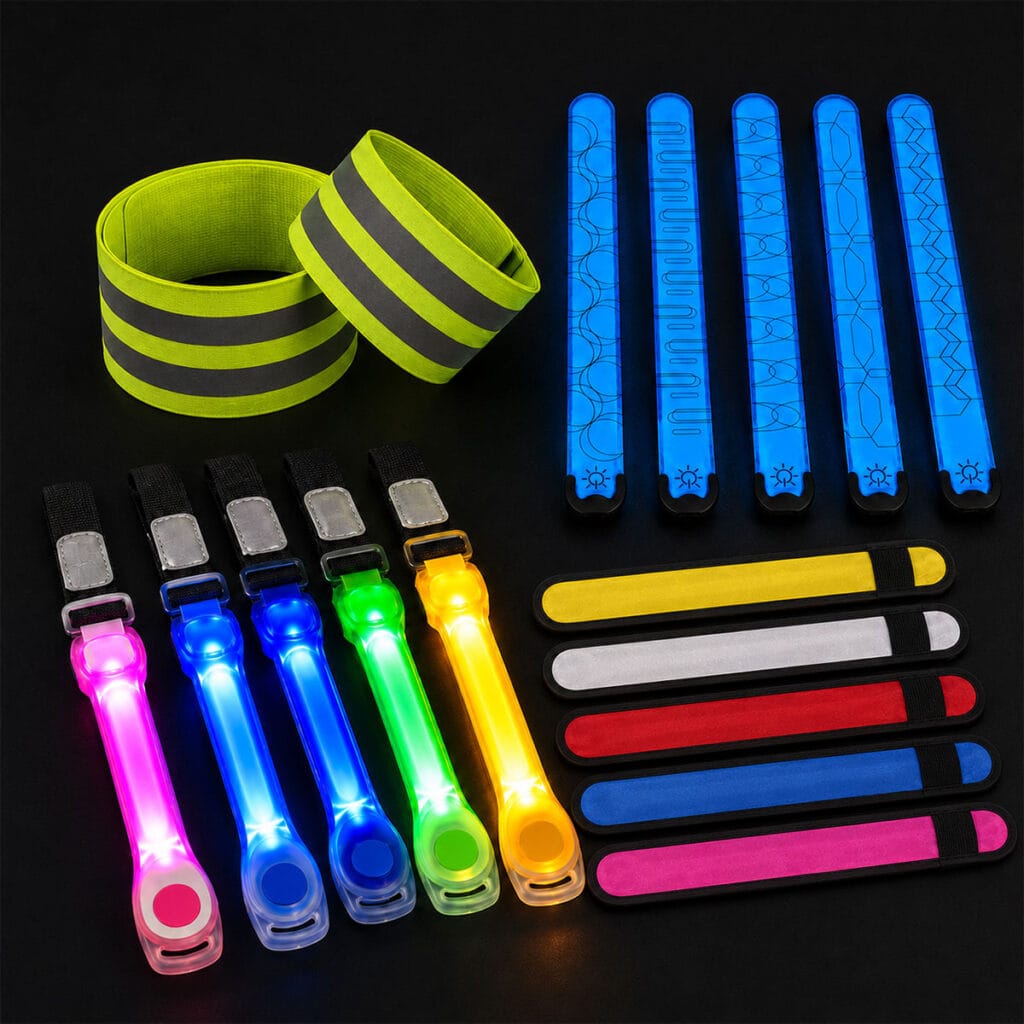
- Bands: Specify the intended body location, adjustment range and fastening method. Assess fit over the relevant clothing.
- Sashes and cross belts: Review the complete worn layout, including adjustment hardware and interruptions in the reflective material.
- Laces: Check compatibility with the intended footwear, the tying method and how much material remains exposed after threading.
- Stickers: Specify the mounting surface, shape and application instructions. Treat each proposed substrate as a separate compatibility question.
- Lights and combined products: Include power supply, controls, charging or battery replacement, and care instructions in the purchasing brief.
For an adjustable cycling trouser band with hook-and-loop fastening, ask for the width and adjustment range of the sample under review. Those dimensions describe that item only. They offer a concrete comparison point, but the required fit should come from your intended wearer and clothing.
When comparing reflective bands, assess the fastening method and whether the design includes LEDs. These represent separate choices: how the product closes and whether it includes a powered light. Keep both attributes visible in your product data.
For powered wearable options, use the reflective vest with LED lights guide to develop questions about batteries, water exposure and compliance documentation.
A cross-belt detail to address before sampling
In our experience with reflective cross belts and harnesses, buckles create gaps in the reflective band. Assess how buckle size affects the gaps in the finished reflective layout. Include the buckle and adjuster dimensions in the drawing before approving the overall appearance. Material selection alone does not resolve the finished layout.
Customization examples: printed keychains and fabric accessories
Customization should begin with the construction and intended use. Define the shape, attachment, artwork position and printing method together. A logo mockup alone cannot show how the finished accessory hangs or which parts of its surface remain exposed.
Personalized keychains
A possible development brief is a heart-shaped reflector keychain with a chosen color and personalized artwork, subject to confirmation of the available construction and printing options. This example combines shape, color choice and artwork in a compact accessory.
For a comparable development brief, ask the supplier to identify the printable area, attachment position and proposed reflective construction. Review the decorated sample as a finished product, including its attachment, rather than approving only an artwork file.
Reflective fabric beyond sports products
A holder for acrylic display figures is a possible reflective fabric concept to discuss with a supplier, including the available colors and printing options. It provides an example of reflective material incorporated into a merchandise accessory.
Decorative earrings are another concept to explore when discussing uses for reflective material. Such examples can inform design discussions, but decorative use does not establish suitability for a safety claim. Define the intended function and supporting evidence before deciding how to describe the finished product.
For fabric accessories, ask how the selected material will be cut, joined and printed. Specify whether the item will be washed with a garment, cleaned separately or removed before washing. These details belong in the development brief alongside the artwork.
Regional product patterns in Germany, Spain and Japan
Regional listings can suggest ways to organize a catalogue. They should not be treated as measurements of national demand or customer preference.
- Germany: When planning a range for this market, consider whether accessories for everyday bags, backpacks, caps and gloves fit your sales channel alongside cycling products. This suggests an everyday-carry category worth considering alongside sports products.
- Spain: When planning a range for this market, consider organizing products by intended application, such as cycling, running, workplace or motorcycle use. An application-based catalogue can keep related products together while preserving their different attachment requirements.
- Japan: The band, personalized keychain, printed fabric holder and earring examples above illustrate a mix of functional and decorative formats. Keep those intended uses clear in product descriptions.
For an importer, the practical next step is to select examples that fit the existing sales channel. A garment distributor might prioritize jacket-compatible accessories; a cycling distributor might organize the range around body, backpack and bicycle attachment points.
Connecting accessories to reflective jackets and materials
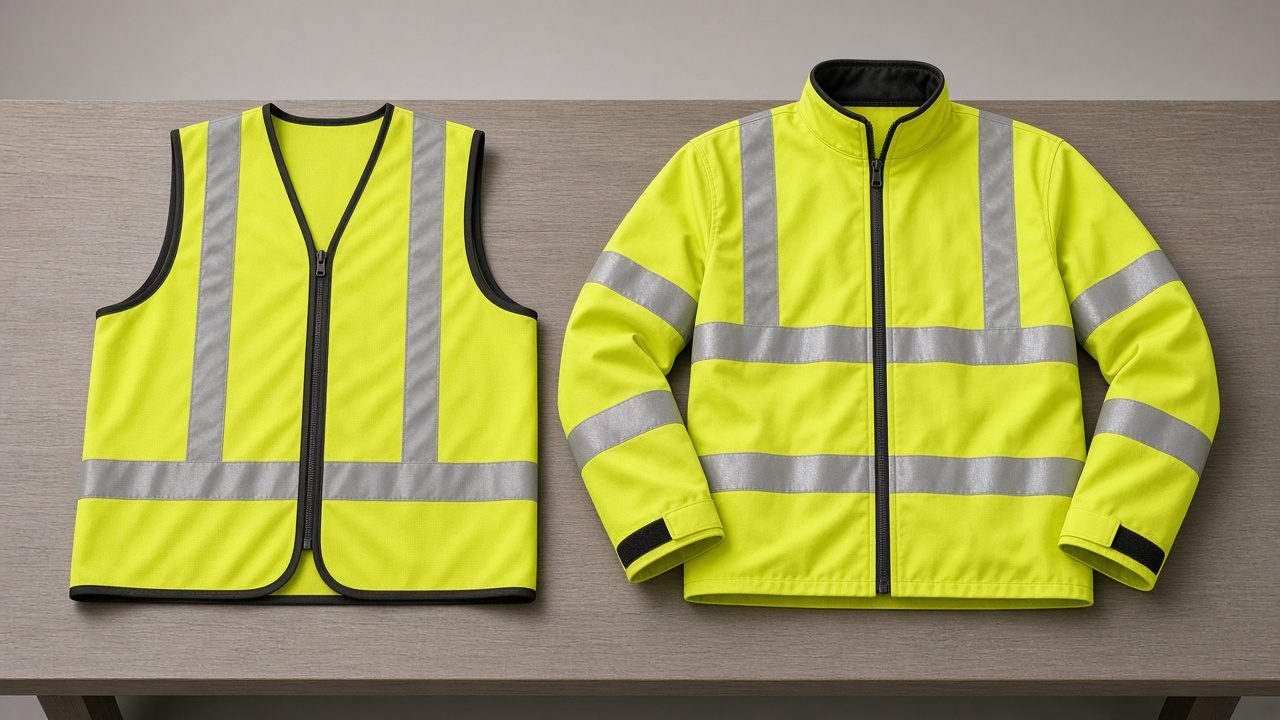
Yolite is a Chinese manufacturer of reflective safety products founded in 2003. Reflective jackets are its core product, with reflective vests and safety apparel also within the range. The company supplies reflective tape, reflective fabric and reflective heat transfer film for garment makers.
Yolite supports OEM/ODM services, custom logos and custom designs for brands and distributors. For an accessory project, define the required construction and confirm manufacturing scope during the enquiry. The formats discussed in this guide are selection examples, not a statement that every format is available from Yolite.
Yolite holds EN ISO 20471 and EN 17353 certificates and has a BSCI audit. These are company-level facts; they do not establish certification of every accessory discussed here. Request documentation applicable to the exact product being purchased. The BSCI audit is separate from product certification.
When developing accessories alongside apparel, coordinate mounting points, artwork and care instructions with the jacket design. The reflective clothing sourcing guide for walkers helps frame the garment brief, while the reflective webbing guide supports discussions about strap-based constructions.
What to include in a supplier enquiry
- The intended activity and exact attachment location.
- A drawing showing dimensions, adjustment and fastening hardware.
- The reflective material construction and proposed artwork placement.
- Expected cleaning, handling and storage conditions.
- The destination market, intended product claims and required documentation.
- Packaging requirements and the checks needed before sample approval.
This gives the supplier a defined product to evaluate and gives your purchasing team a consistent basis for comparing proposals.
FAQ
How should a distributor choose an initial reflective accessory range?
Start with the products customers already buy. For a reflective jacket range, assess compatible bands, sashes and bag attachments. Give each accessory a distinct use and verify its fit on the intended garment or equipment.
Can the same reflective sticker be used on any surface?
Do not assume universal compatibility. Specify the substrate, surface shape and installation conditions, then request evidence or sample evaluation for that application. Helmet applications also need to follow the helmet manufacturer’s instructions.
Can reflective accessories carry a custom logo?
Printed accessory examples include personalized keychains and reflective fabric products. The available method depends on the selected construction. Confirm artwork position and assess the finished decorated sample before approving production.
Does a company’s certificate cover every reflective accessory?
Company-level certificate information does not establish coverage of an unspecified product. Match the offered model and construction to the applicable documentation, and keep social audit information separate from product certification.