For walkers, being seen after dark is a life-safety issue. But for importers, distributors and activewear brands, reflective clothing for walkers is also a product category with specific technical requirements. Consumer guides list retail styles, but sourcing teams need to understand the reflective materials, design rules and European standards that separate a certified safety garment from a jacket with a few shiny strips. This article breaks down what B2B buyers should look for when specifying or manufacturing reflective jackets and apparel for pedestrians and fitness walkers.
Why Walkers Need Specialized Reflective Clothing
Drivers see reflective clothing much earlier than bright or dark clothing. Studies cited by road safety organisations show reflective clothing can be detected at a distance potentially greater than bright clothing and up to a distance that depends on viewing conditions and can be greater than dark clothing in night traffic. Pedestrians wearing only bright clothing are typically visible to drivers from a distance that depends on lighting and road conditions. At urban speeds, that may not give a driver enough time to stop. Tests by the Japan Automobile Federation found up to a potentially substantial difference in driver detection distance between bright and dark clothing at night.
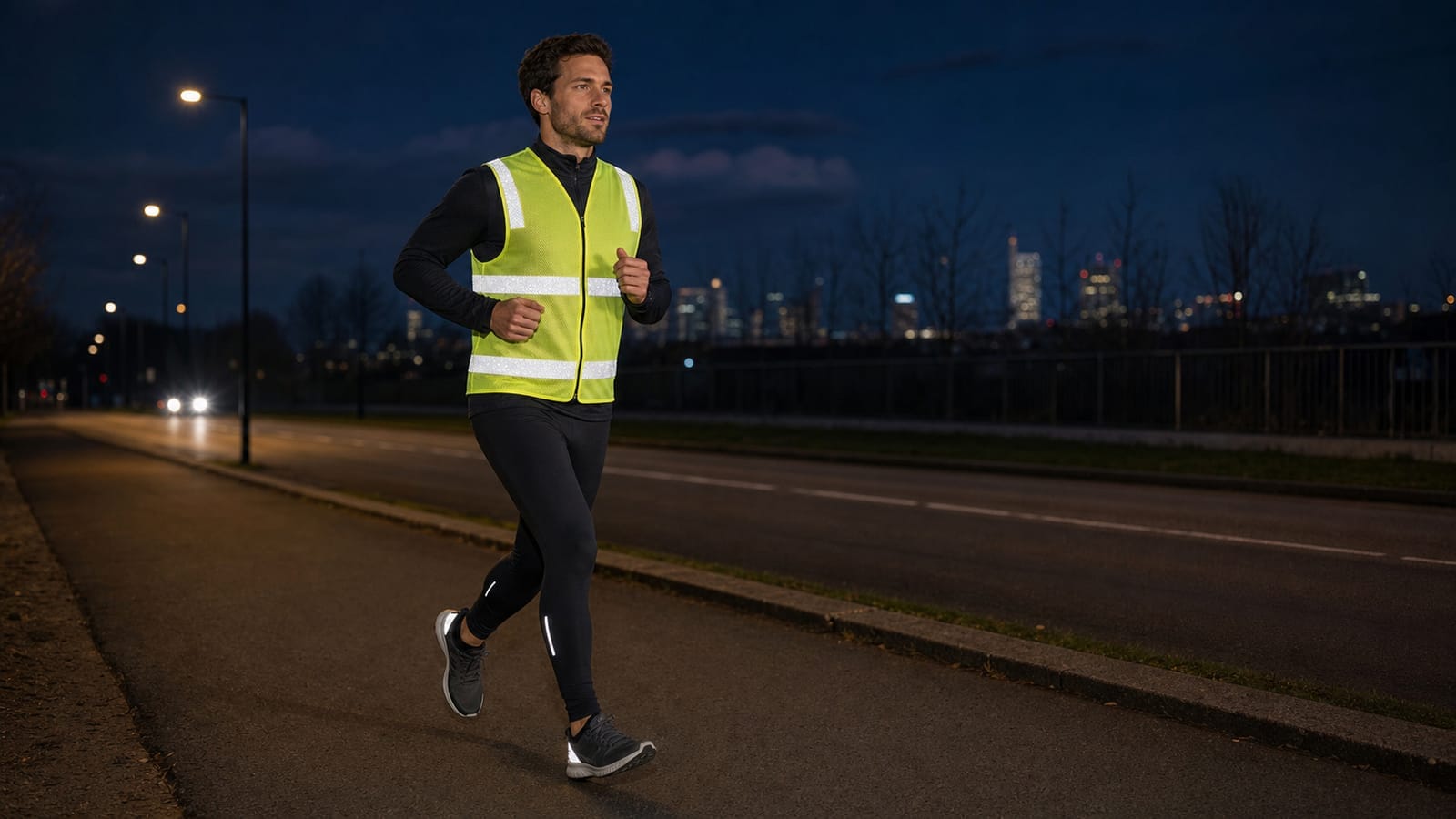
Reflectors must be visible from all sides. A jacket with reflective tape only on the front does not protect a walker when a car approaches from behind or from the side. Bands around moving joints, such as wrists and ankles, are highly effective because motion draws the eye. For B2B buyers, this means demand is growing for jackets and vests that provide 360-degree coverage, not just a small logo on the chest.
There is also a newer concern: ongoing studies suggest that certain automatic emergency braking (AEB) systems in cars may not detect pedestrians wearing highly reflective clothing as effectively as expected. While reflectors still improve human driver detection, brands and buyers should stay informed about how vehicle sensors interact with reflective surfaces.
How Does Reflective Clothing Work? (Retroreflection Explained)
Reflective clothing works through retroreflection. Unlike a bright colour, which scatters light in many directions, a retroreflective surface sends light back toward its source. When a car’s headlights hit a retroreflective tape or fabric, the light bounces back to the driver’s eyes. This is why the material appears bright only when the viewer is near the light source.

Two common retroreflective technologies are used in apparel: glass bead and microprismatic. Glass bead materials use thousands of tiny spheres bonded to a backing. Microprismatic materials use moulded cube corners that return more light over a wider angle. Both are suitable for walking apparel, but microprismatic materials often perform better at long distances and in wet conditions. The choice depends on the garment’s intended use and price point.
What Materials Are Used in Reflective Clothing?
Most reflective jackets for walkers use one or more of these materials:
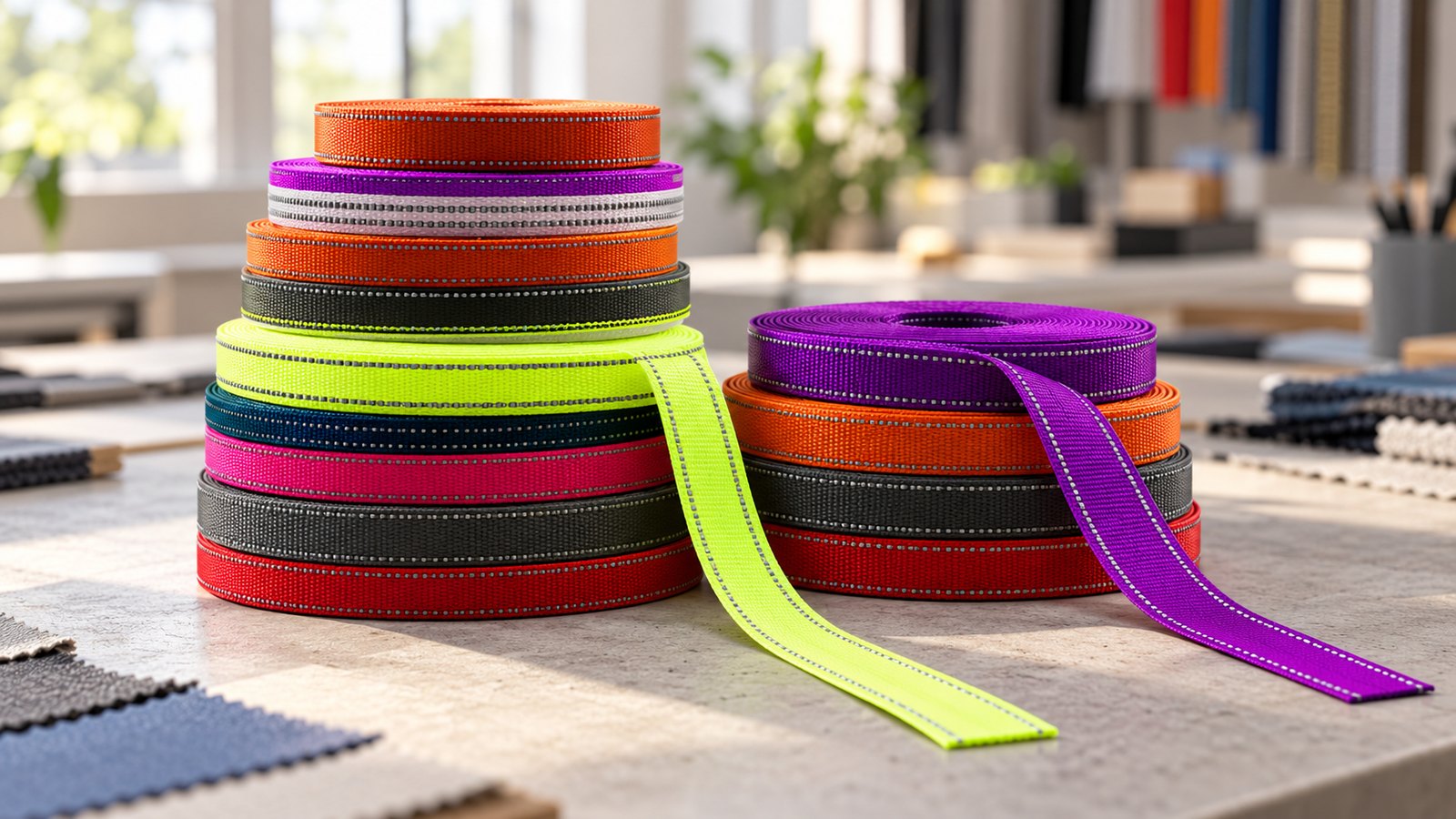
- Reflective tape: sew-on, iron-on, or heat transfer. Sew-on tape is durable and common on jackets. Iron-on or heat transfer tape works for lightweight shells and limited wash cycles. See our guide to reflective tape for clothing for a detailed comparison.
- Reflective fabric: fabric with reflective yarns or printed reflective elements. It can be used for entire panels or subtle accents.
- Reflective heat transfer film: a thin film applied with heat, often used for logos, small trims, and complex shapes. It is not usually used for large safety areas because it may not meet minimum width and area rules without careful design.
Yolite supplies reflective tape, reflective fabric, and reflective heat transfer film to garment makers. The factory is a 3M customer and uses 3M Scotchlite reflective materials in many programs. When you specify 3M Scotchlite, you get a consistent, well-documented retroreflective performance, which helps with certification.
For walkers’ garments, reflective strips are generally wrapped around the torso or limbs to outline the human form. According to standard regulations, such strips must have a minimum width of a value our sales team can confirm for the applicable standard and garment type. For optimal safety and aesthetics, many brands choose bands between relatively narrow and wide, sewn onto highly durable fabric such as a polyester blend. The wider the band, the easier it is to see at a distance, but it also affects the garment’s look and flexibility.
Key Design Features for a Quality Reflective Jacket
When sourcing a reflective jacket for walkers, look beyond the reflective tape. The entire garment must support the reflective function and comfort.
- 360-degree visibility: Reflective elements must appear on front, back, and both sides. For jackets, this usually means horizontal bands around the torso, stripes on the sleeves, and sometimes vertical or diagonal accents on the back. See our reflective running jacket guide for brands for winter design examples.
- Placement on moving parts: Reflective bands on wrists, elbows, or ankles are highly effective because motion catches attention. Sleeves should have at least one reflective band near the cuff.
- Continuous bands with minimal gaps: Zippers, pockets, and seams can interrupt reflective stripes. For certified garments, the total gap in a torso band must stay within standard limits. In our experience, for reflective cross belts and harnesses, buckles create gaps in the reflective band; each gap must not exceed the individual gap limit specified by the applicable standard, and the sum of gaps around the torso must not exceed the total gap allowance for the applicable design. We advise keeping buckle length below the applicable gap limit, which our sales team can confirm for your design, to stay compliant. The same principle applies to jacket front zippers and side panels.
- Durable outer fabric: The base fabric must withstand repeated washing and outdoor use. A 65% polyester blend is common for sew-on reflective bands because it holds stitching well and resists shrinking. For weather protection, see our reflective rain jacket guide for waterproof ratings and trims.
- Fit and layering: Walkers often layer. A jacket with adjustable cuffs, hem, and a hood that can be stowed is more practical. Reflective elements must not be covered by a backpack or jacket collar.
Understanding Safety Standards: EN ISO 20471 and EN 17353
Two European standards govern reflective clothing for different risk levels.
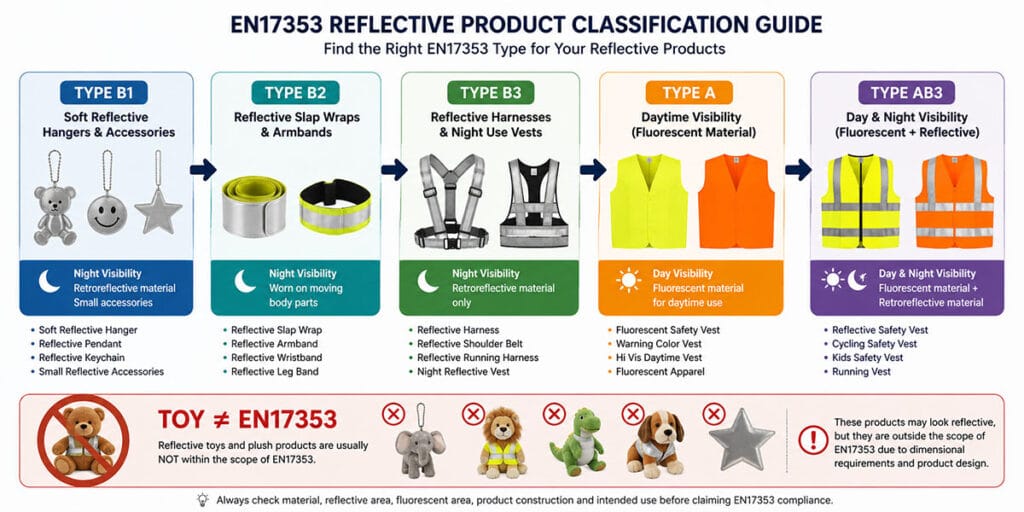
EN ISO 20471 is the standard for professional visibility clothing used in high-risk work environments, such as road construction or emergency response. It sets minimum areas of reflective and fluorescent material and requires specific garment designs. It is often required for workwear, not necessarily for recreational walkers.
EN 17353 is the standard for enhanced visibility equipment in medium-risk situations. It covers garments for non-professional use, including walking, running, and cycling. EN 17353 Type B3 applies to garments that cover the torso and limbs, like jackets and vests, and it specifies the distribution of reflective material on the front, back, and sides, as well as minimum total reflective area. For Type B3, the reflective material on the torso must form a complete or nearly complete ring, with limited gaps. The standard also requires 360-degree visibility.
Yolite products hold EN ISO 20471 and EN 17353 certificates, so buyers can source certified garments or materials without a separate certification project. However, any custom design that changes the reflective placement or reduces the area still needs to be reviewed against the standard. A supplier that understands these rules can help you avoid expensive sampling mistakes.
Customization and OEM Options for Activewear Brands
Most walkers’ reflective jackets are not one-size-fits-all products. Brands and distributors often need custom colours, logos, pocket layouts, or reflective patterns that match a collection. This is where an experienced OEM/ODM partner helps.
Yolite has over 20 years of experience, founded in 2003, as a Chinese manufacturer specialising in reflective jackets and safety apparel. The factory offers comprehensive OEM/ODM services, including custom logos and custom designs. The manufacturing facility has passed the BSCI audit, which supports ethical sourcing requirements for European and North American buyers.
When preparing an RFQ for reflective walking jackets, specify:
- Target standard: EN 17353 Type B3 for medium risk, or EN ISO 20471 if the garment will also be used for work.
- Reflective material type: 3M Scotchlite glass bead or microprismatic, and whether tape, fabric, or heat transfer film is preferred.
- Placement and width: e.g., two 5 cm bands around torso, one band on each sleeve, one on back yoke.
- Base fabric and weight: specify a durable polyester blend or waterproof shell as needed.
- Any AEB-related concerns should be discussed with your materials supplier; some brands are now testing reflective patterns that perform well with both human eyes and camera-based systems.
For a broader look at product options for walking at night, see our best reflective gear for walking at night article. For commuter styles, our men’s reflective jacket guide covers winter designs for B2B buyers.
FAQ
How does reflective clothing work?
It uses retroreflective materials, such as glass beads or microprismatic tape, that bounce light back to the source. When a car’s headlights shine on the garment, the light returns to the driver’s eyes, making the wearer visible from much farther away than with bright fabric alone.
What materials are used in reflective clothing?
Common materials include sew-on reflective tape, iron-on or heat transfer reflective tape, reflective fabric with embedded reflective yarns, and reflective heat transfer film for logos and small accents. 3M Scotchlite is a widely used premium reflective material.
Where to find reflective clothing for outdoor sports?
B2B buyers can source from specialised manufacturers like Yolite, which offers OEM/ODM reflective jackets, vests, and reflective materials. The factory holds EN ISO 20471 and EN 17353 certificates and works with brands and distributors worldwide.
What are some good reflective items for walkers?
For walkers, the most effective items provide 360-degree visibility: jackets with reflective bands on the torso and sleeves, vests with front and back coverage, and accessories like reflective armbands or ankle bands that highlight moving joints.
Why do you need to wear reflective clothing at night when walking?
Drivers see reflective clothing at much greater distances than bright or dark clothing. Bright clothing may be visible from 40–80 meters, but reflective clothing can be seen from three times that distance and up to ten times farther than dark clothing. This extra distance gives drivers more time to react.