Bike safety reflectors are passive retroreflective devices fitted to the front, rear, wheels and pedals of a bicycle so that drivers see the rider in their headlights. They need no battery, never run flat and are required on new bicycles in many markets. For bike brands, retailers, bike-share fleets and promotional buyers, the sourcing question is not “do we need reflectors?” but “which reflectors, to which standard, and in what quantity and packaging?”
This guide explains the reflector positions, colours and materials, the rules that most often apply, and the points to agree with a factory before you order reflectors in bulk or under your own brand.
What Are the Main Types of Bike Safety Reflectors?
A fully equipped bicycle usually carries four kinds of reflector. Each faces a different direction and has its own colour convention.
| Position | Usual colour | Typical mounting | What it does |
|---|---|---|---|
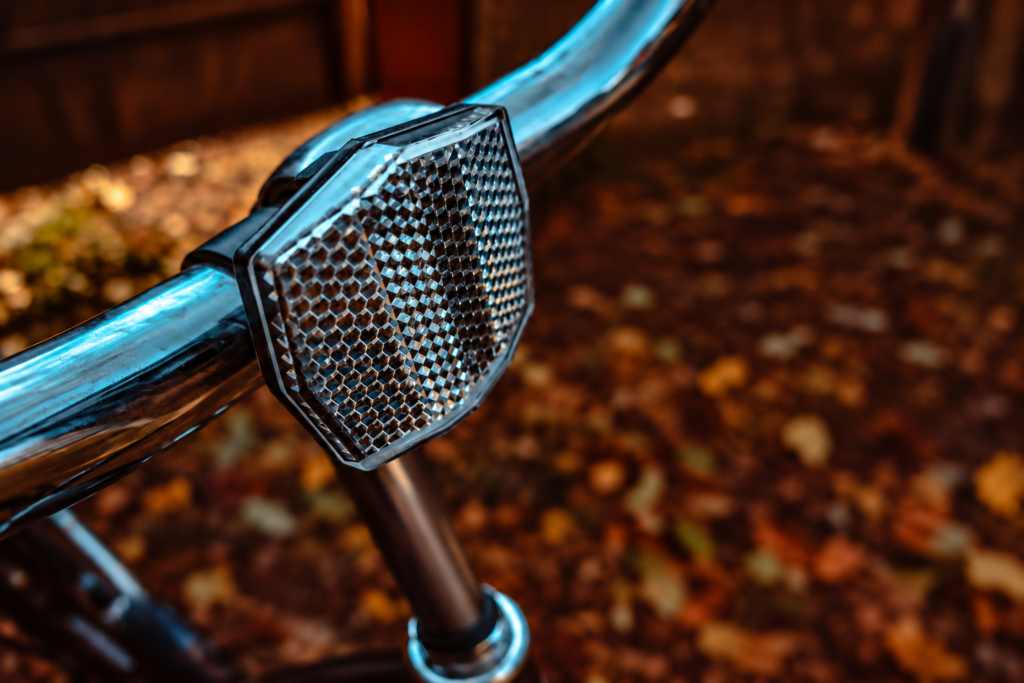
| Front reflector | Colourless (white) | Handlebar or headlight bracket | Shows oncoming drivers there is a bike ahead |
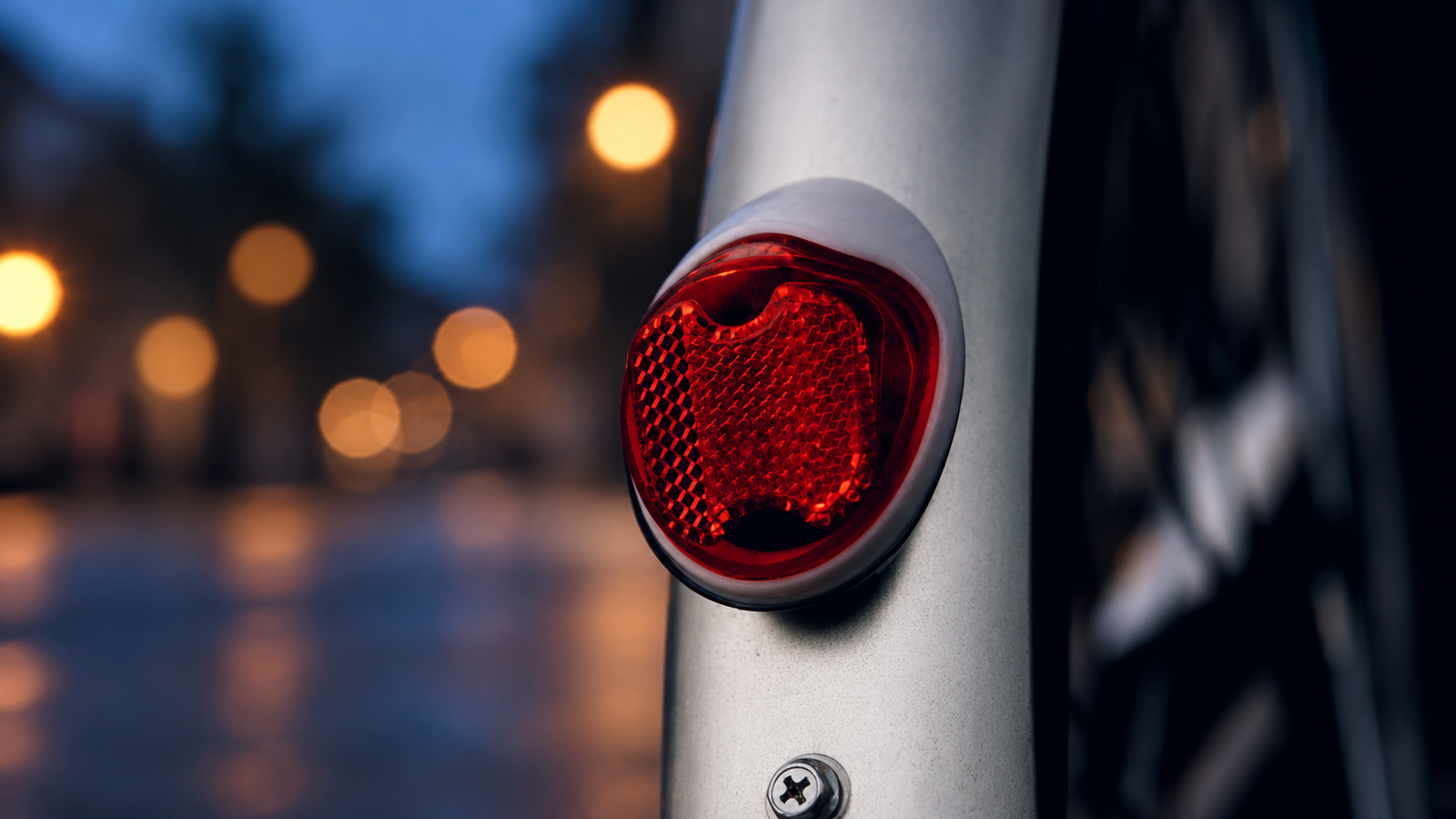
| Rear reflector | Red | Seat post, mudguard or rack | Warns drivers approaching from behind |
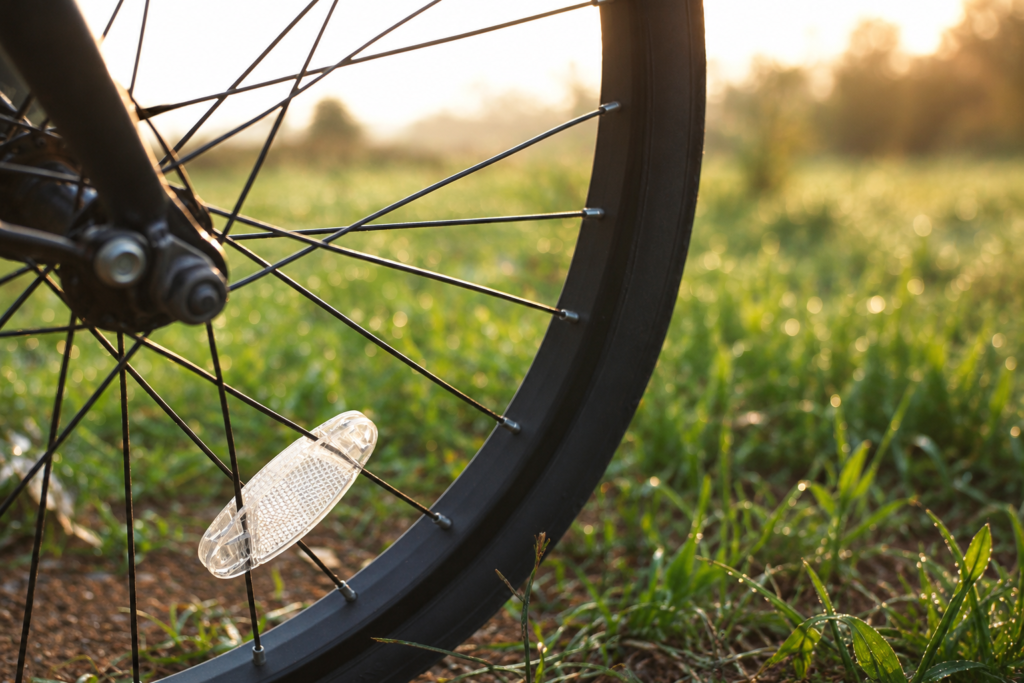
| Wheel (spoke) reflectors | Amber or colourless front, red or colourless rear (US rule) | Clipped to spokes, or reflective tyre sidewalls | Side visibility at junctions and crossings |
| Pedal reflectors | Amber (colourless also allowed under the US rule) | Front and rear faces of each pedal | Moving light helps drivers recognise a cyclist |
Beyond these “fitted” reflectors there is a large market for add-on items: spoke reflector clips, soft spoke reflectors, frame stickers and reflective clips for bags and helmets. These are popular with retailers, schools and road-safety campaigns, but they are not a substitute for the reflectors a new bicycle is required to carry.
Which Rules Apply to Bicycle Reflectors?
Requirements depend on where the bicycle or accessory will be sold. Three references come up most often in B2B enquiries:
- United States, 16 CFR Part 1512: the Consumer Product Safety Commission’s bicycle requirements include a reflector section (§1512.16). It calls for a colourless front reflector, a red rear reflector, colourless or amber reflectors on the front and rear of each pedal, and side reflectors on the wheels, and allows retroreflective tyre sidewalls (or, on some bicycles, retroreflective rims) as an alternative to spoke-mounted reflectors. It also sets test procedures for reflector performance and mounting.
- ISO 6742-2: the international standard for retro-reflective devices on cycles. It defines photometric, colour and durability tests for bicycle reflectors and is often referenced by brands selling into several markets.
- Germany, StVZO §67: German road traffic regulations set their own lighting and reflector rules for bicycles, and approved components carry an official test mark. Buyers selling into Germany usually ask for approved parts specifically.
Other countries have their own rules for bicycles sold new, and some only regulate what must be fitted at the point of sale. Always confirm the target market before choosing a reflector, because a reflector that passes one rule may not carry the approval mark another market expects. Our soft vs hard reflectors guide covers the different testing logic for accessory reflectors.
Reflector Materials and How They Perform
Almost all rigid bicycle reflectors are injection-moulded plastic with a back surface of tiny cube-corner prisms. Light enters the front, bounces off three faces of each prism and returns towards its source, which is why the reflector looks bright to the driver behind the headlight. Points to check:
- Lens material: PMMA (acrylic) gives good optical clarity; polycarbonate is tougher against knocks. Ask which grade is used and whether it is UV-stabilised for outdoor use.
- Sealing: the prism side should be sealed by an ultrasonically welded back plate. If water or dirt gets behind the prisms, the reflector loses most of its brightness.
- Colour: red and amber come from the lens resin. Colour must stay within the range the relevant rule allows.
- Brackets and clips: nylon or glass-filled brackets must hold the reflector at the right angle and survive vibration. Spoke clips must fit the spoke diameters of your bikes.
Flexible reflectors, stickers and tape use a different technology: glass beads or microprismatic film. See glass bead vs microprismatic reflective tape for the trade-offs, and our bicycle reflective safety sticker for a typical frame-sticker product.
Sourcing Bike Reflectors for B2B Programmes
Buyers usually fall into one of four groups, and each needs a different brief:
- Bicycle brands and assemblers: need reflector sets that match the rule of each sales market, with brackets that fit their frame and handlebar sizes, packed for the assembly line.
- Retailers and e-commerce sellers: sell replacement and upgrade sets. Packaging, instructions and clear claims matter as much as the reflector itself.
- Bike-share and rental fleets: need tamper-resistant fixings and spare-part supply over several years.
- Road-safety campaigns and promotional buyers: often choose spoke reflectors, reflective magnet clips or stickers in custom shapes and colours, printed with a campaign logo on the card or bag rather than the lens.
For promotional shapes such as hearts, stars or animals, remember that a custom outline changes the reflective area. A fun shape can be a good giveaway, but do not describe it as meeting a bicycle reflector standard unless that exact design has been tested. For wearable items, see our clip-on reflectors guide.
What to Include in a Reflector RFQ
- Target market(s) and the rule or standard the reflector must meet.
- Positions needed (front, rear, wheel, pedal) and the colours for each.
- Mounting details: handlebar and seat-post diameters, spoke gauge, pedal type.
- Lens shape and size, bracket colour, and whether a custom shape is wanted.
- Packaging: bulk for assembly, retail card or blister, multilingual instructions.
- Test reports you need from the supplier, and whether you will test independently.
- Quantity per colour and shape. MOQ, sampling time and lead time will be confirmed when you ask for a quote.
Frequently Asked Questions
Are bike reflectors required by law?
In many markets new bicycles must be sold with reflectors. In the United States, 16 CFR Part 1512 sets reflector requirements for bicycles sold new. Rules for riding at night, such as whether lights are also required, are set separately by states and other jurisdictions.
What colour should bicycle reflectors be?
The common convention is colourless or white at the front, red at the rear and amber on the pedals (the US rule also allows colourless pedal reflectors). Wheel reflectors vary by rule; under the US regulation the front wheel uses amber or colourless and the rear wheel uses red or colourless.
Do reflectors replace bike lights?
No. Reflectors only work when a light source, such as a car headlight, points at them. Lights let the rider be seen from all angles and by people without headlights. Most safety advice recommends using both.
Are spoke reflectors better than reflective tyres?
Both provide side visibility. Reflective tyre sidewalls show a full circle that is easy to recognise as a wheel, while spoke reflectors are cheaper to add to existing bikes. The US rule accepts either option on new bicycles.
Can YOLITE supply custom bike reflectors?
Yes. Tell us the positions, shapes, colours, packaging and target market, and we will confirm available options, testing, MOQ and lead time for your project.
Request a Bike Reflector Quote
Whether you need reflector sets for new bicycles, retail packs or a road-safety giveaway, send YOLITE your quantities, target market and artwork. Browse our reflective cycling gear for related items, or contact us directly to start your quote.
Sources and Scope
1. U.S. Consumer Product Safety Commission, “16 CFR Part 1512 — Requirements for Bicycles,” §1512.16 Requirements for reflectors. https://www.ecfr.gov/current/title-16/chapter-II/subchapter-C/part-1512
2. International Organization for Standardization, “ISO 6742-2 — Cycles — Lighting and retro-reflective devices — Part 2: Retro-reflective devices.”
3. Germany, Straßenverkehrs-Zulassungs-Ordnung (StVZO), §67 Lighting equipment on bicycles. https://www.gesetze-im-internet.de/stvzo_2012/__67.html
This article is a procurement guide, not legal advice or a substitute for the full text of any regulation or standard. Requirements vary by country, bicycle type and edition of the rule; confirm the current requirements for your market before ordering.

AUTHOR
Jack Lee
Founder · Yolite Industrial Co., Ltd.
Reflective-products specialist since 2003, focused on reflective materials, high-visibility apparel, OEM customization, and practical product development for international buyers.