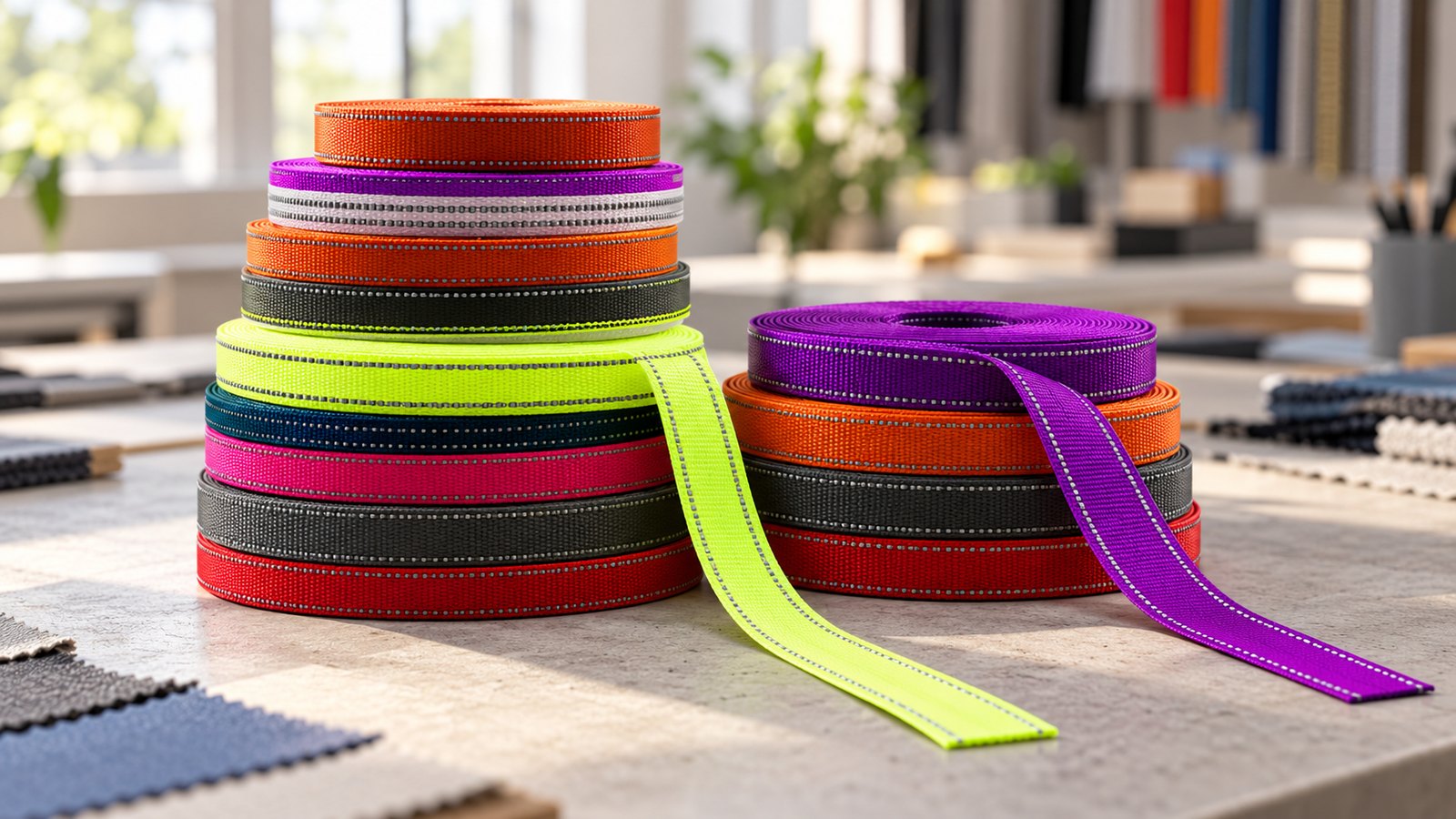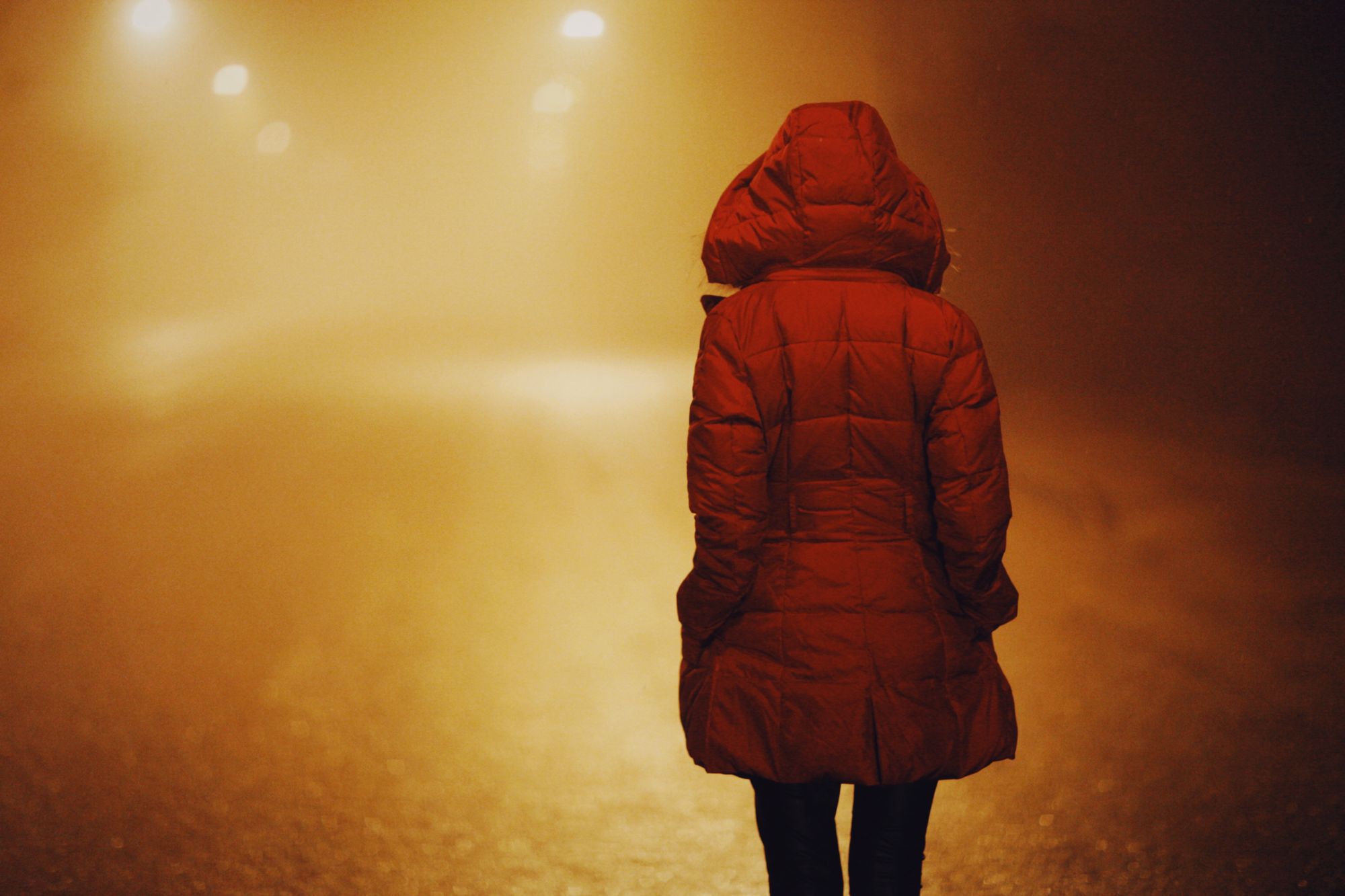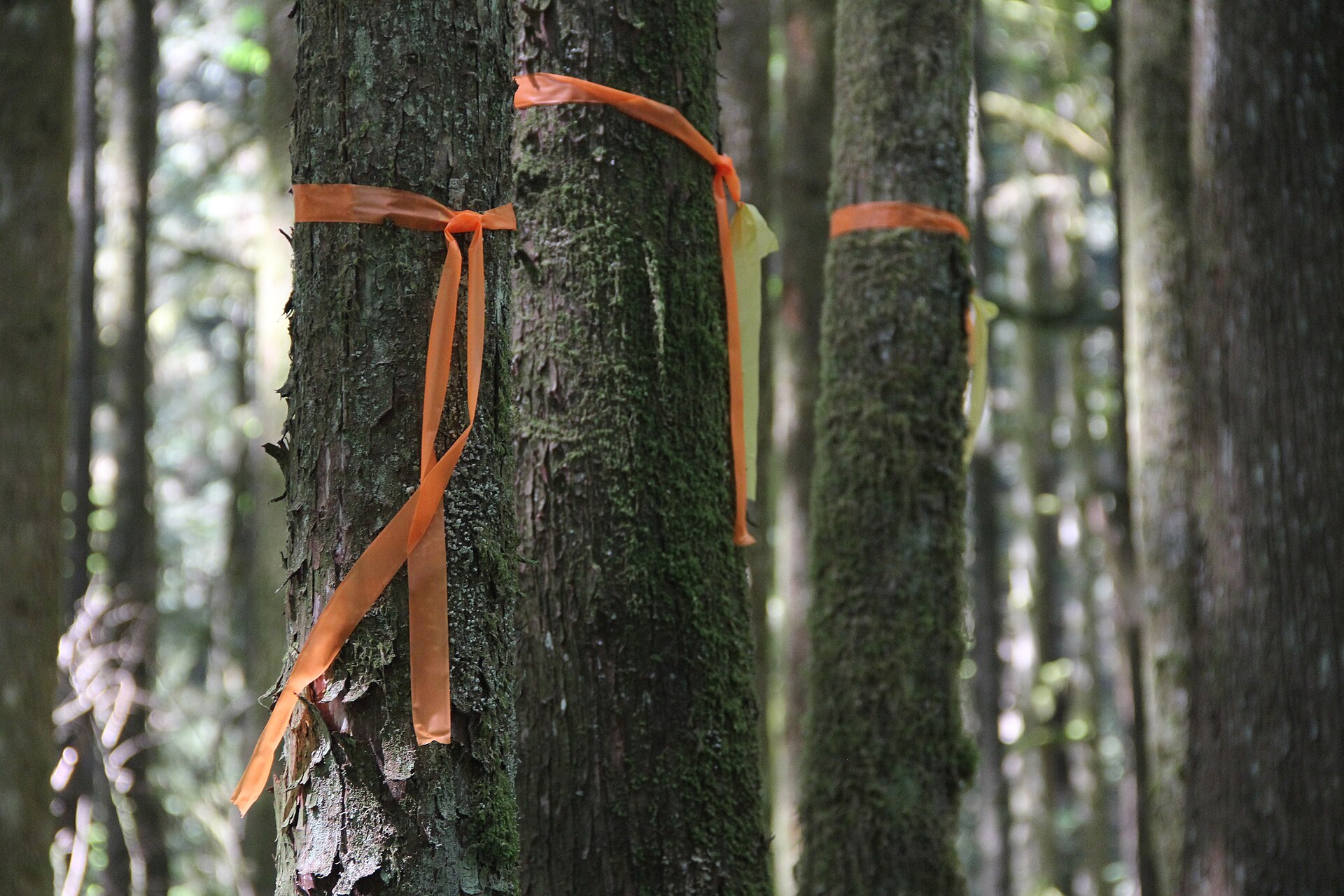
Reflective flagging tape is a thin, non-adhesive plastic ribbon that is tied to trees, stakes, fences or branches to mark a point or a route, with a retroreflective layer or print that lights up when a headlamp or vehicle light hits it. Ordinary flagging tape is easy to see in daylight because of its fluorescent colour. The reflective version keeps working after dark, which matters for trail runners, hunters, search teams, night survey crews and anyone who has to find a marker with a torch.
This guide is for distributors, outdoor brands, event organisers and contractors who buy flagging tape in volume or want it printed. It covers how reflective flagging differs from standard flagging, colour choices and colour codes, materials and roll formats, printing, and what to ask a factory before ordering.
Flagging Tape, Barricade Tape and Reflective Tape: What Is the Difference?
Buyers often search for one and mean another. The products look similar on a roll but do different jobs.
| Product | What it is | Typical use |
|---|---|---|
| Standard flagging tape | Thin non-adhesive PVC or polyethylene ribbon, often fluorescent | Marking trees, survey stakes, boundaries and routes in daylight |
| Reflective flagging tape | Flagging ribbon with a retroreflective layer, stripe or print | Routes and markers that must be found at night with a light |
| Barricade or warning tape | Wider printed polyethylene tape, usually with a warning message | Closing off an area; not designed to be tied in knots |
| Adhesive reflective tape | Reflective film or sheeting with a pressure-sensitive adhesive | Permanent marking on posts, vehicles, equipment and signs |
If you need a permanent marker on a hard surface rather than a temporary tie, adhesive products such as custom reflective stickers or reflective survey target stickers are usually the better choice.
Where Reflective Flagging Tape Is Used
- Trail marking: trail races, orienteering events, mountain bike courses and temporary detours. Night and early-morning stages need markers that show up in a headlamp beam.
- Hunting and wildlife work: marking the route from a road or camp to a stand or blind, so it can be followed before sunrise and after dark.
- Forestry: marking trees, plot centres and harvest or road boundaries. Crews often work in poor light under dense canopy.
- Surveying and construction: tying to stakes and lath on survey lines and site layouts, especially where crews or plant operators work early or late.
- Search and rescue: marking searched areas, junctions and the route back, often at night.
Colours and Colour Codes
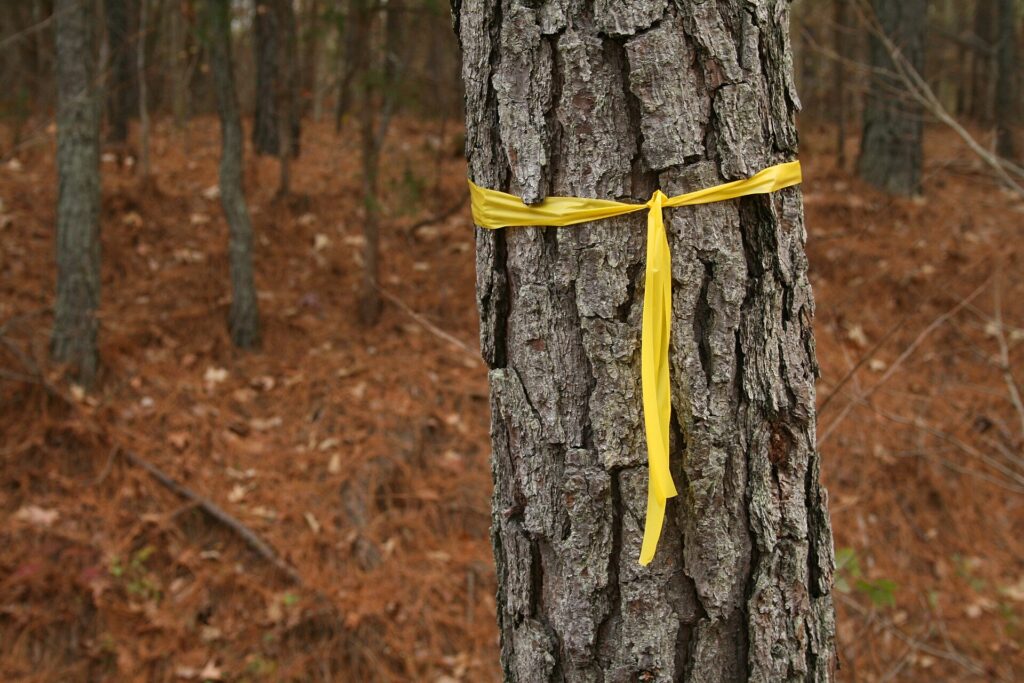
Flagging is sold in fluorescent pink, orange, lime green, yellow and blue, plus red, white and striped patterns. Pink and orange stand out against most vegetation; blue and white can disappear against sky or snow, and green can be hard to see in summer foliage.
There is no single international colour code for flagging. Many organisations set their own: one colour for a boundary, another for a route, another for trees to keep. In the United States, utility locating follows the American Public Works Association (APWA) uniform colour code, in which pink indicates temporary survey markings and white marks proposed excavation, while red, yellow, orange, blue, purple and green identify types of underground utilities. Check which code your customers follow before choosing the colour range you stock, and avoid colours that clash with a local code.
Materials, Reflectivity and Roll Formats
Base film
Most flagging is PVC or polyethylene film. PVC stays flexible in cold weather and ties easily; polyethylene is lighter and free of chlorine. Biodegradable flagging made from cellulose-based materials is also available for forestry and event uses where markers may be left behind. If a supplier claims biodegradability, ask for the test report and the conditions it was tested under.
How the reflective part is made
- Full reflective surface: a reflective film laminated to the ribbon. Brightest option, but stiffer and more costly.
- Reflective stripe or pattern: a printed or laminated reflective stripe on a fluorescent ribbon. Keeps the daytime colour strong and adds night visibility.
- Reflective print: reflective ink printed in a repeat pattern or with text. Lower brightness, useful when the tape is also branded.
Most reflective flagging uses glass-bead technology, explained in our article on how glass-bead reflective materials work. Retroreflection is measured as a coefficient of retroreflection at stated observation and entrance angles. Ask the supplier for measured values on the actual tape rather than for the base film alone, and compare samples side by side with a headlamp at a realistic distance.
Roll formats
Specify width, length per roll, film thickness and the core size. Common flagging rolls are a few centimetres wide, and long rolls are packed in multi-roll boxes for crews and distributors. Agree tolerances, the number of rolls per carton and carton labelling on the order.
Printed and Custom Flagging Tape
Custom printing turns flagging into a branded or coded product. Common prints are a company or event name, a phone number, words such as “SURVEY”, “BOUNDARY” or “TRAIL”, or a numbered sequence. When you order:
- Send the text or artwork and the print repeat length.
- Choose the ribbon colour and the print colour, and whether any print should be reflective.
- Confirm the base film, thickness, width and roll length.
- Ask for a printed sample and test it outdoors in rain and sun for the length of time your markers stay in place.
- Agree packaging: shrink-wrapped single rolls, retail cards or bulk cartons.
Minimum order quantity, available colours and lead time depend on the film and the printing method, and we confirm them when you send your enquiry.
Good Practice When Using Flagging
- Tie flagging at eye height and at a consistent side of the route, so people know where to look.
- Place markers so that the next one is visible from the last, and add extra markers at junctions.
- Get landowner or land manager permission before marking, and follow the rules of parks and protected areas.
- Remove temporary flagging when the job or event ends. Leave No Trace principles ask outdoor users to leave places as they found them.
- Combine flagging with reflective clothing for the people working on site. Our guide to reflective gear for walking at night covers the wearer’s side, and reflective sashes and belts are a light option for event marshals.
Frequently Asked Questions
Does flagging tape glow in the dark?
Standard flagging does not; its fluorescent colour only looks bright in daylight. Reflective flagging returns light from a headlamp or vehicle lights. Glow-in-the-dark (photoluminescent) tape is a separate product that emits light after being charged.
Is flagging tape adhesive?
No. Flagging is designed to be tied. For marking a post, sign or equipment permanently, use adhesive reflective tape or stickers.
How long does flagging tape last outdoors?
It depends on the film, thickness, sunlight and weather. Fluorescent colours fade with UV exposure, and reflective layers can lose brightness when abraded. If markers must last a full season, test samples in your own conditions before ordering in bulk.
Which colour is best for night trail marking?
Colour matters less at night than the reflective layer. For combined day and night use, a fluorescent pink or orange ribbon with a reflective stripe is a common choice, unless a local code reserves those colours.
Can YOLITE print our name on reflective flagging tape?
Yes. Send your text or logo, preferred colours and roll size, and we will confirm material options, MOQ and lead time.
Request a Reflective Flagging Tape Quote
Tell YOLITE where the tape will be used, the colours and roll sizes you need, and whether you want it printed. We can supply reflective materials, printed ribbons and related marking products such as reflective stickers. Contact us with your specification or a reference sample.
Sources and Scope
1. American Public Works Association (APWA), “Uniform Color Code” for temporary marking of underground facilities.
2. CIE, “CIE 54.2:2001 — Retroreflection: definition and measurement.”
3. Leave No Trace Center for Outdoor Ethics, “The Seven Principles.”
This article is a sourcing guide. Colour codes, marking rules and permissions vary by country, land manager and industry; follow the requirements that apply to your site.

AUTHOR
Jack Lee
Founder · Yolite Industrial Co., Ltd.
Reflective-products specialist since 2003, focused on reflective materials, high-visibility apparel, OEM customization, and practical product development for international buyers.