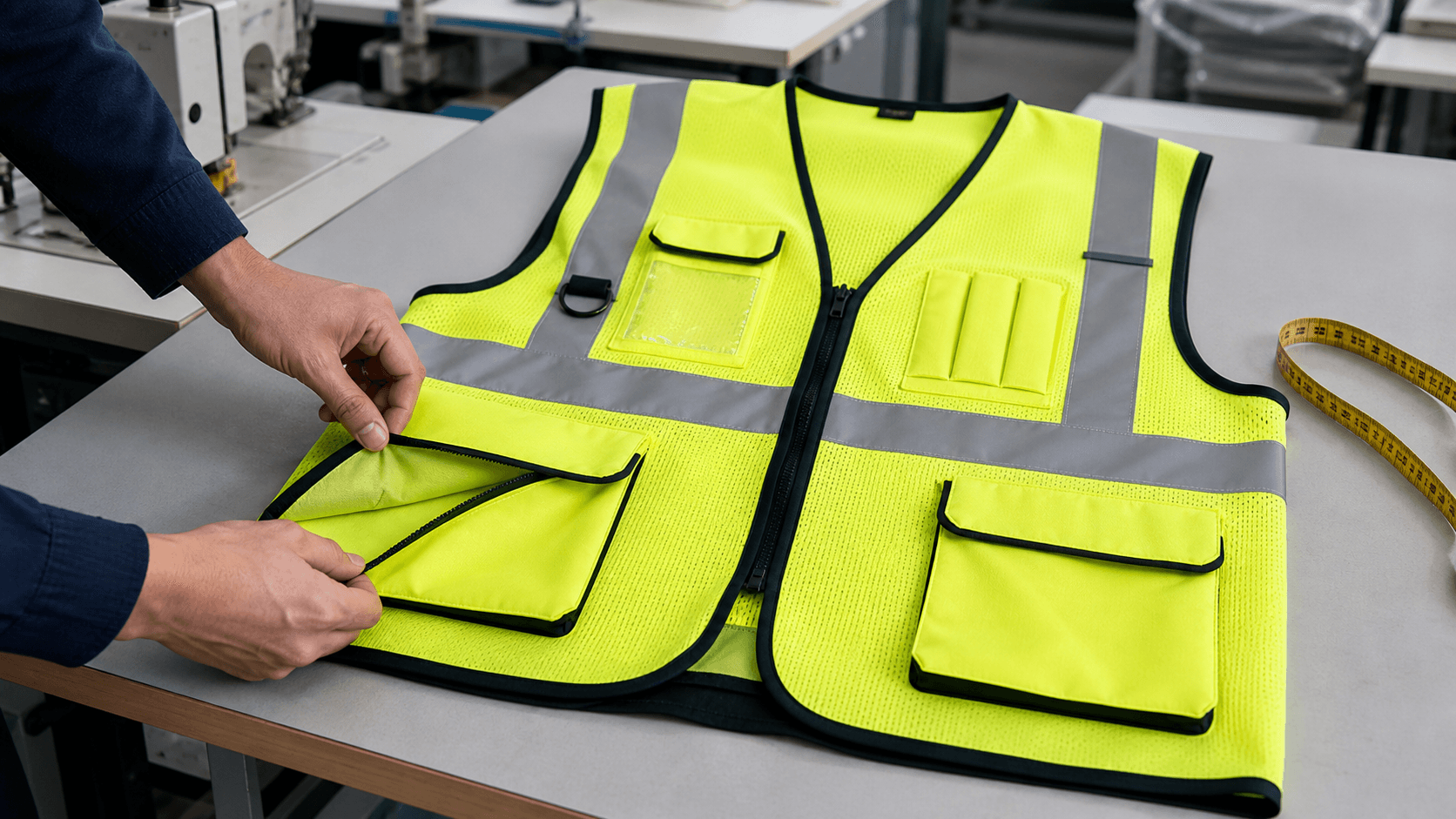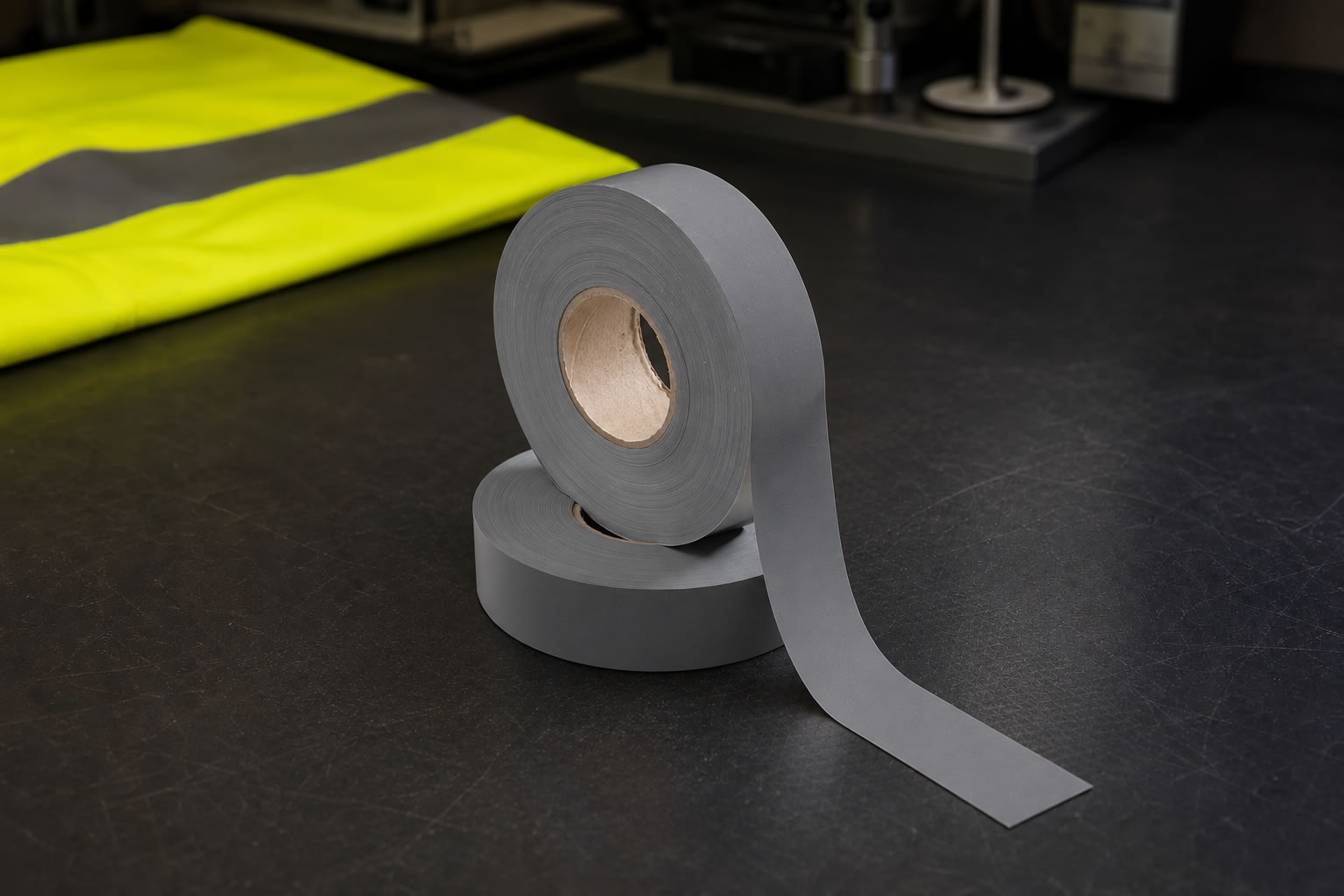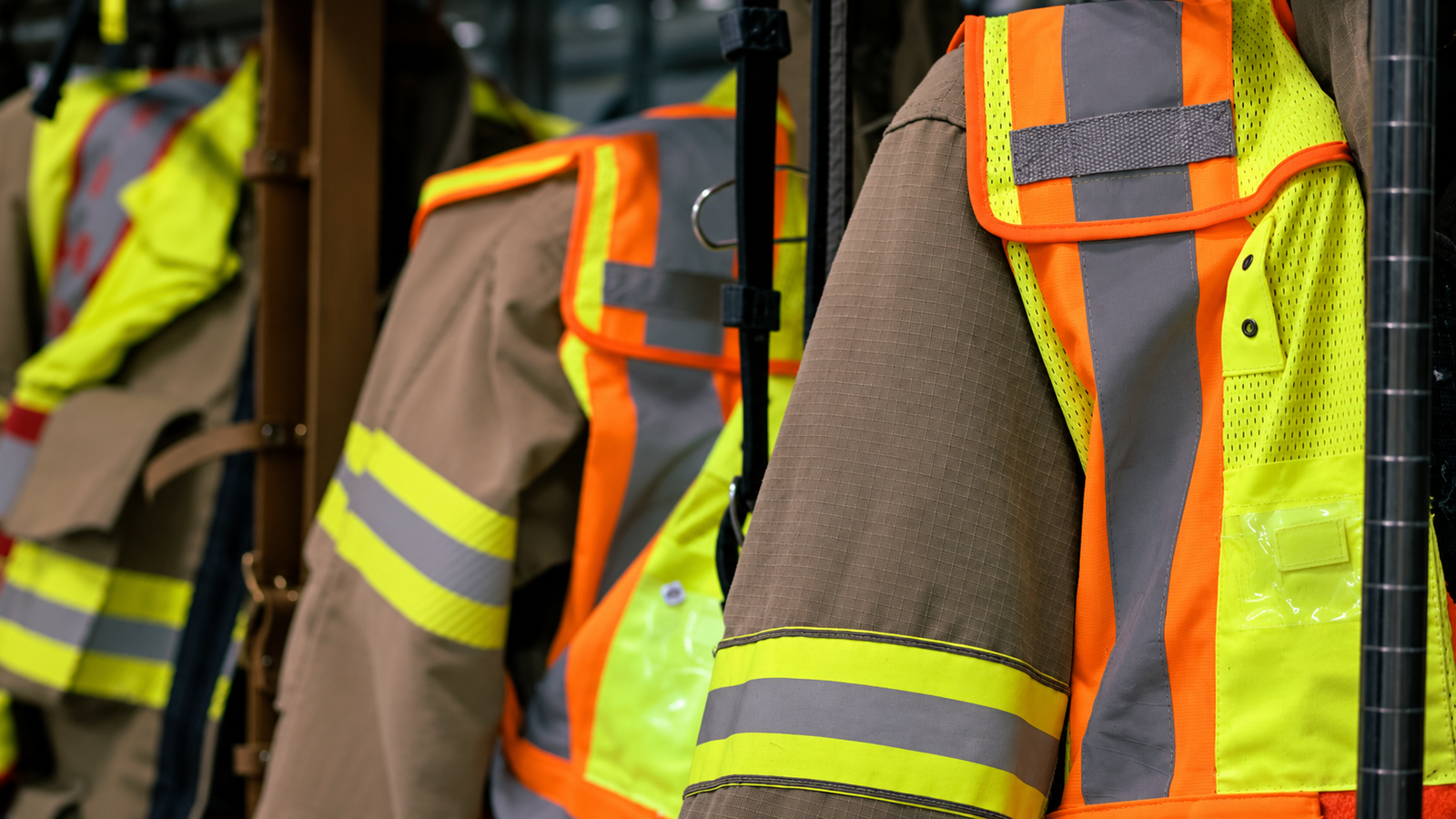
Reflective tape for clothing is a retroreflective strip, built on a fabric or film carrier, that is sewn, heat-applied or bonded onto a garment so the wearer shows up in headlights at night. For a garment maker the important choice is not the brand of tape. It is how the tape is attached, because the attachment method decides how the garment washes, flexes, breathes and passes inspection.
This guide is for workwear brands, uniform suppliers, sportswear factories and private-label buyers who need to choose between sew-on, iron-on and heat transfer reflective tape. It compares the methods, matches them to fabrics, and lists what to put in a purchase specification.
What Types of Reflective Tape Are Used on Clothing?
Most reflective clothing tape falls into four groups. The reflective element is either glass beads or microprisms; the difference that matters on a production line is the backing.
| Tape type | How it attaches | Best suited to | Watch out for |
|---|---|---|---|
| Sew-on fabric tape | Stitched along both edges | Vests, jackets, coveralls, heavy industrial laundering | Needle holes in waterproof shells; stiff on light knits |
| Iron-on (heat-activated) tape | Hot-melt adhesive with heat and pressure | Repairs, small runs, accessories, knit fabrics | Bond depends on press settings and fabric finish |
| Heat transfer film / segmented tape | Heat press, often in cut sections or shapes | Sportswear, polo and T-shirts, PU rain gear, logos | Edge lift if under-pressed; check stretch recovery |
| Flame-retardant sew-on tape | Stitched with compatible FR thread | FR coveralls and arc-rated garments | Whole garment must be tested, not just the tape |
For the optical side of the choice, read our glass-bead vs microprismatic reflective tape guide. Microprismatic tape is common on rigid or coated surfaces; glass-bead fabric tape remains the usual choice for washable textile garments.
Sew-On, Iron-On or Heat Transfer: Which Should You Choose?
Sew-on reflective tape
Sewn tape is the default for certified workwear. It tolerates frequent washing, does not rely on adhesive chemistry, and can be inspected visually by checking the stitch line. It is the safest option for garments sent to industrial laundries. The trade-offs are weight, a stiffer hand, and needle holes that need seam taping on waterproof garments.
Iron-on reflective tape
Iron-on tape carries a hot-melt adhesive on the back. It is practical for small orders, repairs and accessories, and it avoids visible stitching. In bulk production, a heat press with controlled temperature, time and pressure gives a far more consistent bond than a hand iron. Ask the supplier for the recommended press window for your exact fabric.
Heat transfer and segmented reflective tape
Heat transfer reflective film is thinner and lighter than sewn tape. It can be cut into logos, numbers and patterns, and segmented versions (the tape is split into small blocks) bend and breathe better on active garments. That makes it popular for sportswear, cycling apparel and polo shirts. Our reflective HTV guide explains how the film is cut and pressed.

How Do You Match Tape to the Garment Fabric?
The base fabric often decides the attachment method before anyone looks at a catalogue.
- Polyester knit and mesh (vests, T-shirts): sewn tape works on vests; heat transfer or segmented tape keeps T-shirts and polos soft and stretchy.
- Polyester-cotton twill (coveralls, work trousers): sewn tape is the reliable choice for industrial laundering.
- PU-coated or laminated rain fabric: heat-applied tape avoids needle holes. If you sew, the seams must be taped or welded afterwards.
- Softshell and fleece: segmented heat transfer tape flexes with the garment and keeps breathability.
- Flame-retardant fabrics: use FR-rated tape and FR thread. Ordinary adhesives and polyester thread can compromise the result.
If you also need reflective material inside the fabric itself, see reflective yarn vs reflective thread. For bonding onto bags and accessories, reflective fabric with adhesive backing is another option.
What Do the Standards Say About Tape Width and Placement?
Decorative reflective trim does not have to meet a standard. Certified high-visibility garments do, and the standards set minimum widths and placement:
- EN ISO 20471: retroreflective bands must be at least 50 mm wide, and the garment is classified by the measured areas of fluorescent background and retroreflective material.
- ANSI/ISEA 107-2020: minimum retroreflective widths step up by class, commonly summarized as 1 in (25 mm) for Class 1, 1.38 in (35 mm) for Class 2 and 2 in (50 mm) for Class 3. Class 2 roadway garments also need at least 201 in² of retroreflective material and Class 3 at least 310 in².
Placement rules cover torso bands, braces and sleeve bands so the garment outlines the body from every direction. The tape must also keep its performance after the number of wash cycles stated on the label, which is why tape selection and wash testing go together. Our EN ISO 20471 explainer covers the classes in more detail.

How Durable Is Reflective Tape on Clothing?
Durability depends on the tape, the attachment and the care routine together. Common failure points are:
- Edge lift on heat-applied tape when temperature, dwell time or pressure was too low, or the fabric carried a water-repellent finish that blocked the adhesive.
- Loss of brightness from high wash temperatures, chlorine bleach, tumble drying on high heat or industrial chemicals the tape was not rated for.
- Cracking at folds when wide continuous tape is used on soft, stretchy fabric.
- Stitch failure when thread is not matched to the tape or fabric.
Ask for the number of wash cycles the tape is rated for, at which temperature and by which method (domestic or industrial). Pass the same care instructions to the end user; our guide on how to wash a reflective jacket is a good starting point.
What to Include in a Reflective Clothing Tape Specification
- Garment type, base fabric and any coating or finish.
- Attachment method: sew-on, iron-on, heat transfer or segmented.
- Tape width, color (silver, fluorescent yellow-silver-yellow, colored) and layout drawing.
- Target standard and class, if the garment will be certified.
- Wash requirement: cycles, temperature, domestic or industrial laundry.
- Special needs: flame retardant, stretch, breathability, low weight.
- Logos or lettering in reflective film, and whether they count toward class area.
Our hi-vis workwear RFQ guide shows how to lay these points out so supplier quotes can be compared line by line. You can also browse finished garments in our reflective clothing range.
Frequently Asked Questions
Is sew-on or iron-on reflective tape better for clothing?
For workwear that is washed often, sew-on tape is the more robust choice. Iron-on and heat transfer tape are better when the garment must stay light, soft, stretchy or waterproof, provided the press settings are controlled.
Can I put reflective tape on a waterproof jacket?
Yes. Heat-applied tape avoids needle holes in coated or laminated fabric. If the tape is sewn, the stitch line must be sealed with seam tape so the jacket stays waterproof.
Does adding reflective tape make a garment compliant?
No. Compliance comes from testing the finished garment against a standard such as EN ISO 20471 or ANSI/ISEA 107, including background area, retroreflective area, widths and placement. Tape alone cannot be certified as a compliant garment.
How wide should reflective tape on clothing be?
For certified high-visibility garments, 50 mm (2 in) is the common width. Narrower tape is used on sportswear and fashion pieces that are not claiming a high-visibility class.
Can YOLITE supply garments with custom reflective tape layouts?
Yes. Send your garment type, fabric, attachment method and target standard, and we will confirm MOQ, sampling and lead time for your project.
Request a Quote for Reflective Clothing
Tell YOLITE what the garment is, which fabric it uses, how it will be washed and which standard it must meet. We can review tape type, attachment method, layout and branding for your B2B order, or contact us directly with your drawings.
Sources and Scope
1. International Organization for Standardization, “ISO 20471:2013 — High visibility clothing — Test methods and requirements.” https://www.iso.org/standard/30838.html
2. American National Standards Institute, “ANSI/ISEA 107-2020: High-Visibility Safety Apparel,” November 2, 2020. https://blog.ansi.org/ansi/ansi-isea-107-2020-high-visibility-apparel/
3. Kishigo, “ANSI/ISEA 107-2020 Basics.” https://zips.com/docs/default-source/other-documents/kishigo-ansi-107-2020-basics-083021.pdf
This article is a procurement guide, not a substitute for the complete standard, a workplace hazard assessment or advice from the authority responsible for your project. Requirements can vary by jurisdiction, contract, garment type, performance class and standard edition.

AUTHOR
Jack Lee
Founder · Yolite Industrial Co., Ltd.
Reflective-products specialist since 2003, focused on reflective materials, high-visibility apparel, OEM customization, and practical product development for international buyers.