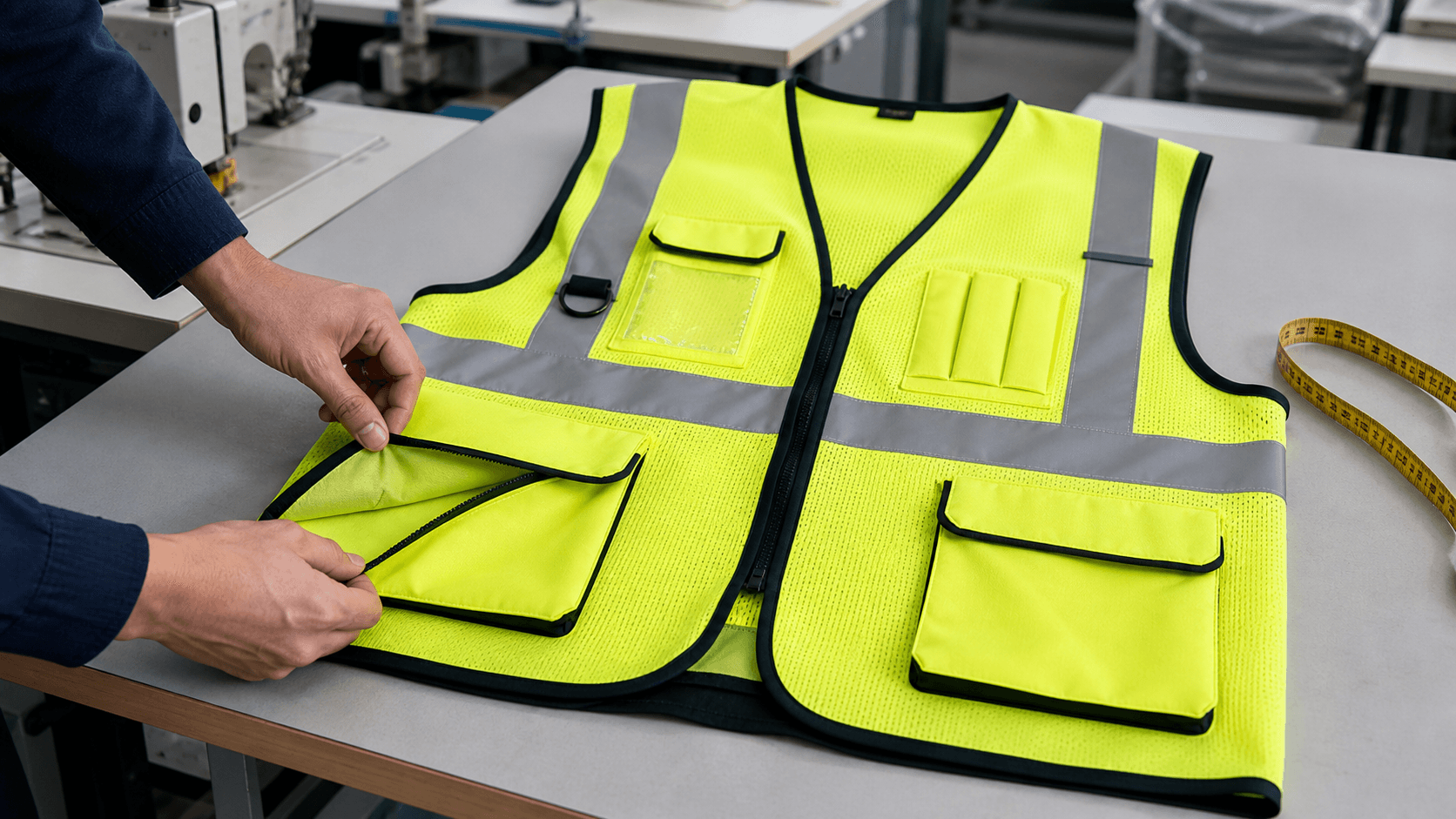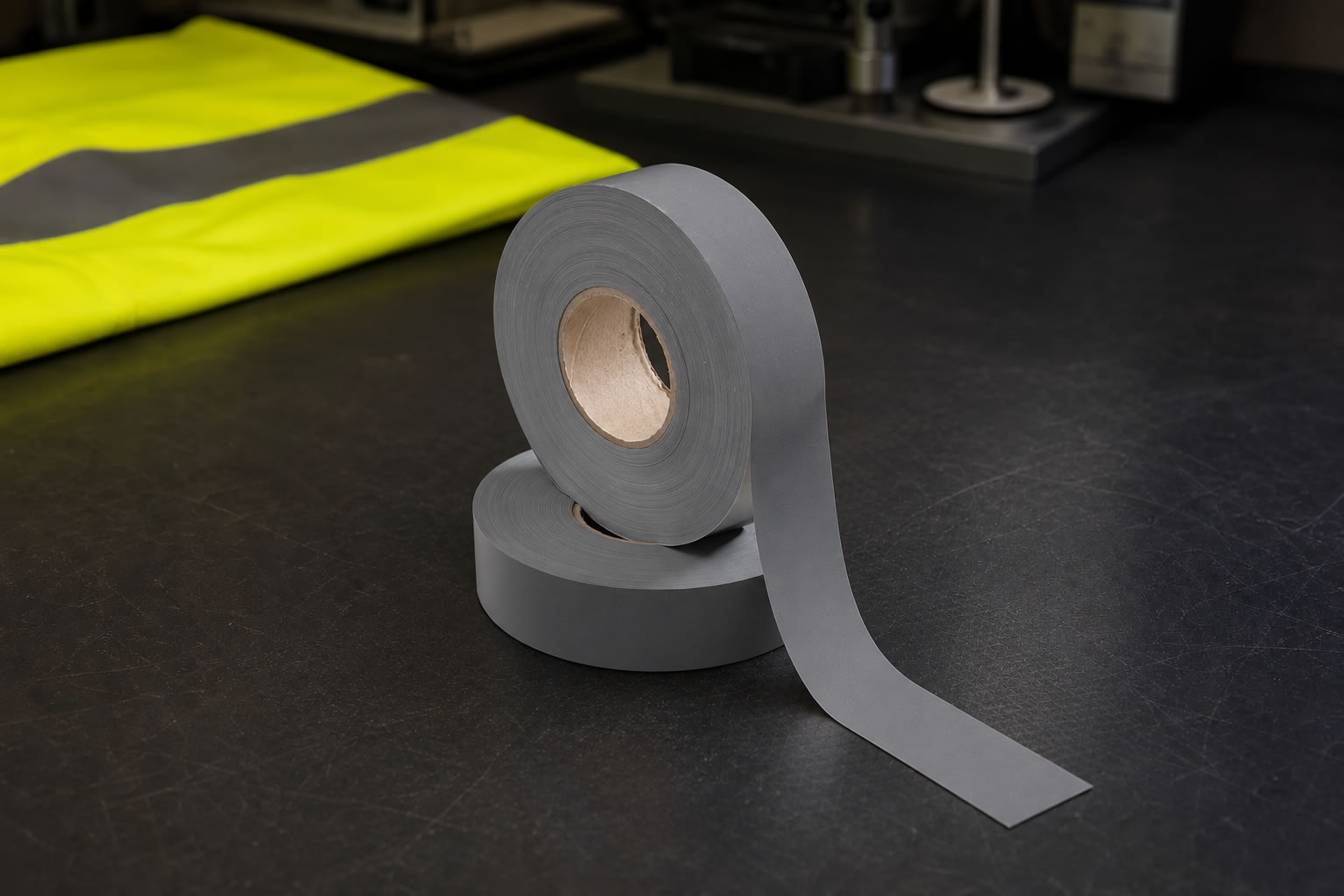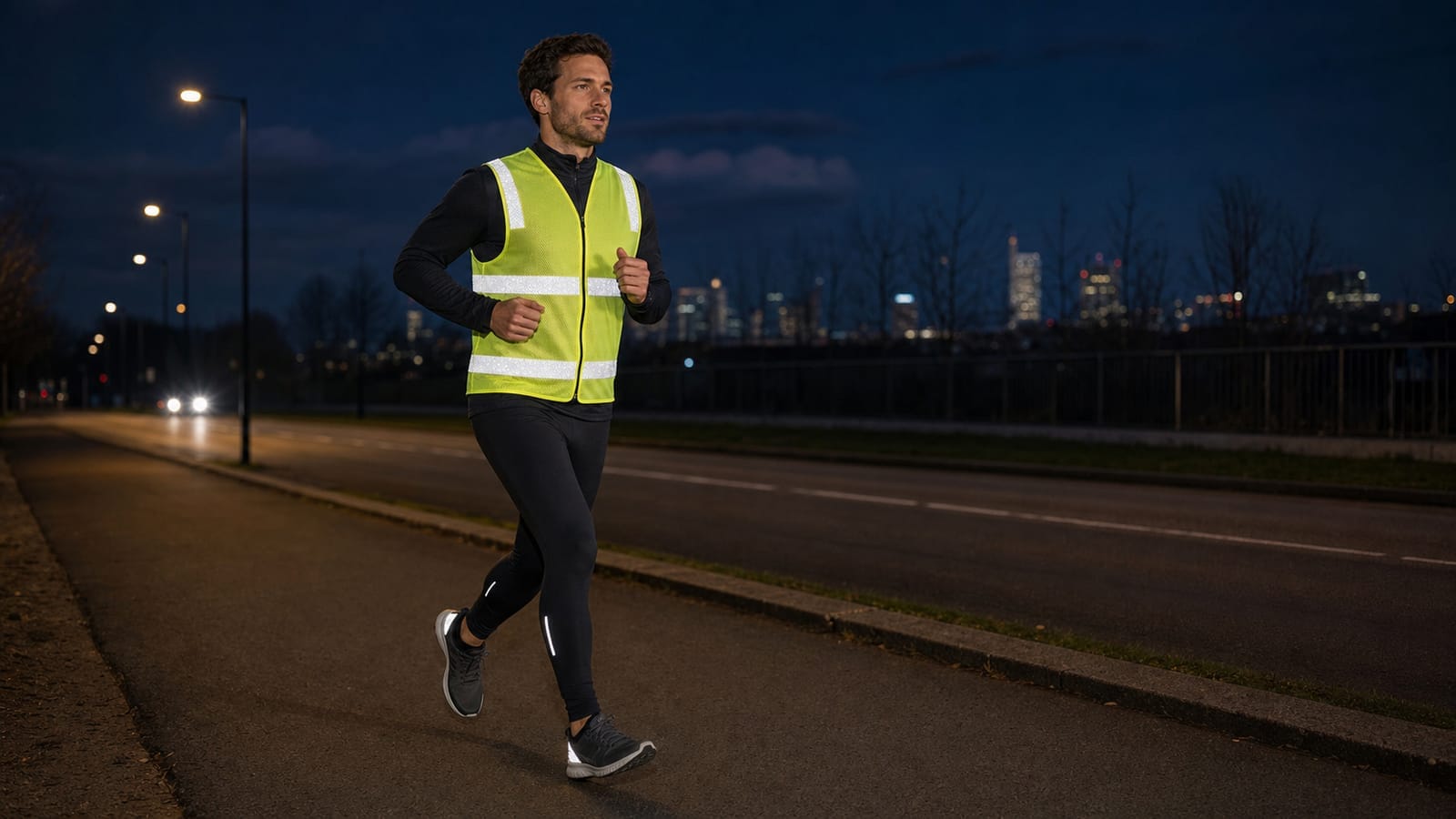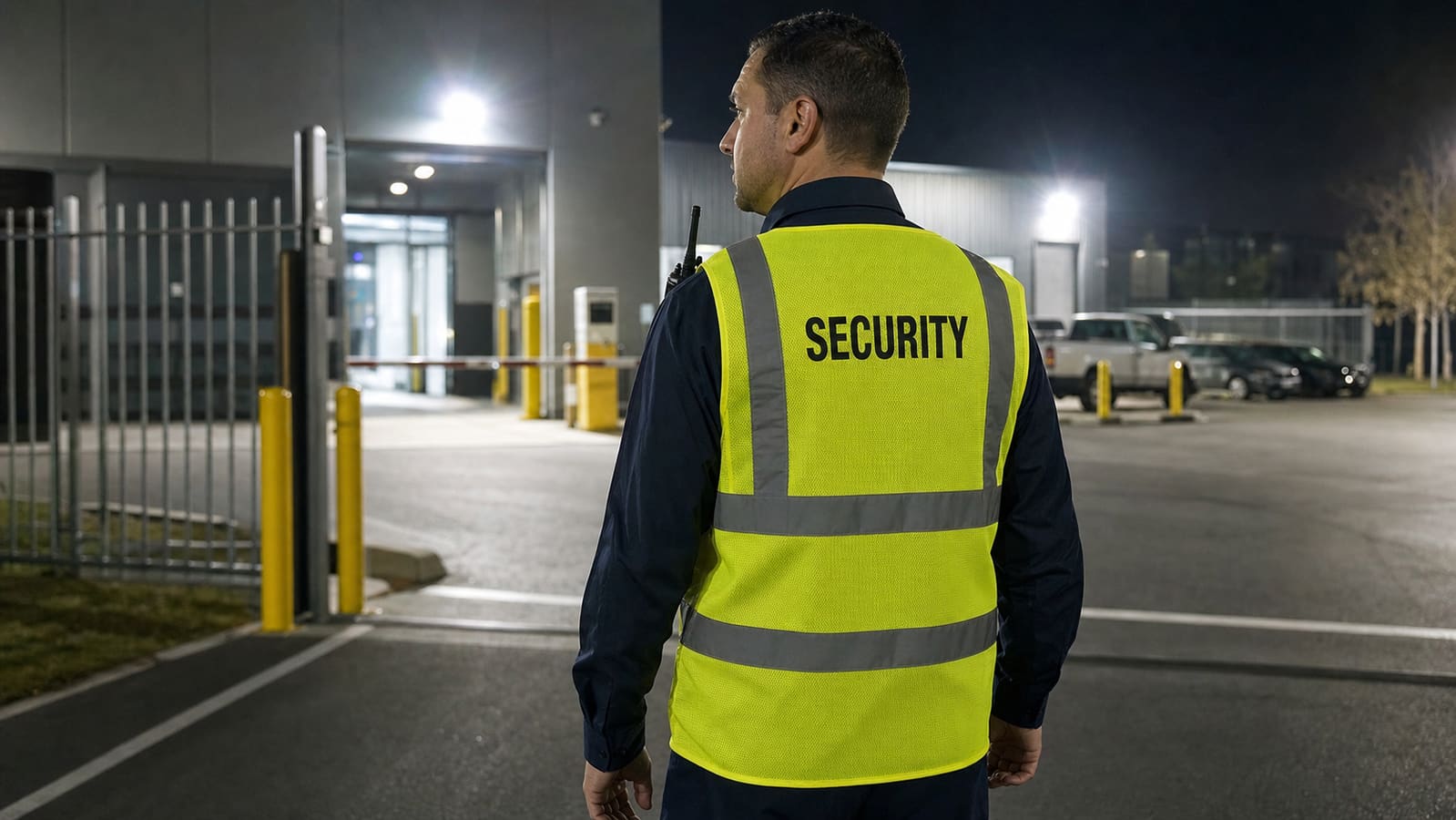
Security guard hi vis vests help patrol, event, parking and access-control teams remain conspicuous while making their role easy to identify. YOLITE manufactures customizable vests for security companies and uniform buyers, with options for garment construction, fluorescent color, retroreflective tape, SECURITY identification, radio loops, ID windows, pockets, sizing and packaging.
A security vest should be specified for the actual duty environment. A black vest with reflective lettering may support role identification, but it should not automatically be described as compliant high-visibility safety apparel. Where guards work around moving vehicles or equipment, buyers should select a complete garment designed and tested for the required market and risk level.
Security Hi Vis Vest Options for Different Duties
Security work is not one uniform application. A temporary event steward, a warehouse gate guard and a night parking patrol may need different visibility, storage and identification features.
| Vest type | Suitable duties | Useful construction options |
|---|---|---|
| Basic security hi vis vest | Events, visitor guidance and short shifts | Lightweight tricot or mesh, hook-and-loop closure, front and back identification |
| Multi-pocket security vest | Property patrol and site access | Zipper front, ID window, phone and notebook pockets, reinforced lower pockets |
| Radio-ready security vest | Venue, logistics and mobile patrol teams | Radio loop, microphone tab, chest pocket and cable-routing considerations |
| Two-tone security vest | Branded teams and dirt-prone environments | Fluorescent upper area, dark lower panels, contrast binding and coordinated printing |
| Long-sleeve visibility garment | Outdoor shifts needing greater body coverage | Sleeve bands, zip front, adjustable cuffs and weather-appropriate fabric |
| Breakaway security vest | Duties where snagging is part of the risk assessment | Shoulder, side and front release points selected for the intended task |
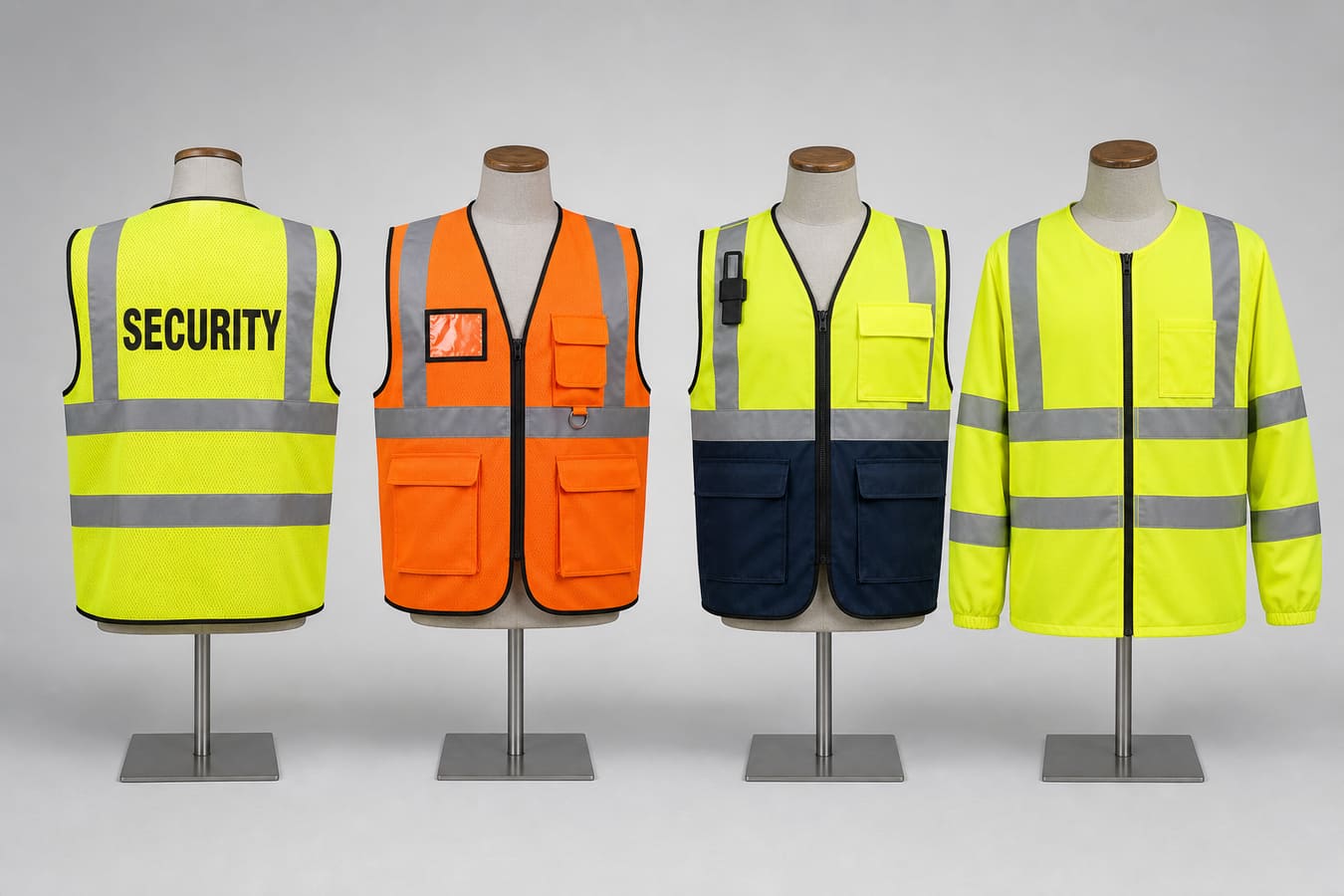
The best starting point is the guard's task, not the number of pockets. Extra storage can be useful, but overloaded pockets may restrict movement or interfere with radios and other equipment. Buyers should decide what each wearer actually carries before locking the pocket plan.
Visibility and Identification Are Two Different Requirements
The word SECURITY helps members of the public recognize a role. Fluorescent background material and retroreflective material serve a different purpose: increasing conspicuity against the environment and under illumination. A good custom design considers both functions without treating a printed job title as proof of safety performance.
ANSI/ISEA 107-2020 is the current American National Standard listed by ISEA for high-visibility safety apparel. ISEA explains that the standard covers material performance, minimum areas and placement, with garment performance classes selected according to worker hazards, tasks, traffic and the surrounding environment.[1]
ISO 20471:2013 specifies requirements for high-visibility clothing intended to signal the wearer's presence to operators of vehicles or mechanized equipment in daylight and under headlights in the dark. Its scope includes color, retroreflection, minimum material areas and placement.[2] ISO also shows that a revision is under development, so buyers should confirm the applicable edition and local adoption when ordering.[3]
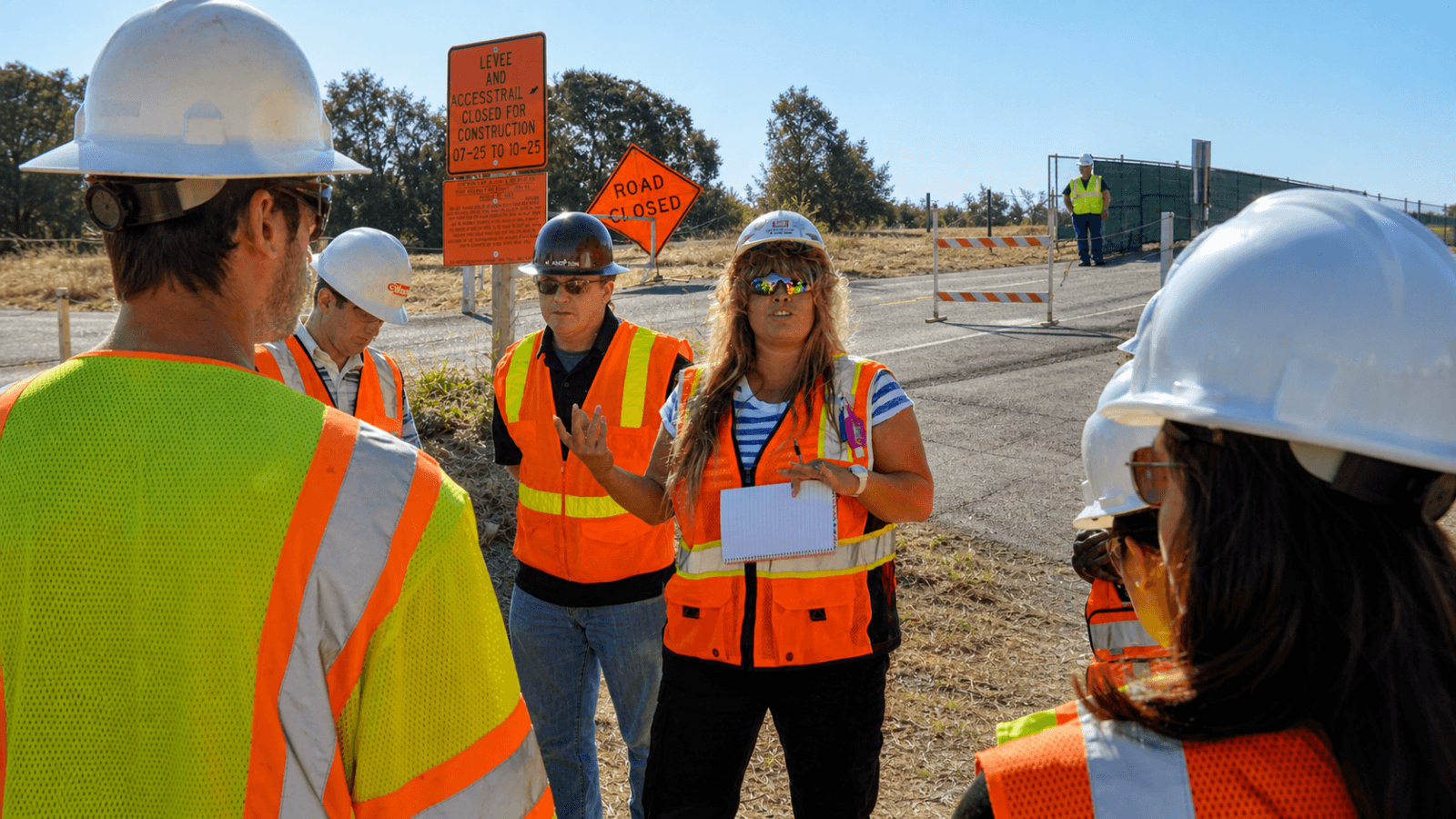
These standards do not make every security guard vest mandatory or appropriate for every assignment. For example, OSHA's interpretation concerns workers exposed to road and construction traffic; it shows why vehicle exposure matters, but it is not a blanket rule for every guard in every workplace.[4] The employer or buyer remains responsible for the hazard assessment and the required garment type or class.
How to Customize a Security Guard Hi Vis Vest
YOLITE's customization process turns the duty requirements into a controlled garment specification. Providing the following decisions at the quotation stage produces a faster and more reliable sample.
1. Define the Duty and Market
Tell us where the vest will be used: event entrance, retail car park, logistics yard, residential patrol, airport support, construction access point or another setting. Include lighting conditions, weather, proximity to vehicles and the destination market. This determines whether the request is mainly for identification, enhanced visibility or certified high-visibility protection.
2. Select the Garment Structure
Choose a sleeveless vest or long-sleeve garment, then specify mesh or solid knitted fabric, zipper or hook-and-loop closure, and any breakaway requirement. For guards carrying radios, access cards or notebooks, define each item's approximate size and preferred position rather than asking for a generic “multi-pocket” layout.
3. Choose Color and Reflective Layout
Common options include fluorescent yellow, fluorescent orange and two-tone combinations with navy or black lower panels. Reflective tape width, orientation and placement must remain compatible with the intended garment design and any claimed standard. Decorative changes should never be assumed to preserve certification without checking the completed design.
4. Add Security Identification
Identification can include SECURITY, EVENT STAFF, PATROL, SUPERVISOR or a customer-approved role title. Available methods may include screen printing, heat transfer, reflective transfer or removable hook-and-loop patches. Buyers should specify the exact wording, front and back positions, letter dimensions, color and required viewing distance. Company logos should be supplied as vector artwork where possible.
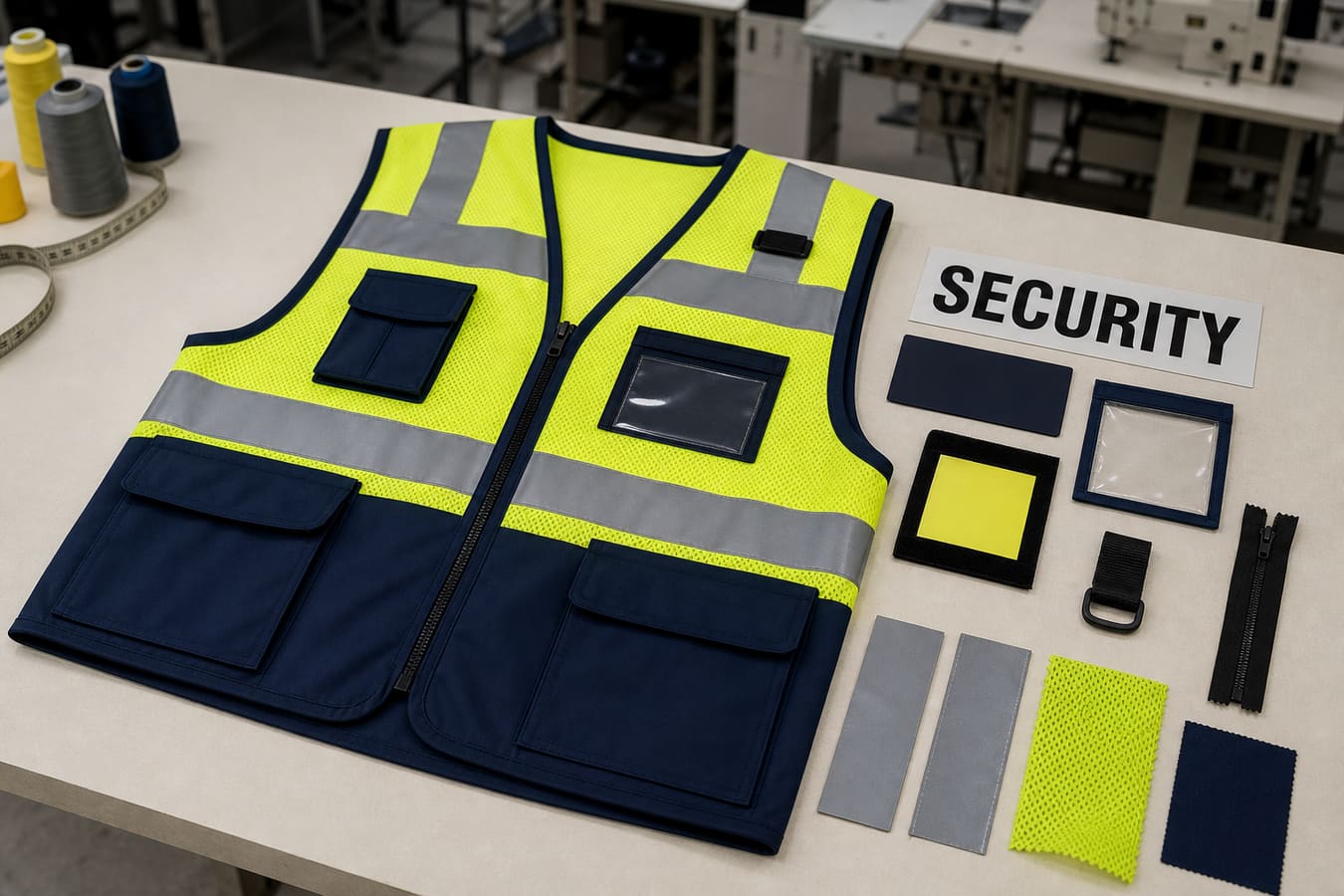
5. Confirm Functional Details
Typical options include:
• Clear ID card window in portrait or landscape orientation
• Radio loop or microphone tab
• Chest, phone, pen and reinforced lower pockets
• D-ring or key loop where appropriate
• Contrast binding and dark dirt-concealing panels
• Size labels, care labels and buyer-specific packaging
Each feature should have a purpose. A radio loop needs to match the device and clip; an ID pocket needs to fit the card and remain visible; lower pockets need closures appropriate to the objects carried.
6. Approve Artwork and Sample
Before bulk production, confirm the specification sheet, size range, color references, reflective layout, identification artwork and packaging marks. Depending on project requirements, approval may include a digital layout, pre-production sample or required garment testing. Production should begin only after the buyer approves the agreed reference.
What to Include in Your RFQ
An effective request for quotation should include:
1. Country or market of use
2. Guard duties and work environment
3. Estimated order quantity and size breakdown
4. Vest color, fabric and closure
5. Required pockets, ID holder and radio features
6. Exact SECURITY wording and logo artwork
7. Required standard, type or performance class, if applicable
8. Sample, packaging and delivery requirements
If the applicable standard is not yet known, describe the hazard rather than guessing a class. Vehicle speed, separation from traffic, lighting, background complexity, weather and the wearer's attention all influence the selection.
OEM Manufacturing and Quality Checks
As a reflective products and safety clothing manufacturer, YOLITE can coordinate fluorescent fabric, reflective material, garment construction, identification and packaging within one OEM project. The final quality plan can check measurements, seams, closure operation, pocket position, tape continuity, artwork placement, labeling and packing against the approved specification.
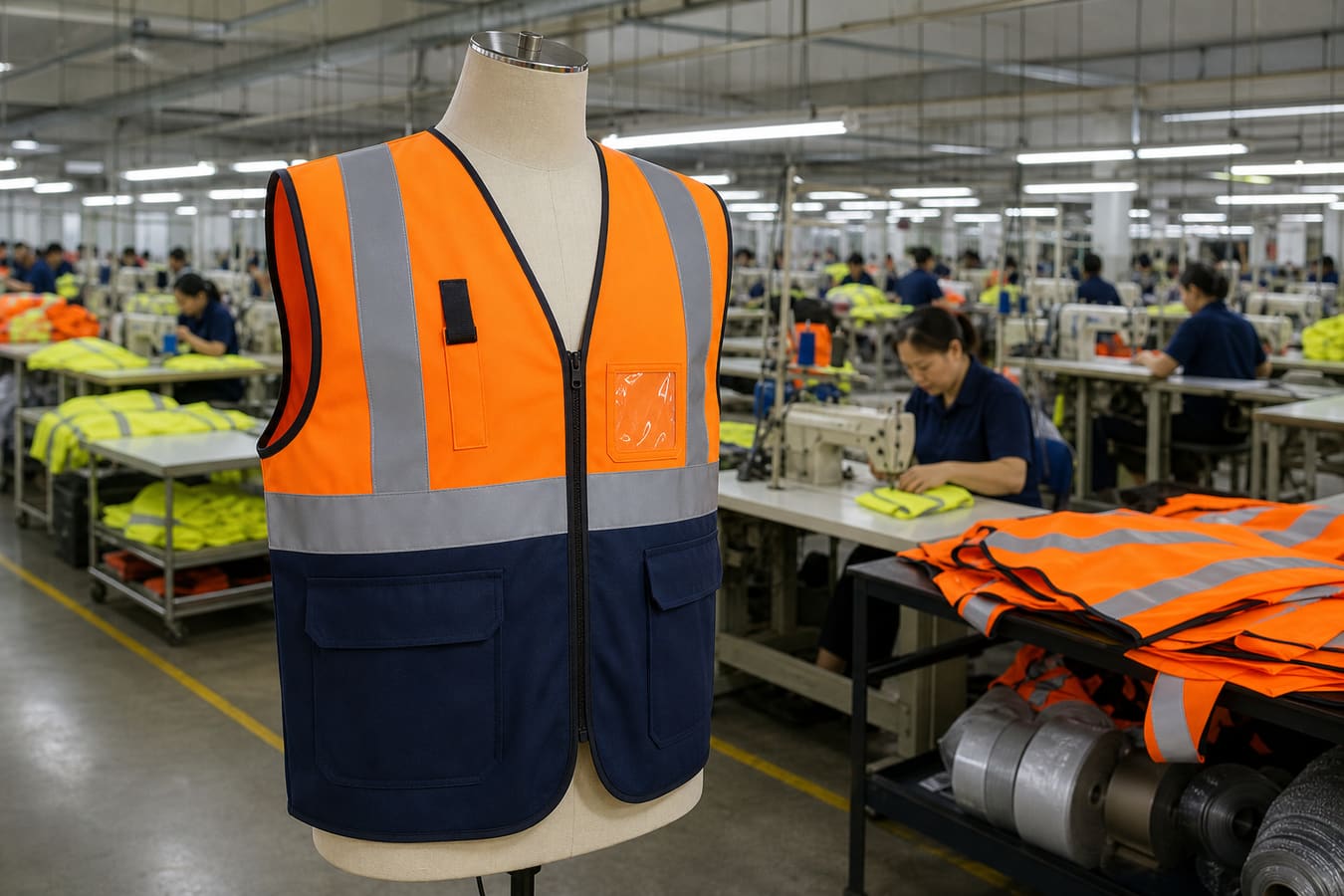
Certification claims must apply to the exact garment configuration being supplied. Changing background color, material area, tape placement, sleeves or large contrast panels can affect whether a design remains within a tested configuration. Ask for the documentation relevant to the ordered style instead of relying on a generic product-family claim.
Frequently Asked Questions
Can SECURITY be printed on the front and back?
Yes. The wording, size, color, location and print method can be customized. Buyers should provide exact artwork requirements and confirm that identification panels do not interfere with the required fluorescent or retroreflective material layout.
Is a black reflective security vest high visibility?
A black vest with reflective elements may improve nighttime identification when illuminated, but black fabric is not fluorescent background material. Do not describe it as compliant high-visibility safety apparel unless the complete garment has been designed and assessed for the applicable requirement.
Which pockets are useful for security guards?
Common choices include an ID window, radio loop, microphone tab, phone pocket, pen channels and reinforced lower pockets. The correct layout depends on the equipment carried and should avoid restricting movement or access.
Can one vest design meet every international standard?
Not automatically. ANSI/ISEA 107, ISO 20471 and national adoptions have specific scopes and design requirements. The destination market, duty risk and exact finished garment must be confirmed before making a compliance claim.
Can YOLITE make a sample before a bulk order?
Sampling can be included in the quotation process when required. Send the target design, quantity, size range, artwork, functional features, applicable standard and delivery requirements so the team can confirm the appropriate development route.
Request a Custom Security Vest Quote
Send YOLITE your duty environment, target market, quantity, garment structure, SECURITY artwork, pocket and radio requirements, standard requirements and desired delivery schedule. We will use these details to define the appropriate vest specification and quotation rather than forcing every security team into the same standard design.
Sources
1. International Safety Equipment Association, “Our Standards — ANSI/ISEA 107-2020.” https://safetyequipment.org/our-standards/
2. International Organization for Standardization, “ISO 20471:2013 — High visibility clothing — Test methods and requirements.” https://www.iso.org/standard/42816.html
3. International Organization for Standardization, “ISO/DIS 20471 — Edition 2 under development.” https://www.iso.org/standard/88983.html
4. Occupational Safety and Health Administration, “Whether use of high-visibility warning garments by construction workers in highway work zones is required,” August 5, 2009. https://www.osha.gov/laws-regs/standardinterpretations/2009-08-05

AUTHOR
Jack Lee
Founder · Yolite Industrial Co., Ltd.
Reflective-products specialist since 2003, focused on reflective materials, high-visibility apparel, OEM customization, and practical product development for international buyers.
View LinkedIn Profile