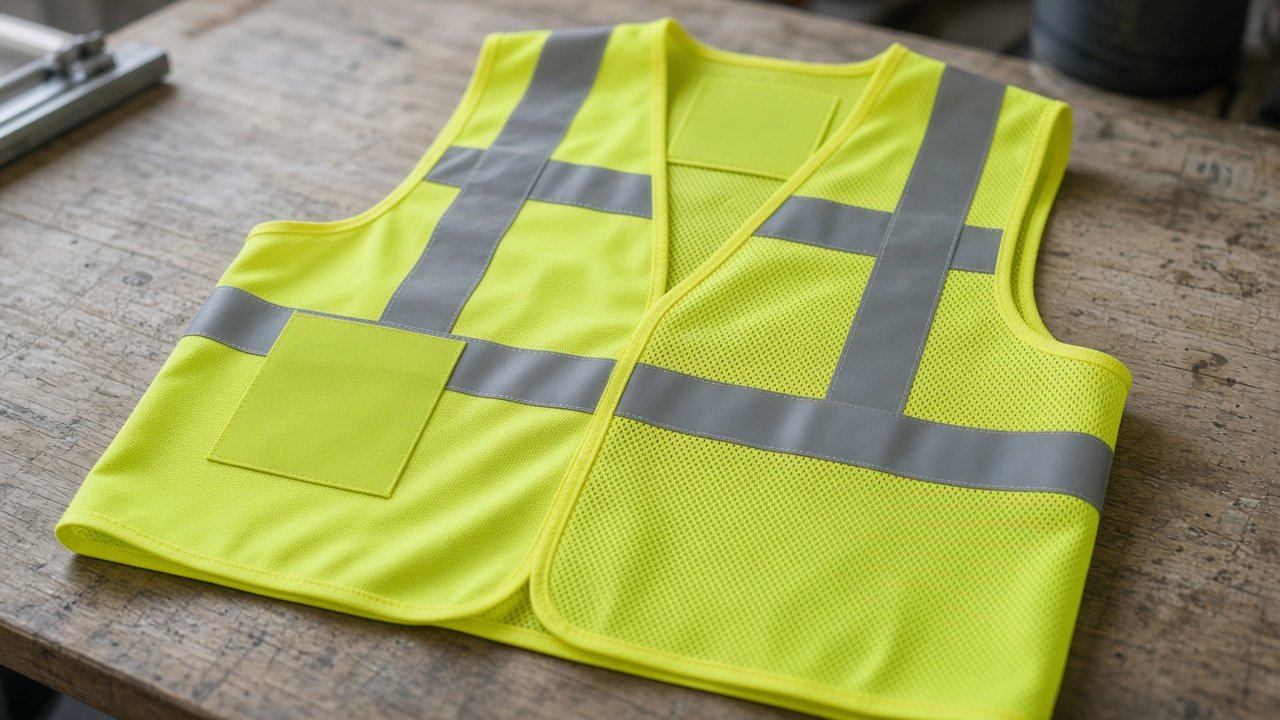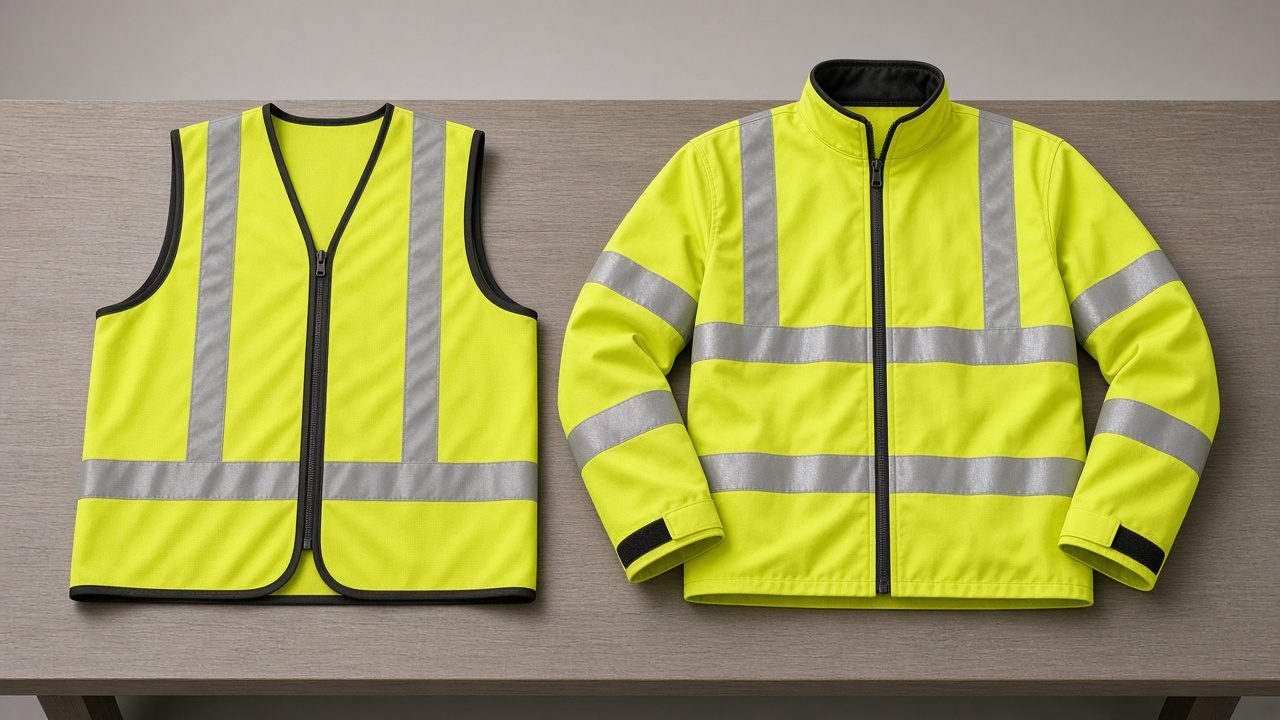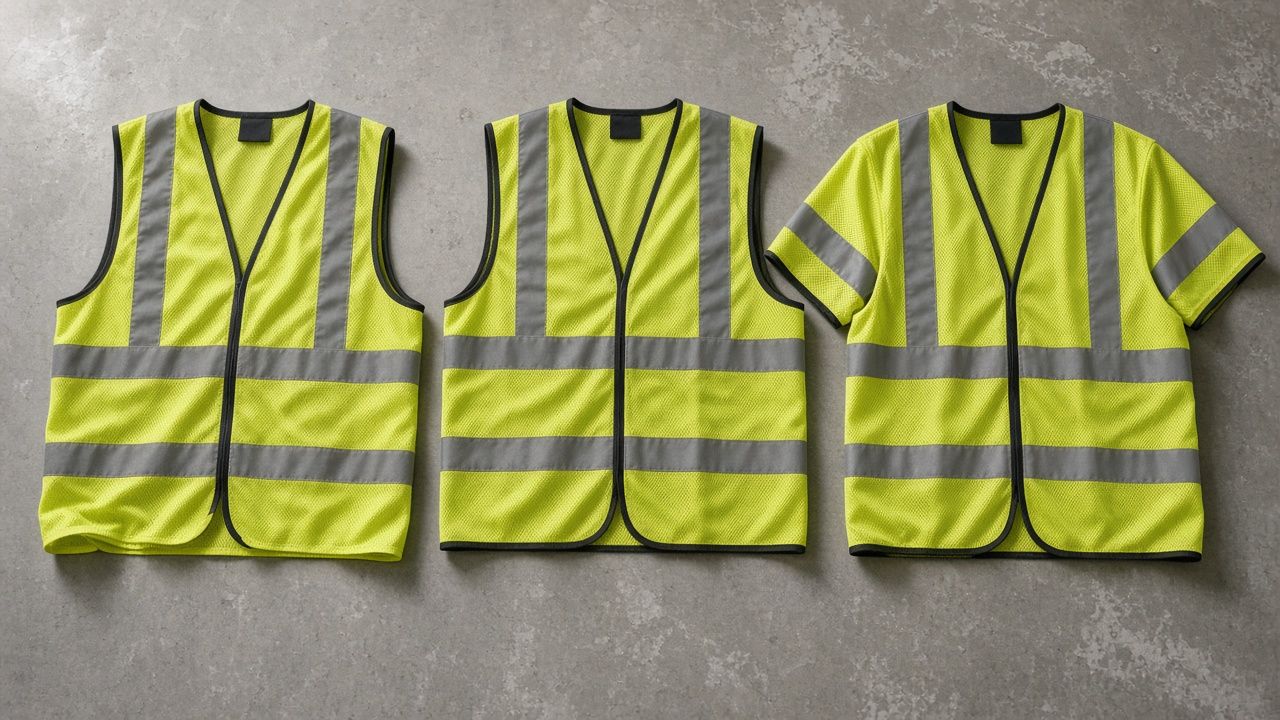
ANSI safety vest classes are the Performance Class 1, 2, and 3 levels in the U.S. high-visibility safety apparel (HVSA) standard ANSI/ISEA 107. Class describes how much fluorescent background and retroreflective material a garment uses and how it is designed so a worker is conspicuous. Class 1 is the off-road / Type O option for lower-speed, lower-complexity exposure. Class 2 and Class 3 are the roadway-oriented levels that MUTCD temporary traffic control rules generally require in public right-of-way work zones. As of late October 2026, ISEA lists ANSI/ISEA 107-2026 as the current English edition, while garments labeled to 107-2020 (and earlier accepted revisions) are expected to coexist during transition—always read the sewn-in label for the edition year, Type, and Class you are buying.
What is ANSI/ISEA 107, and which edition should buyers cite?
ANSI/ISEA 107 is the American National Standard for high-visibility safety apparel. It sets performance requirements for fluorescent background material, retroreflective (or combined-performance) material, color, design placement, marking, and related testing so HVSA improves conspicuity by day and under vehicle headlights at night.
ISEA’s catalog lists ANSI/ISEA 107-2026 as the current English HVSA standard (Spanish 107-2020 still listed). ISEA’s October 26, 2026 announcement keeps Type O / R / P and Classes 1, 2, 3, and E; changes focus on sizing flexibility for smaller Type R Class 2/3 garments (reduced fluorescent-background allowance through size Medium), updated test references, Declaration of Conformity on request, durable markings, and split-trim / non-continuous band rules. Products labeled to the previous edition are expected to coexist with 2026-labeled products during transition.
Buyer takeaway: specify the standard year, Type, and Performance Class on the PO and verify the garment label. Do not assume a stock photo or a “hi-vis yellow vest” claim equals a labeled class.
What do Type O, Type R, and Type P mean?
Since the mid-2010s editions, ANSI/ISEA 107 groups garments by intended use setting (Type) as well as by material/performance Class:
| Type | Typical setting | Performance classes usually offered |
|---|---|---|
| Type O (off-road) | Occupational work with moving equipment/vehicles where MUTCD roadway HVSA mandates do not apply, but visibility still matters | Class 1 only |
| Type R (roadway) | Workers exposed to roadway traffic and temporary traffic control environments | Class 2 or Class 3 |
| Type P (public safety) | Fire, police, EMS, and similar incident-response roles that may need different background-area options and equipment access | Class 2 or Class 3 |
FHWA’s MUTCD interpretation of ANSI/ISEA 107-2015 explains that Type R Class 2 or 3 aligns with roadway worker apparel, while Type P Class 2 corresponds to the earlier public-safety vest approach (formerly ANSI/ISEA 207), with Type P Class 3 as an additional responder option. Manufacturer summaries of ANSI/ISEA 107-2020 likewise state that Class 1 is available only as Type O, and that Classes 2 and 3 apply to Type R or Type P.
Class E bottoms (pants, shorts, gaiters) are supplemental. When a labeled Class E garment is worn with a Class 2 upper garment as a documented ensemble, the combination can be classified as Class 3—confirm that claim on the product documentation for the configuration you actually wear.
What are ANSI Class 1, Class 2, and Class 3 at a buyer level?
Performance classes set minimum areas of fluorescent background and retroreflective (or combined-performance) material, plus design rules. Exact normative tables live in the purchased standard. The widely cited buyer-facing summaries below come from Oregon OSHA Fact Sheet FS-42 (Class 1–3 framing, citing ANSI/ISEA 107-2010 material minima in that sheet) and, for Type R/P Class 2–3 amounts, the Nebraska DOT TIM HVSA sheet that presents ANSI/ISEA 107-2020 Type/Class area tables. Treat them as working references; verify against the edition year on your labeled garment.
| Criterion | Class 1 | Class 2 | Class 3 |
|---|---|---|---|
| Typical Type | Type O (off-road) | Type R or Type P | Type R or Type P |
| Min. fluorescent background (common summaries) | About 217 in² (Oregon OSHA FS-42) | About 775 in² Type R (Oregon FS-42; Nebraska TIM Type R Class 2) | About 1,240 in² Type R (Oregon FS-42; Nebraska TIM Type R Class 3) |
| Min. retroreflective / combined-performance (common summaries) | About 155 in² (Oregon OSHA FS-42) | About 201 in² (Oregon FS-42; Nebraska TIM) | About 310 in² (Oregon FS-42; Nebraska TIM) |
| Typical environments (guidance) | Separated from traffic; traffic ~≤ 25 mph; tasks that do not divert attention from approaching vehicles (Oregon FS-42) | Tasks that divert attention; work near vehicles > ~25 mph; better conspicuity in poor weather (Oregon FS-42) | Higher risk / imminent traffic danger; long-range conspicuity (~1,280 ft framing in Oregon FS-42) |
| Typical garment form | Often a lighter vest or shirt meeting Class 1 area/design | Common sleeveless or sleeved Type R vest/shirt | Usually needs more coverage (often sleeves or a Class 2 + Class E ensemble)—a sleeveless vest alone is generally not Class 3 |
Type P note: Common 107-2020 summaries (e.g., Nebraska TIM) list a lower fluorescent background minimum for Type P Class 2 than for Type R Class 2, with the same retroreflective minimum. Specify Type P explicitly for responder programs—do not assume a Type R Class 2 vest is interchangeable.
When is Class 1 enough, and when must you step up?
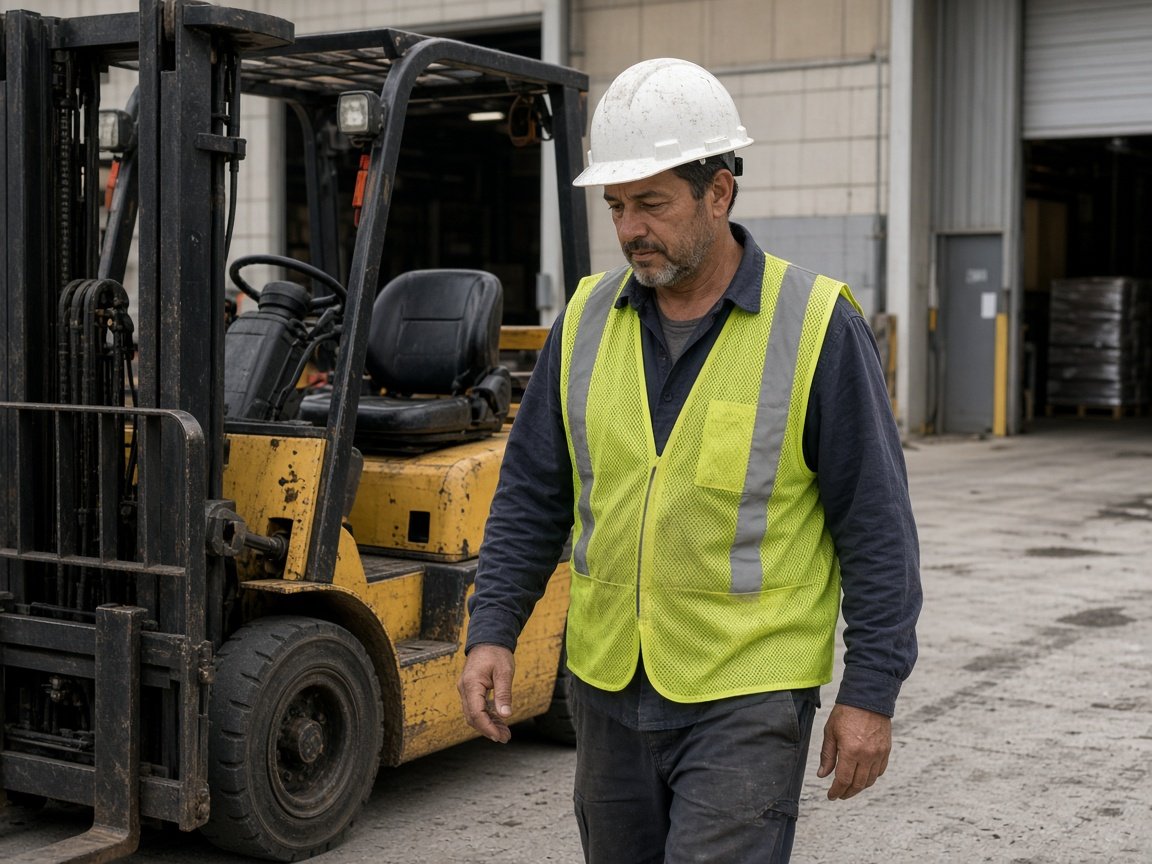
Class 1 can be enough when a documented hazard assessment shows off-road or controlled exposure—Oregon OSHA’s illustrative table associates shopping-cart retrieval, warehouse work, and many delivery-truck roles with Class 1, and notes that warehouse or parking-lot workers without street/highway exposure are often not required to wear roadway-grade HVSA (employers may still choose hi-vis after assessing struck-by risk).
You must step up when any of the following apply:
- Public roadway right-of-way / temporary traffic control (TTC). MUTCD 11th Edition Section 6C.05 requires workers (including emergency responders) within the right-of-way who are within a TTC zone to wear HVSA meeting Performance Class 2 or 3 of ANSI/ISEA 107–2015 or equivalent revisions. Class 1 / Type O is not the MUTCD roadway minimum.
- Speed, attention, weather, or sight distance worsen. Oregon OSHA’s Class 2 framing is for diverted attention and vehicles above about 25 mph; Class 3 is for higher danger and long-range conspicuity. Flaggers are listed under Class 3 in Oregon’s illustrative job table; MUTCD guidance additionally points nighttime flaggers toward Class 3.
- Owner, DOT, prime contractor, or site rules specify Class 2 or Class 3. Match the written specification and the labeled configuration.
- You need Class 3 coverage but prefer a vest for heat. Plan a labeled Class 3 ensemble (for example Class 2 upper + Class E bottoms) or a sleeved Class 3 garment—do not assume a sleeveless Class 2 vest “counts as Class 3.”
For a deeper Class 2 vs Class 3 buying decision (material areas, sleeves vs ensembles, MUTCD selection notes), use the existing guide: Class 2 vs Class 3 Safety Vests: Which Level Do You Need?. This overview stays at the three-class map so that comparison page remains the decision deep-dive.
How do MUTCD and OSHA frame high-visibility apparel?
- MUTCD (FHWA) Section 6C.05 requires Class 2 or 3 HVSA for workers in the right-of-way inside TTC zones; an employer-designated person selects the class. Background colors must be fluorescent orange-red, fluorescent yellow-green, or a combination as defined in the ANSI standard.
- OSHA does not publish a separate “Class 1 / 2 / 3 vest table” that replaces ANSI/ISEA 107. Employers still assess hazards and select PPE under the general PPE framework (including 29 CFR 1910.132). For roadway TTC work, the MUTCD visibility provisions are the usual compliance reference; some states (for example Oregon OSHA high-visibility garment rules cited in FS-42) add their own enforceable language.
- Practical compliance stack for buyers: hazard assessment → jurisdiction/site rules → MUTCD if in TTC right-of-way → labeled ANSI/ISEA 107 Type + Class + year → care/life and replacement criteria on the label.
What should a purchase order or OEM brief include?
- ANSI/ISEA 107 claim with target edition year (2020 and/or 2026 during transition—confirm supplier documentation).
- Type (O, R, or P) and Performance Class (1, 2, or 3; note Class E if using an ensemble).
- Fluorescent color that contrasts the work background (lime vs orange is contrast, not a class).
- Garment form: sleeveless vest, sleeved shirt/jacket, rain shell, or Class E ensemble.
- Tape layout (360° visibility when closed) and logo/ID constraints so decoration does not break the labeled model.
- Size run, closures, wash/life expectations, and—when required—a Declaration of Conformity for the finished style (ISEA highlights DoC on request under the 2026 update).
Yolite (reflective.cn) supplies hi-vis PPE and reflective safety gifts for OEM programs, including Scotchlite-class materials and ANSI/ISEA 107-oriented designs plus EN ISO 20471 / EN 1150 / EN 13356 where those markets apply. Discuss Type/Class intent and labeling—not invented MOQs, prices, or blanket SKU certificates. Request documentation for the specific style.
FAQ
Is ANSI/ISEA 107-2026 already required on every vest?
No single date in the public ISEA announcement forces an overnight relabel of every garment. ISEA states that 2020- and 2026-labeled products are expected to coexist during transition. MUTCD 11th Edition still cites ANSI/ISEA 107–2015 “or equivalent revisions.” Buyers should follow project specs and accept labeled garments that meet the required Performance Class under an accepted revision—and record the year on the label.
Does Class 1 meet MUTCD roadway work-zone requirements?
No. MUTCD Section 6C.05 requires Performance Class 2 or 3 for workers in the right-of-way within a temporary traffic control zone. Class 1 / Type O is for non-MUTCD off-road occupational settings where visibility still matters.
Is a sleeveless vest automatically Class 2 or Class 3?
A sleeveless vest can be labeled Class 1 or Class 2 if it meets the material and design rules for that class. It is generally not Performance Class 3 by itself; Class 3 typically needs more coverage (often sleeves) or a documented Class 2 + Class E ensemble. Trust the label, not the silhouette alone.
Are Type R Class 2 and Type P Class 2 the same garment?
Not necessarily. Common summaries share Class 2 retroreflective minima, but Type P Class 2 may allow less fluorescent background than Type R Class 2 (Nebraska TIM 107-2020 table). Specify Type for public-safety programs.
Do fluorescent color and tape width alone set the class?
No. Class depends on minimum areas, configuration, and labeling under ANSI/ISEA 107. Lime vs orange is a contrast choice, not a class by itself.
Soft next step for ANSI-oriented vest programs
Map Class 1 yards versus Class 2/3 roadway kits with a hazard assessment and the tables above, then use the Class 2 vs Class 3 decision guide for that pairwise choice. For OEM ANSI-oriented vests, contact reflective.cn / Yolite with Type, Class, color, and label year—and ask for style-level documentation, not generic “ANSI compliant” copy.
Sources
- ISEA — Our Standards catalog (ANSI/ISEA 107-2026 listing): https://safetyequipment.org/our-standards/
- ISEA — Updated High-Visibility Safety Apparel Standard (Oct 26, 2026): https://safetyequipment.org/updated-high-visibility-safety-apparel-standard/
- ANSI Blog — ANSI/ISEA 107-2026 overview: https://blog.ansi.org/ansi/ansi-isea-107-2026-high-visibility-apparel/
- Oregon OSHA FS-42 — High-visibility safety apparel: https://osha.oregon.gov/OSHAPubs/factsheets/fs42.pdf
- FHWA MUTCD 11th Edition Part 6 — Section 6C.05: https://mutcd.fhwa.dot.gov/pdfs/11th_Edition/part6.pdf
- FHWA MUTCD Interpretation 6(09)-37(I): https://mutcd.fhwa.dot.gov/resources/interpretations/6_09_37.htm
- Nebraska DOT TIM — High-Visibility Safety Apparel (April 2024): https://dot.nebraska.gov/media/eqjj2npm/high-visibility-safety-apparel-hvsa.pdf
- NASCO — HiVis ANSI/ISEA 107-2020 Standard Summary: https://nascoinc.com/content/resources/NASCO-ANSI-107-2020-Summary.pdf