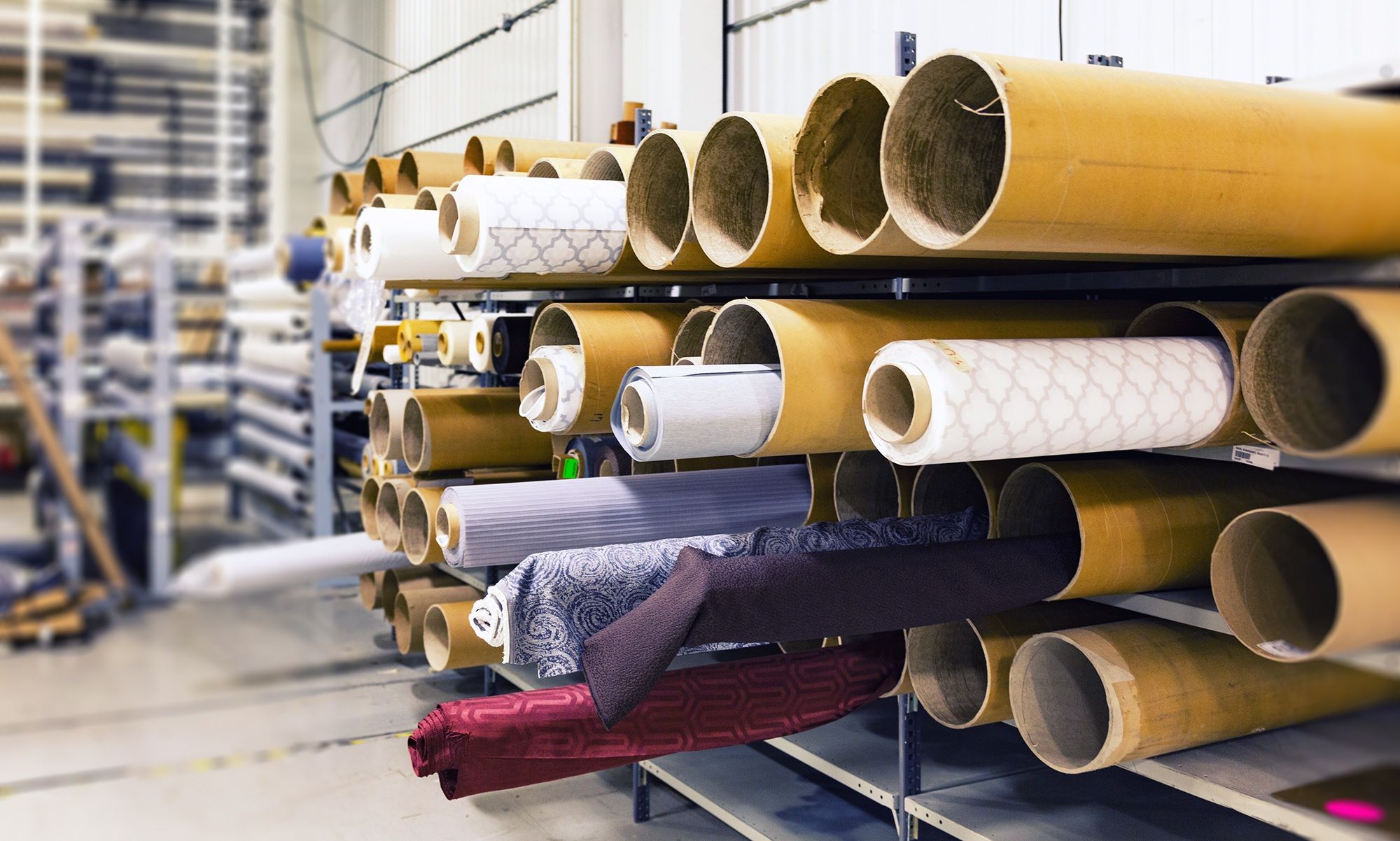
Reflective fabric by the yard is retroreflective textile sold off the roll in running lengths, so brands and workshops can cut their own panels, trims and whole garments instead of buying pre-cut tape. Buying it well means specifying more than “silver, 50 yards”: the face technology, the base fabric, the usable width, the brightness and the wash rating all decide whether the finished product works at night and keeps working after it is washed.
This guide is for apparel brands, bag and accessory makers, uniform suppliers and sewing workshops buying reflective fabric for clothing and gear. It explains the main grades, how to read a spec sheet, how width and roll length affect your cut plan, and what to check before you approve a bulk roll.
What Is Reflective Fabric, and How Is It Different from Tape?
Reflective fabric and reflective tape use the same physics: millions of tiny glass beads (or, on some rigid products, micro-prisms) bounce light back towards its source, so a driver behind the headlights sees the material glow. Our explainer on how glass-bead reflective fabric works covers the optics in more detail.
The difference is format. Tape is slit into narrow widths for trims and stripes. Fabric comes in full-width rolls, so you can cut large shapes: whole jacket fronts, bag panels, pet coats, hats or all-over reflective outerwear. Many factories buy both: tape for standard stripes and fabric for anything wider than a trim.
Main Types of Reflective Fabric Sold by the Yard
| Type | Base fabric | Look in daylight | Typical uses |
|---|---|---|---|
| Silver reflective fabric (high brightness) | Polyester or poly-cotton (TC) woven | Grey to silver | Trims cut in-house, safety garments, bag panels |
| Stretch reflective fabric | Spandex blend or knit | Grey | Sportswear, leggings, cuffs, fitted panels |
| Coloured reflective fabric | Polyester with tinted bead layer | Black, navy, red, fluorescent tones | Fashion and lifestyle products where silver is too loud |
| Printed or patterned reflective fabric | Polyester; reflective layer printed in a pattern | Dots, grids, camouflage, logos | Streetwear, kids’ products, accessories |
| Rainbow (iridescent) reflective fabric | Polyester | Neutral by day, multi-colour at night | Statement jackets, bags, dancewear |
| Adhesive-backed reflective fabric | Fabric with pressure-sensitive or heat-activated backing | Grey or coloured | Patches, helmet and gear decoration, repairs |
Examples from our own range include bright silver striped reflective fabric, rainbow reflective fabric with a bamboo pattern and reflective fabric with adhesive backing.
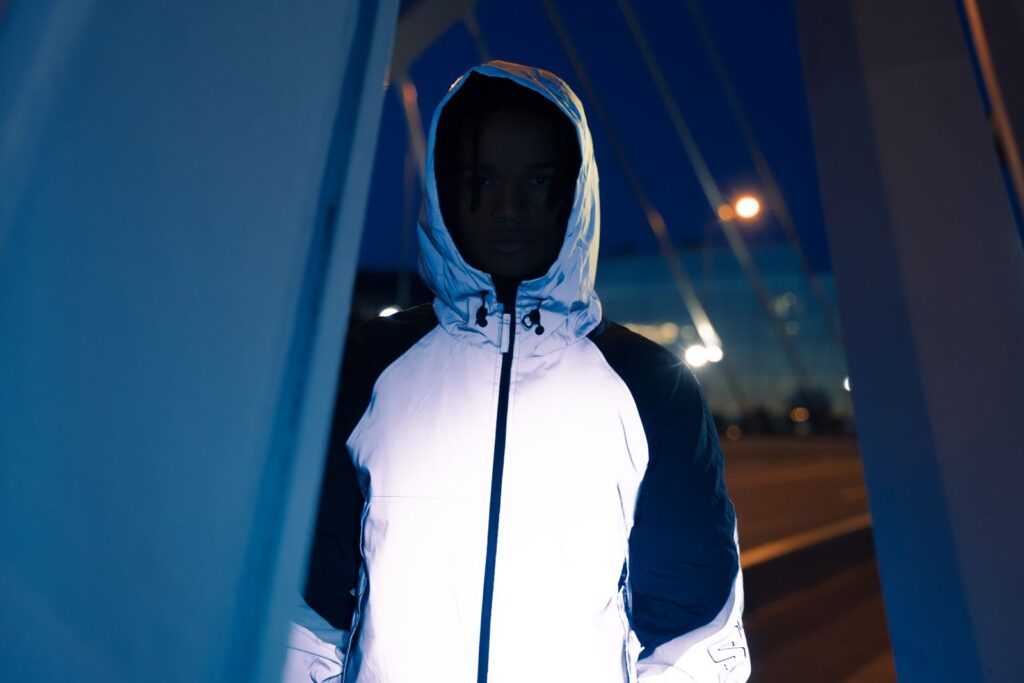
How to Read a Reflective Fabric Spec Sheet
Ask every supplier for the same set of figures so that quotes can be compared line by line:
- Coefficient of retroreflection (RA): brightness in cd/(lx·m²), measured at a stated observation and entrance angle. Compare values only when the angles match.
- Base fabric: fibre content, weave or knit, weight in g/m² and whether it stretches.
- Usable width: the width you can actually cut from, excluding selvedges or uncoated edges.
- Roll length and joins: yards or metres per roll, and how many joins a roll may contain.
- Wash rating: the number of cycles and the method, for example domestic washing to EN ISO 6330 or industrial laundering to ISO 15797, with the brightness retained after washing.
- Other durability: abrasion, flexing, cold folding and rain performance if the product will be used outdoors.
- Standard claims: which standard the material has been tested to, and a test report you can read.
For workwear, EN ISO 20471 and ANSI/ISEA 107 set minimum brightness levels for retroreflective material, and materials are usually sold as tested to one or both. For consumer clothing such as running or cycling wear, EN 17353 is the European reference. Brightness alone does not make a garment compliant: the standards also set colour, area and placement rules for the finished garment. Our comparison of glass-bead and microprismatic reflective materials explains why the two technologies suit different products.
Reflective Fabric for Clothing: Choosing the Right Base
The reflective face gets the attention, but the base fabric decides how the garment feels and how it is made:
- Polyester woven is the general-purpose choice: stable, easy to cut and sew, and suitable for most jackets, vests and bags.
- Poly-cotton (TC) feels softer and works for workwear that is washed often, but check the wash rating carefully.
- Stretch bases follow the body on sportswear. Reflective coatings can crack if overstretched, so test at the stretch your pattern needs.
- Lightweight or breathable bases suit summer and running products. If a garment needs airflow, consider reflective panels only in key areas and mesh elsewhere.
If you only need narrow stripes, tape may be cheaper than cutting from fabric. See reflective tape for clothing for sewn, iron-on and heat transfer options, and reflective HTV for logos and graphics.
Width, Yield and Ordering by the Yard
Reflective fabric is priced by length, but your cost depends on how much of each yard ends up in the product. Before ordering:
- Make a marker with the real usable width. A few centimetres of difference in width can change how many panels fit across the roll.
- Check direction. Some patterned and rainbow fabrics have a direction, so panels must be cut the same way, which lowers yield.
- Allow for testing and sampling. Keep extra length for wash tests, lab tests and sample rounds.
- Convert units once. One yard is 0.9144 m. Decide whether the PO, packing list and invoice use yards or metres, and keep it consistent.
- Ask about cut lengths and minimums. Minimum quantities and lead times vary by type and colour, so confirm them when you request a quote.

Incoming Inspection Checklist for Reflective Fabric Rolls
- Batch and shade: silver and coloured reflective fabrics can vary slightly between batches. Keep each order on one batch where possible and record batch numbers.
- Night appearance: view samples with a torch held near your eye in a dark room. Patches, streaks or dull areas will show at once.
- Surface defects: check for missing beads, scratches, creases and coating peel at the edges.
- Width and length: measure usable width and spot-check roll length against the label.
- Sewing trial: sew a test seam with your normal needle and thread, then flex it to check for cracking around the stitches.
- Wash trial: wash a garment sample using your care label and compare it with an unwashed piece under the same light.
For fashion and sportswear products, see how brands lay out reflective areas in our reflective running jacket guide.
Frequently Asked Questions
Can I buy reflective fabric by the yard in small quantities?
Small cut lengths are often available for sampling, but bulk prices apply to full rolls. Minimums depend on the type and colour, so ask the supplier to confirm when quoting.
Is reflective fabric waterproof?
Not by default. Many reflective fabrics resist light rain, but waterproofing depends on the base fabric, coating and seam construction. Ask for rain or water penetration data if the product will be used in wet weather.
Can reflective fabric be printed or dyed?
Coloured and printed reflective fabrics are made during production. Dyeing finished reflective fabric is not recommended because it can damage the reflective layer.
How do I sew reflective fabric?
Use a sharp needle, a slightly longer stitch and avoid hot irons on the reflective face. Test on an offcut first, because heavy needle perforation can weaken thin coatings.
Does YOLITE supply reflective fabric for clothing by the yard?
Yes. Send the application, required width, colour, target standard and quantity, and we will confirm options, MOQ and lead time for your order.
Request a Reflective Fabric Quote
Tell YOLITE what you are making, the base fabric you need, the brightness or standard you are designing to, and how many yards or metres you expect to use. We can send swatches for night and wash testing before you commit to bulk rolls. Contact us with your specification or a reference sample.
Sources and Scope
1. International Organization for Standardization, “ISO 20471:2013 — High visibility clothing — Test methods and requirements” (as amended), adopted in Europe as EN ISO 20471.
2. International Safety Equipment Association, “ANSI/ISEA 107-2020 — American National Standard for High-Visibility Safety Apparel.”
3. European Committee for Standardization (CEN), “EN 17353:2020 — Protective clothing — Enhanced visibility equipment for medium risk situations.”
4. ISO 6330 (domestic washing and drying procedures for textile testing) and ISO 15797 (industrial washing and finishing procedures for workwear).
This article is a procurement guide, not a substitute for the complete standards or for testing by an accredited laboratory. Material performance, minimum quantities and lead times vary by product and should be confirmed for each order.

AUTHOR
Jack Lee
Founder · Yolite Industrial Co., Ltd.
Reflective-products specialist since 2003, focused on reflective materials, high-visibility apparel, OEM customization, and practical product development for international buyers.