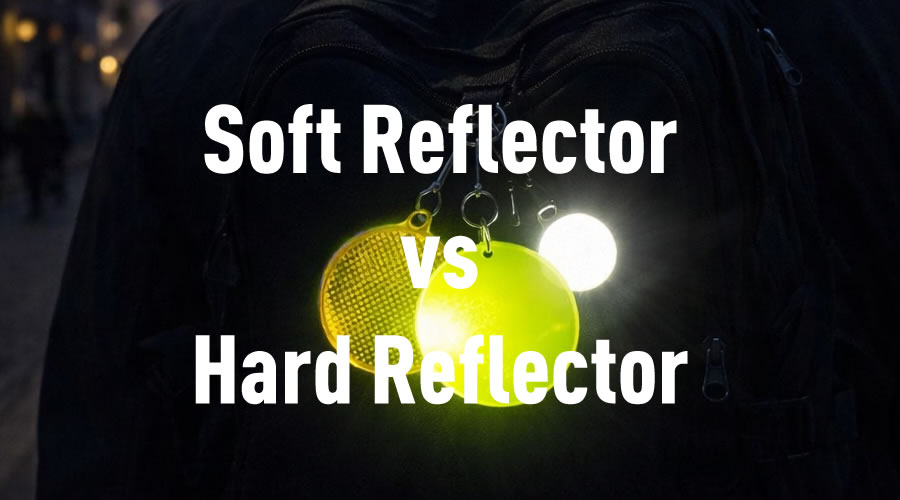
Whether you are producing promotional gifts or personal safety gear, reflective pendants are an excellent choice for attaching to bags and backpacks. The two primary options on the market are soft reflectors and hard reflectors. Both serve the crucial purpose of enhancing pedestrian safety and can meet the strict EN17353 visibility standards. However, they differ significantly in materials, manufacturing processes, tooling costs, and longevity. As a manufacturer, we’ve put together this guide to help you compare the two and choose the best option for your specific volume, budget, and durability needs.
1. Material & Manufacturing Process
The fundamental difference between the two lies in what they are made of and how they are put together.
Soft Reflectors: These are made from a combination of reflective PVC and PVC foam. The manufacturing relies on high-frequency welding, which fuses the two reflective layers together seamlessly.
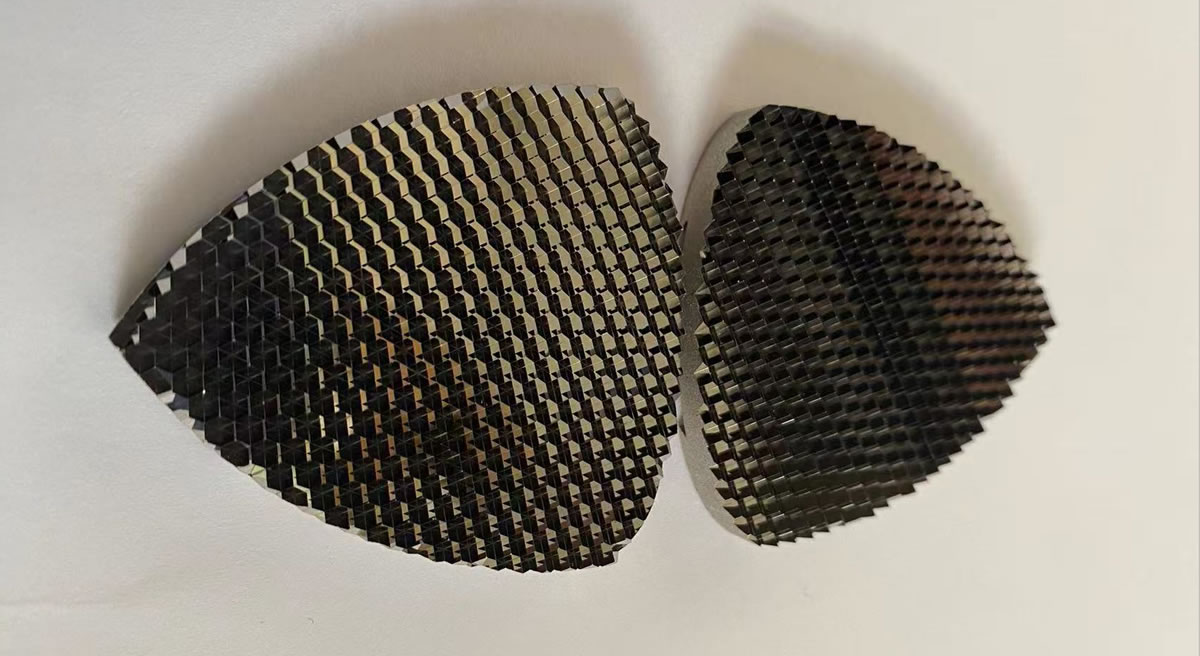
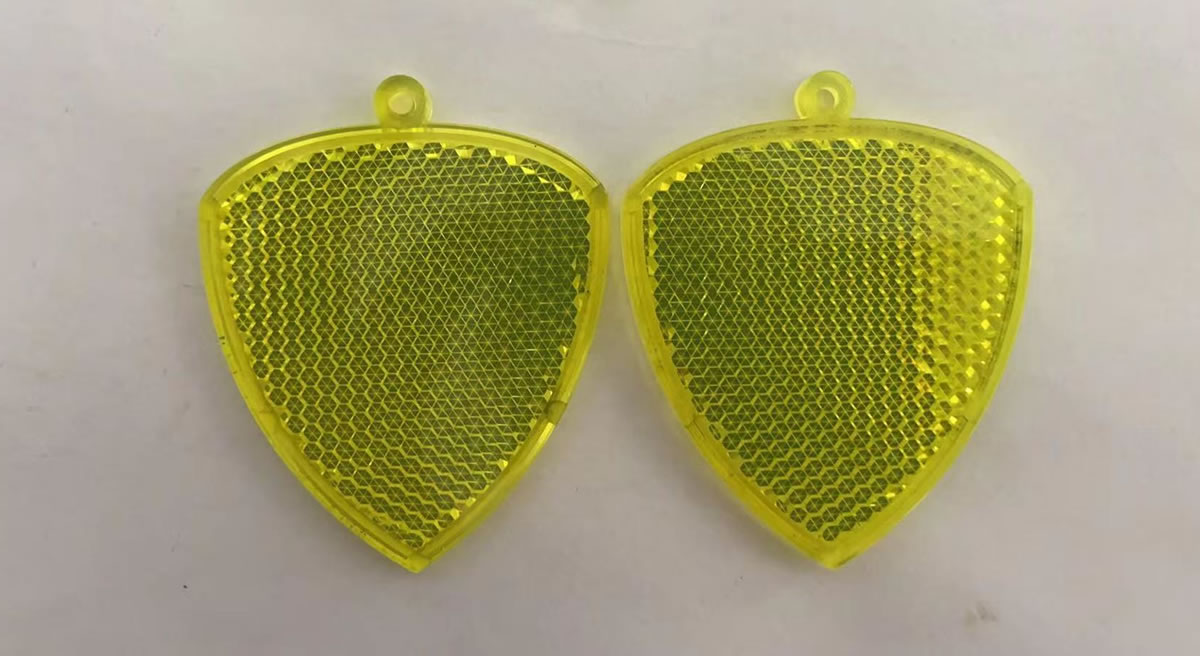
Hard Reflectors: These are manufactured using an injection molding process, primarily utilizing hard Acrylic (PMMA). The front and back reflective panels are then joined using ultrasonic welding.
Manufacturer’s Note: Some suppliers use PS (Polystyrene) to cut costs. We highly advise against this. PS results in poor reflectivity and is very brittle, making it prone to breaking easily. Always opt for high-quality PMMA.
2. Mold Costs & Cavity Scaling
If you are budget-conscious or testing a new design, tooling costs will be a major deciding factor.
Soft Reflectors (Low Cost): Tooling is very affordable, often starting around just $50. Furthermore, creating a multi-cavity mold (e.g., 1-out-of-4 or 1-out-of-8) does not significantly increase the tooling cost. This makes soft reflectors ideal for small order quantities.
Hard Reflectors (High Cost): Because it requires an injection mold, the initial setup is expensive, typically starting around $3,000. Additionally, the reflective prism part of the mold is calculated per square centimeter. If you want a multi-cavity mold to produce several pieces at once, your mold costs will multiply exponentially.
3. Prototyping & Lead Times
Your project timeline will heavily dictate which product you can choose.
Soft Reflectors: Because the tooling is simple, the sampling cycle is incredibly fast. Molds and initial samples can usually be completed within 1 to 3 days.
Hard Reflectors: Injection molding takes time. You can expect a lead time of about 4 weeks just to complete the mold and get the first prototypes.
4. Printing & Customization Options
Both options allow for branding, but the PVC material offers a bit more flexibility.
Soft Reflectors: Printing can be done on the surface or beneath the outer layer (internal printing). Because it is PVC, you can achieve vibrant full-color designs using silkscreen or UV printing. You can also easily add tactile effects, such as embossed logos.
Hard Reflectors: Because it consists of two rigid, pre-molded plastic pieces welded together, printing is restricted to the outer surface. Silkscreen is the standard method here, though digital printing can be used to achieve multi-color designs.
5. Durability & Lifespan
Consider how and where the end-user will interact with the product.
Soft Reflectors: While great for bags, if they are frequently taken in and out of pockets, the friction can cause the welded seams to tear over time. Additionally, prolonged outdoor exposure to strong UV rays and temperature fluctuations will eventually degrade the PVC material.
Hard Reflectors: PMMA acrylic is highly durable. These pendants can easily withstand long-term outdoor exposure, including sun and rain, without sustaining damage. They have a significantly longer operational lifespan.
6. Weight Differences
Soft Reflectors: Very lightweight, typically weighing around 5 grams.
Hard Reflectors: Noticeably heavier due to the dense acrylic, usually weighing between 10 to 15 grams.
Conclusion: Which should you choose?
Both items make fantastic, safety-oriented promotional gifts. If you have a tight deadline, a smaller order quantity, or a limited budget, soft reflectors are your most cost-effective solution. However, if you have the upfront budget and are looking to create a highly durable, premium item meant for long-term outdoor use, investing in hard acrylic reflectors is the superior choice.
Frequently Asked Questions
The primary difference lies in the material and manufacturing process. Soft reflectors are made from reflective PVC and PVC foam using high-frequency welding, making them lightweight, flexible, and affordable to mold. Hard reflectors are injection-molded from rigid acrylic (PMMA) and ultrasonically welded, resulting in a solid, heavier, and highly durable product.
Yes, both soft PVC and hard acrylic reflectors can be manufactured to meet the strict EN17353 visibility standard for non-professional use. However, when importing to Europe, it is highly recommended to classify these items as "bag accessories" or "safety reflectors" on customs documents rather than "toys." Reflective pendants often cannot pass the strict EN 71 pull test required for children's toys, which can cause unnecessary customs clearance issues.
Soft PVC reflectors are generally the most cost-effective choice for small or promotional orders. The tooling cost is very low (often starting around $50), and multi-cavity molds do not significantly increase the price. Furthermore, prototypes can be ready in just 1 to 3 days.
If you require long-term outdoor durability, hard acrylic reflectors are the superior option. They are highly resistant to UV rays, weather fluctuations, and general wear. Soft PVC reflectors are excellent for everyday use on bags, but they may eventually tear at the welded seams or degrade with prolonged exposure to harsh sunlight.
Absolutely. Soft reflectors offer highly flexible printing options, including silkscreen and full-color UV printing, either on the top surface or underneath the clear outer layer. Hard reflectors typically utilize surface silkscreen printing, though digital printing can also be applied to achieve multi-color designs on the rigid exterior.
Tell us about your reflective pendant project! Share your desired quantity, material preference (Soft PVC or Hard PMMA), and logo requirements below. Our team will get back to you within 24 hours with a competitive manufacturing quote.